E-Paper



'Paper agreement won't bring security': Iran targets Saudi over defence deal with Pakistan, Turkey
Ebrahim Rezaei said that Saudi Arabia should reconsider its approach to security.

 Prefer HTon Google


A new defence agreement between Saudi Arabia, Turkey and Pakistan has drawn criticism from Iran, with a prominent Iranian lawmaker saying that the deal will not bring security to Riyadh.
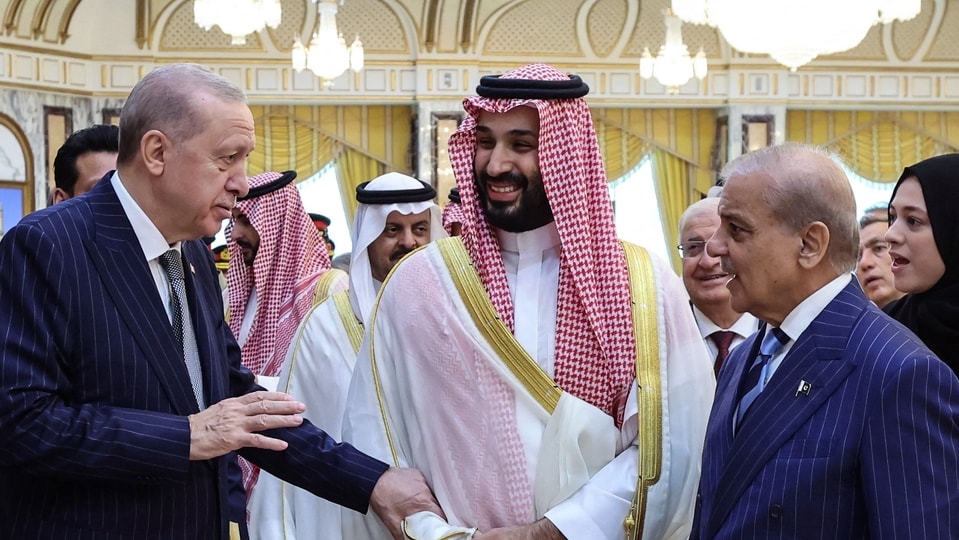
The agreement, signed amid growing regional security concerns, commits the three countries to treat an attack on any one of them as an attack on all three, strengthening defence cooperation between the regional powers.
READ ALSO | India reacts to Turkey-Pakistan-Saudi defence deal: 'Closely following the development'
Iranian lawmaker targets Riyadh over defence pact
Ebrahim Rezaei, a member of Iran’s Parliament’s National Security and Foreign Policy Commission, criticised the agreement in a post on X, arguing that Saudi Arabia should reconsider its approach to security.
"The Saudis should know that a paper agreement with Turkey and Pakistan will not bring them security, just as years of one-sided milking by the Americans did not bring them security. Change your policies so that you do not have to #BegForSecurity from others," he wrote.
Saudi Arabia, Turkey and Pakistan sign agreement in Mecca
The defence agreement was signed in Saudi Arabia’s holy city of Mecca by Saudi Crown Prince Mohammed bin Salman, Turkish President Recep Tayyip Erdogan and Pakistan Prime Minister Shehbaz Sharif, according to statements from the three countries.
ALSO READ | 'Fake News': MEA rejects report that India approached Israel for defence pact after Pak-Saudi-Turkey deal
Why was the deal signed now?
The agreement comes amid maximum security concerns in West Asia, including the US and Israeli war on Iran, Israel's UN-designated genocide on Gaza and other regional instability.
Saudi Arabia has also been seeking to diversify its defence partnerships after its oil facilities and critical infrastructure came under attack during regional conflicts.
Pakistan said Prime Minister Shehbaz Sharif's visit to Saudi Arabia was aimed not only at discussing the Gulf crisis but also at strengthening ties and improving coordination on regional and international issues, AFP reported.
India reacts to defence deal
India on Friday said it was "closely following" the new defence agreement. Responding to questions, MEA spokesperson Randhir Jaiswal said the government was monitoring the development and would provide updates.
The trilateral pact, signed by Saudi Crown Prince Mohammed bin Salman, Turkish President Recep Tayyip Erdogan and Pakistan Prime Minister Shehbaz Sharif, commits the three countries to treat an attack on any one of them as an attack on all. It also aims to expand defence cooperation through joint military exercises, training, technology transfers and intelligence sharing.
The agreement comes as Saudi Arabia seeks to strengthen its security partnerships amid regional tensions. India had also taken note of the Pakistan-Saudi mutual defence pact signed in 2025, saying it would study its implications.