
 E-Paper



Pune traffic falls 37.79% during Diwali
With thousands of people in Pune returning to their hometowns for Diwali, traffic movement across the city dropped by 37.79% during the festival as compared to the pre-Diwali period

 Prefer HTon Google


PUNE: With thousands of people living and working in Pune returning to their hometowns for Diwali, traffic movement across the city dropped by 37.79% during the festival as compared to the pre-Diwali period. Even three days after the festivities, traffic levels remained 19.01% below normal, indicating that a significant portion of the city’s population is still to return.
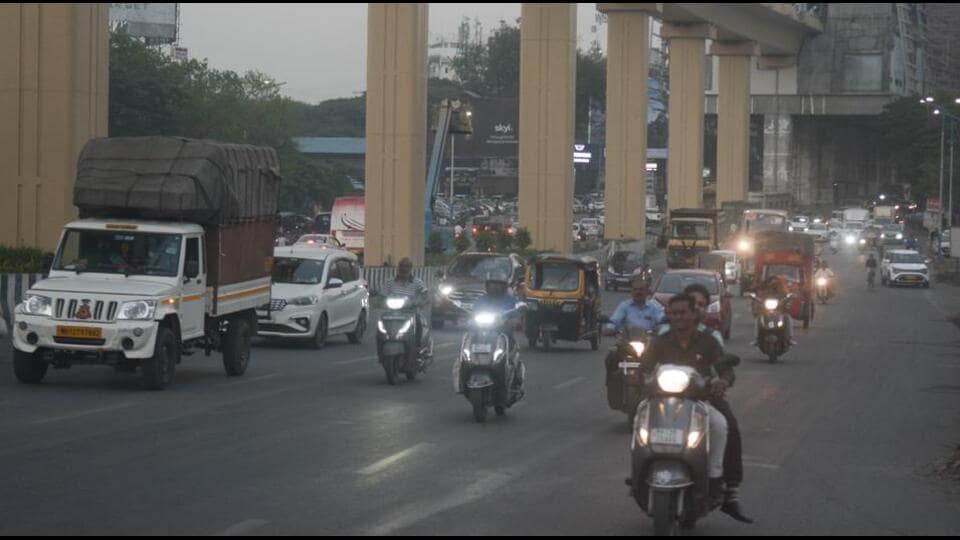
An analysis of Pune traffic police data covering 16 major road corridors shows that traffic volumes declined across all monitored stretches during Diwali; with J M road recording the steepest fall of 43.80%, followed closely by F C road (43.63%), Shastri road (43.37%), Tilak road (43.10%), and Sinhagad road (42.63%).
The decline reflects the annual exodus of migrant workers, students and people employed in the city’s IT, industrial and service sectors who travel to their native places for the festival. With educational institutions and workplaces too witnessing reduced activity during the holiday period, roads across Pune experienced considerably lighter traffic.
Even post-Diwali figures suggest that the city is yet to return to its usual traffic intensity. J M road continued to record the highest shortfall at 24.25% below the pre-Diwali baseline, followed by Tilak road (20.75%), Airport road (20.71%) and Paud Road (20.33%). F C road recorded a 19.15% decline, Satara road a 19.16% decline, Pashan road 19.58%, and University road-Chandani Chowk 19.64%.
Saurabh Deshpande, a Pune resident, said, “During Diwali, travelling across the city was much easier, with considerably less traffic even on busy roads. The difference was noticeable, particularly on J M road and F C road. It also shows how much the city’s daily traffic depends on the large floating population of people who live and work here.”
Deputy commissioner of police (traffic) Sandeep Bhajibhakre said that the comparative figures indicate a noticeable change in traffic movement during the festival. “The comparative analysis shows that traffic movement reduced across all major corridors during Diwali. Even in the post-Diwali period, traffic levels remained below the pre-Diwali baseline. We will continue to monitor traffic patterns across the city and take necessary measures to ensure smooth movement of vehicles,” he said.
The police analysis compares three-day periods before, during, and after Diwali. The pre-festival baseline covers October 30 to November 1; the Diwali period November 6 to 8; and the post-festival period November 13 to 15.


