
 E-Paper



Pune’s pre-SIR exercise reveals gaps in awareness and documentation
Activists said Pune’s expanding population and complex voter demographics could pose challenges in ensuring accurate and inclusive electoral rolls ahead of upcoming elections.

 Prefer HTon Google


Pune: The pre-Special Intensive Revision (pre-SIR) exercise currently underway has thrown up various challenges for the government staff as well as the citizens. The exercise is the first step ahead of the formal voter list revision process, when officials visit households to verify existing voter details.
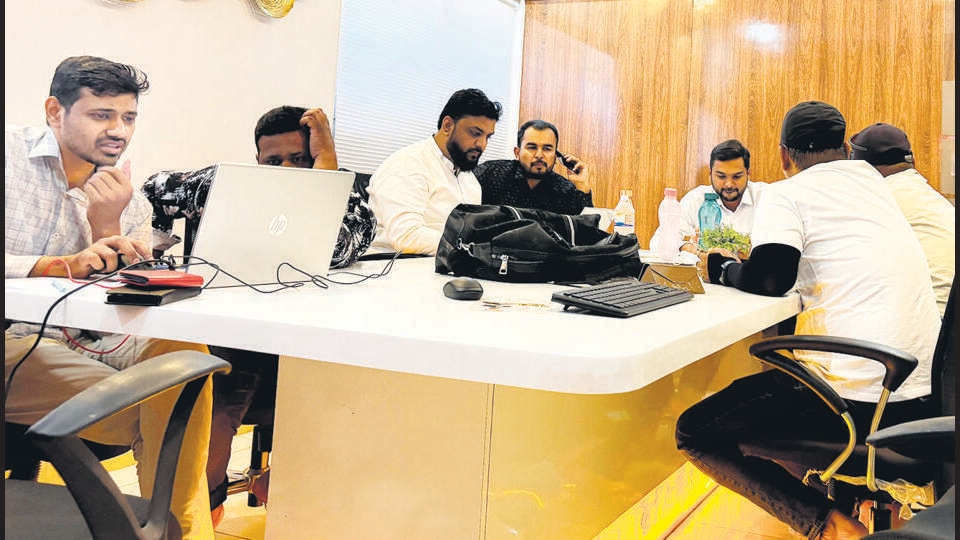
Pune district collector Jitendra Dudi said the current phase, which began in the first week of March, involves preliminary verification by government staff, after which Booth Level Officers (BLOs) will undertake a full-fledged door-to-door exercise once the Special Intensive Revision (SIR) is officially notified.
“The actual SIR has not yet begun; we are awaiting the official notification. The current pre-SIR activity is being carried out by the administration, and once the SIR starts, the pre-activity will stop,” Dudi told Hindustan Times.
As the groundwork progresses, concerns around low public awareness and lack of documentation have come to the fore. Activists said Pune’s expanding population and complex voter demographics could pose challenges in ensuring accurate and inclusive electoral rolls ahead of upcoming elections.
Parallel to the official exercise, political groups and local representatives have started outreach efforts in several areas, including Kondhwa, Katraj, Wanawadi, Undri, Yerawada and parts of Pune city. Camps are being organised to help residents verify their names in the 2002 electoral roll, a key document for the ongoing process.
However, the exercise has triggered anxiety among sections of citizens. Social workers flagged concerns over possible deletions from voter lists, data mismatches and evolving documentation requirements.
Residents pointed to a major awareness gap. Sadik Khan, a resident of NIBM Annexe, said many people were unfamiliar with the process. “During our awareness drives, we found that many citizens are not even aware of the SIR. Several cannot recall their parents’ constituency details from 2002, which is crucial for verification,” he said.
Hussain Shaikh, a social worker, echoed the concern. “There is a clear information gap at the grassroots level. Many people are unaware of the process, and retrieving old constituency details from 2002 is proving difficult,” he said.
Zeeshan Jamadar, another resident, said locating names in the 2002 voter list was cumbersome and alleged lack of cooperation in updating records. “More time should be given for the mapping process and documentation,” he said.
Documentation remains another key hurdle. Sachin Subhash Ghule, vice-president of Haveli taluka panchayat samiti and former deputy sarpanch of Undri, said many citizens either lack the required records or struggle to access them, leading to delays and confusion.
He also highlighted the impact of the digital divide. “Many residents have limited digital literacy and find it difficult to access online records required for the SIR. This slows participation and increases dependency on others,” he said.
Ghule further raised concerns over the reliance on the 2002 voter list. “If a voter’s name is not found in the 2002 records, what happens next? Will such voters be excluded despite having valid voter ID cards? These are questions that need clarity,” he said.
As the pre-SIR exercise continues, activists stressed the need for wider awareness campaigns and support mechanisms to help citizens navigate the verification process.


