
 E-Paper



Reduce highway accidents, formulate action plan: Satej Patil to authorities
To reduce accidents, immediately start patrolling the national highways by constituting dedicated, 24x7 patrolling vehicles and teams for each highway, says Satej Patil. He also directed that the IT-based infrastructure on the national highways be made more efficient


PUNE A review meeting was held earlier last week to help reduce the number of accidents on national highways passing through western Maharashtra after a survey by the Save Life Foundation (SLF) found that 1.35 million people die in road crashes across the globe out of which 150,000 are in India alone and that more than 30 children die in road accidents every day in India.
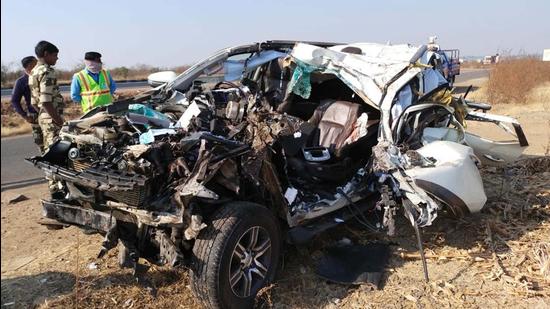
The virtual meeting was attended by the minister of state for IT and home Satej Patil; divisional commissioner Saurabh Rao; transport commissioner Dr Avinash Dhakne; special inspector general of police Manoj Lohia; district collectors of Pune, Sangli, Satara and Kolhapur; superintendents of police; highway police force officers; and founder-president of SLF Piyush Tiwari. Based on the SLF survey report, Patil instructed the Pune, Sangli, Satara and Kolhapur police chiefs to immediately start patrolling the national highways by constituting dedicated, 24x7 patrolling vehicles and teams for each highway. He also directed that the IT-based infrastructure on the national highways be made more efficient.
Among others, the SLF survey revealed that the Pune to Satara highway saw 292 rear-end collisions out of which 95 were fatal; 102 pedestrian accidents in which 34 pedestrians lost their lives; 86 object-related accidents which saw 34 fatalities; 116 self-rollovers or falls which saw 10 fatalities; 48 head-on collisions in which nine people were killed; and 14 other accidents which saw two fatalities.
On the Satara to Kagal highway, 360 rear-end collisions were reported which saw 106 fatalities; 251 self-rollovers/falls in which 55 people died; 156 pedestrian accidents in which 44 pedestrians lost their lives; 31 object-related accidents in which 12 people died; 18 head-on collisions which saw 14 fatalities; 52 other accidents with 28 fatalities; and 35 unknown accidents with five fatalities.
Twenty-five and 62 incidents of wrong side driving during the day and night were reported on the Pune to Satara and Satara to Kagal highways, respectively. One-hundred-and-nine and 205 incidents of wrong lane usage were reported on the Pune to Satara and Satara to Kagal highways, respectively. Three and 40 incidents of overtaking from the left were reported on the Pune to Satara and Satara to Kagal highways, respectively. One-hundred-and-forty five and 99 incidents of illegal parking were reported on the Pune to Satara and Satara to Kagal highways, respectively. One-hundred-and-three and 160 two-wheeler riders were found riding without helmets on the Pune to Satara and Satara to Kagal highways, respectively.
The survey revealed that as many as 125 people have been killed in road accidents on the Pune to Satara and Satara to Kagal highways in the year 2019-20 due to various reasons. The accidents have been caused due to speeding, not wearing seat belts, not wearing helmets, sudden change of lanes, indicators, headlights not being in good condition and so on.
The meeting took cognisance of all these matters with SLF suggesting high impact and scaleable solutions to reduce the fatalities and accidents on highways. “Immediate measures need to be taken from re-engineering of roads, bridging gaps between accidents and their treatment with urgent trauma care to engaging motorists and the general public to change behaviours and upgrading national policies that promote safe driving behaviours among people. By working both on the ground and at the system level, we are addressing the problem from the bottom-up and top-down to completely and decisively resolve this public health issue,” the SLF report stated.
Earlier, implementation of the zero fatality corridor helped authorities and the SLF to reduce road fatalities by 52% on the Mumbai-Pune Expressway over four years; 54% on NH48 over one year; and 100% at Delhi’s Bhalswa chowk black spot in less than one year.


