
 E-Paper



Reservoir levels higher than last year but summer stress grips Maha
Region-wise, Pune continues to remain the most stressed, with storage at 32.99%, though marginally higher than last year’s 28.64%

 Prefer HTon Google


While reservoir storage across Maharashtra currently stands at 40.50%, higher than 34.63% recorded during the corresponding period last year, officials remain cautious as storage has declined sharply from 90-100% recorded at the end of the 2025 monsoon; highlighting mounting summer stress on water resources.
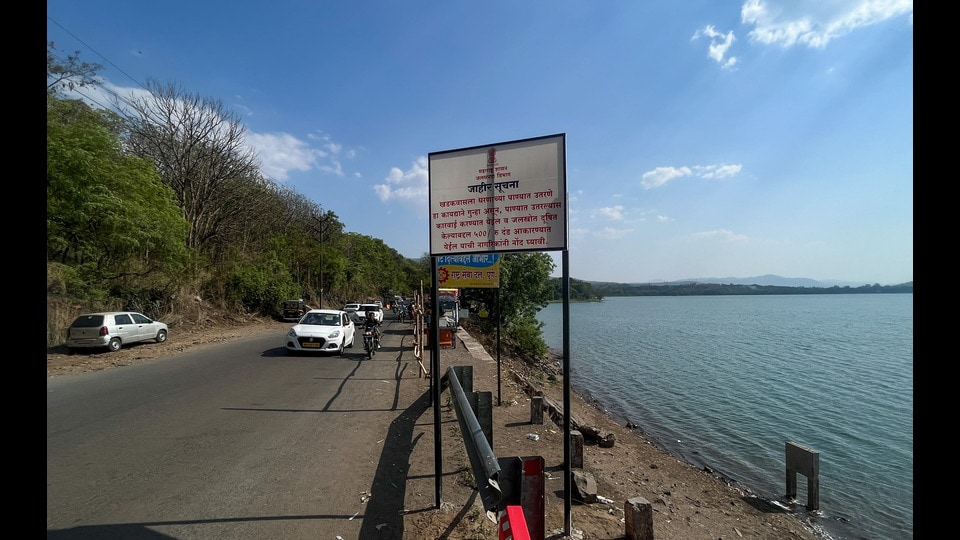
Region-wise, Pune continues to remain the most stressed, with storage at 32.99%, though marginally higher than last year’s 28.64%. Whereas Nashik reports storage at 42.69%; Konkan at 43.62%; Nagpur 44.18%; Chhatrapati Sambhajinagar 45.18%; and Amravati 49.62%.
The state government however maintains that current storage levels remain better than last year. Whereas civic bodies have started initiating precautionary measures. In Pune, no water cuts have been announced yet but the irrigation department has urged the Pune Municipal Corporation (PMC) to adopt prudent water management measures. Officials said that they have already communicated the need for controlled usage to ensure adequate supply throughout summer. According to the irrigation department, the Khadakwasla dam cluster —Khadakwasla, Panshet, Warasgaon and Temghar – currently holds 10.41 TMC of water (35.70%) as compared to 9.14 TMC (31.37%) during the corresponding period last year.
Mohan Bhadane, sub-divisional engineer, irrigation department, said that the current stock is projected to last till August 10. “Considering the El Niño forecast by the India Meteorological Department (IMD), we are closely monitoring reservoir levels and managing releases cautiously. We have written to the PMC suggesting measures such as water cuts, but a decision is still awaited,” Bhadane said.
In Mumbai, the Brihanmumbai Municipal Corporation (BMC) has announced a 10% water cut starting May 15, signalling an early push for conservation. Meanwhile, the civic body has also sought additional carryover storage from the state as a buffer. Civic chief Ashwini Bhide said that the request includes 147 million cubic metres and 90 million cubic metres from the Bhatsa and Vaitarna lakes, respectively; taking the total to 237 million cubic metres.
In 2025, the early onset of the southwest monsoon coupled with sustained rainfall throughout the season, had pushed reservoir levels across the state to near-full capacity, creating a comfortable buffer at the beginning of this summer season. However, water levels have since declined steadily amid a harsher-than-usual summer, considerably increasing demand, especially in urban centres.
Adding to the concerns, the IMD has indicated the possibility of El Niño conditions this year, typically linked to a below-normal monsoon in India. This raises uncertainty over the replenishment of reservoirs in the coming months. As such, efficient water usage and early conservation measures will be critical in the months ahead.


