
 E-Paper



Spike in snake sightings across Pune, Maval emerges as hotspot
The group attributes this spike to water entering natural habitats and ongoing construction on agricultural land, both of which are forcing snakes into/closer to human settlements

 Prefer HTon Google


The early arrival of the monsoon coupled with heavy rainfall and habitat disruption has led to a sharp rise in snake sightings across Pune and its rural outskirts, particularly in Maval. While snake-related calls have risen from 45 in the first half of 2024 to 53 in the corresponding period of 2025—an increase of approximately 17.78%—according to Pune fire department data; Maval has emerged as a major hotspot. Vanyajeev Rakshak Maval, a wildlife NGO that works particularly in Maval, reported 11 snake rescues—mostly pythons—in June 2025 alone compared to just seven to eight in the whole of 2024.
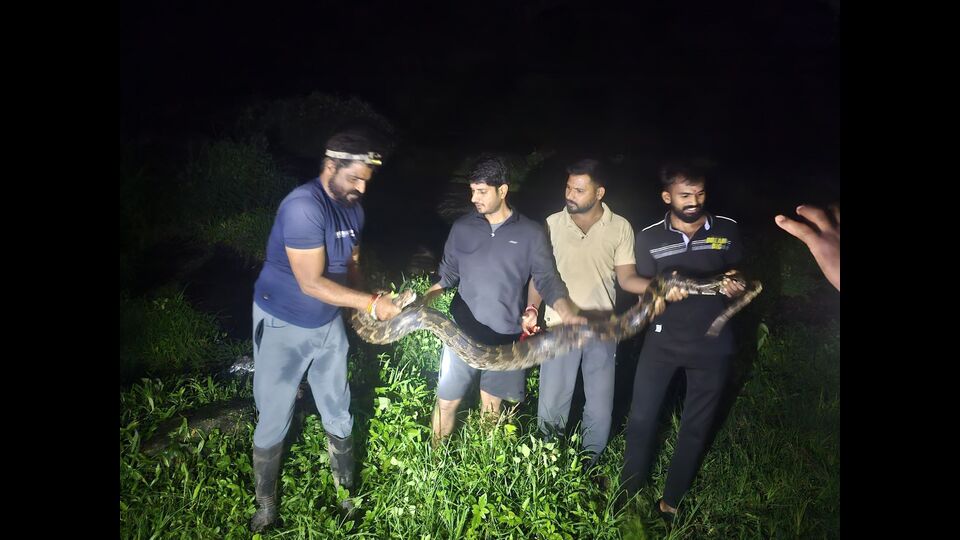
The group attributes this spike to water entering natural habitats and ongoing construction on agricultural land, both of which are forcing snakes into/closer to human settlements.
Pune’s diverse geography—ranging from forests and agricultural fields to urban zones—makes it a suitable habitat for a wide variety of snakes, with both venomous and non-venomous species commonly spotted. These include the ‘big four’ venomous snake species—Indian cobra, Russell’s viper, Common krait, and saw-scaled viper—as well as non-venomous ones like Rat snakes and Kukri snakes. Typically, snake sightings peak between October and December every year during the mating season. This year however, the number of sightings has risen unusually early with the early onset of the monsoon triggering the movement of snakes. Alongside Maval, other areas including Mulshi, Bhor, Velhe and the suburban areas of Pune and Pimpri-Chinchwad, too, have reported a greater number of snake rescues. RESQ Charitable Trust, the Pune forest department’s NGO partner, received as many as 56 rescue calls, each, in May and June this year (from the district). The NGO said that the number is within seasonal limits but acknowledged that the lack of a centralised data system often leads to discrepancies in total numbers. Pune city, too, has seen a rise in the number of snake sightings. As per the Pune fire department data, there were 118 snake-related calls in 2021; 117 in 2022; 115 in 2023; 103 in 2024; and 53 in the first half of 2025 alone.
Forest officials say that the absence of consolidated tracking remains a challenge. “We get snake-related calls almost daily but most are routed to NGOs or local rescuers, making it difficult to maintain complete records,” said Manoj Barbole, range forest officer, Pune. Meanwhile, snake bites remain a serious concern. Despite being protected under the Wildlife Protection Act, 1972, snakes are not covered under the government’s wildlife attack compensation scheme. According to officials, this is because snake bites are typically categorised as accidents. Aditya Paranjape, honorary wildlife warden, said discussions are underway but compensation rules remain unchanged. He advised citizens, especially those in high-risk zones, to consider insurance coverage. As snake activity is expected to continue during the rainy season, experts urge the public to stay cautious and contact trained rescuers in case of sightings, rather than attempting to handle the reptiles themselves.


