
 E-Paper



Startup Mantra: Empowering small businesses thrive in digital age
The vision of husband-wife co-founders of BharatGo is to promote local entrepreneurship, reduce economic disparities, and create a more equitable society


Pune: In a country with a vibrant entrepreneurial spirit, it is the grassroots enterprises that often bear the weight of economic inequality. Struggling to access a broader customer base and lacking the technological prowess to compete in the digital age, these small-scale businesses find themselves caught in the urban-rural divide. BharatGo, a tech-enabled social innovation startup dedicated to empowering artisans, women self-help groups, and small businesses in tier 2/3 cities in India, is determined to rewrite this narrative.

Founded by Pravin Adik and Jayashri Patil in 2022, BharatGo is a SaaS DIY (Software-as-a-Service do it yourself) no-code platform, offering a lifeline to these local entrepreneurs with its user-friendly online store creation platform. Rooted in a vision of promoting local entrepreneurship, reducing economic disparities, and creating a more equitable society, the startup is breathing new life into the age-old traditions and crafts that make India truly unique. Breaking barriers and overcoming geographical limitations, the platform is extending the reach of these local businesses far beyond their physical borders, connecting them to customers from every corner of the country.
In the beginning…
Pravin Adik, who hails from Chhatrapati Sambhajinagar, is a BE computer science engineering graduate with MBA in marketing and operations. An experienced management professional, Pravin comes with 18 years of experience in retail industry. Before starting BharatGo, Pravin was heading Tesco’s online operations for food and non-food for the UK, CE (Central Europe), and Asia. Pravin’s wife Jayashri Patil did her BE in electronics and communication, has experience in retail product mapping and connects well with artisans and women entrepreneurs.
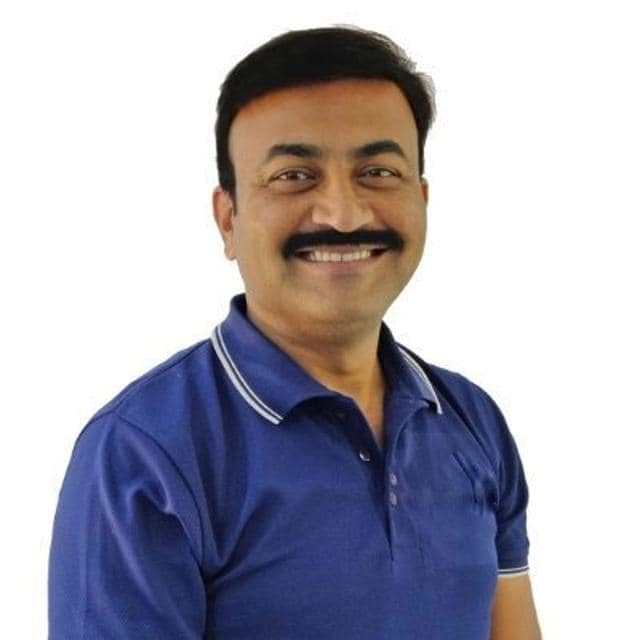
Pravin said, “After my graduation, I decided to relocate to Pune for job. I always wanted to become an entrepreneur, but did not have the risk appetite to start any venture immediately. During my school and college days I did odd jobs. While pursuing MBA too, I was doing a field sales job. After the MBA, incidentally I got placed in a company at Aurangabad and during my second job I got to know about the retail sector. I learnt about market and industry research. Thereafter, I relocated to Hyderabad with a company where we created consumer databases and did research, including historical data and forecast, on more than 50 countries. My third job in Bengaluru, where I was heading the online vertical for food and non-food segment for the UK, Central Europe, and Asia region for seven years, helped me gain hold on the retail sector. I had covered almost all aspects of retail, including business research, market and industry research, consulting, creating forecasts, business models, backend operations, etc.”
Learning from failures
Pravin said, “I returned to Pune city in 2018 and decided to start my own business. The city had changed a lot in two decades and hence I decided to experience it before starting any project. In 2019, I quit my job and incorporated a company ‘Snackro’ in February 2020. The idea was to provide a launchpad platform for local food stalls, carts, eateries which are famous, but cannot scale up or market themselves pan-India. It was for selective street vendors, but before the operations could begin, Covid-19 pandemic struck and we had to halt. During the initial three-month lockdown period, food sectors was the worst affected and it was difficult for new players like us to survive.”
“During lockdown, another business opportunity clicked. Schools were conducted online, but parents were required to collect the books from the vendor stall from school premises. Since parents feared going out, I offered home delivery of school books to them. We created a webpage on Snackro itself for parents to place their orders. We got five schools and parents using that page and completed 450 orders in a few days. However, we knew that this not a sustainable business. Interestingly, some of the parents started enquiring about similar services for the stores they were operating but for long-distance delivery. I realised this was an unsolved problem where people need specific things from specific locations or stores and they are ready to pay an extra amount for it,” he said.
Kwyk
“We decided to do away with the Snackro legacy and launched another brand ‘Kwyk’ for which we did collaborations with iconic restaurants for delivering their products across Pune region, unlike other platforms which serviced restricted regions. We created a minimum viable product (MVP) platform and added curated restaurant delivery service for only 150 restaurants. Convenience was the benefit for customers at very little extra cost. In a few months, we completed 2,700 orders with a GMV (gross merchandise value) of around ₹37 lakh.
“Soon we realised there were problems with customer acquisition. We were coming in direct competition with big players although we had a differentiating factor like selective and long-distance deliveries. Another challenge was that customers did not order regularly over long-distance outlets. Customers’ demand was to include nearby outlets in their areas, but with that we would have lost our USP. While we were trying to find a way out, we came across other small businesses like kirana stores, medical shops, local flea markets, artisans, etc which were neglected by other platforms. The Indian government also has several initiatives for women empowerment and skill development, lots of non-government organisations work, but the impact and empowerment of small businesses is not much visible,” said Pravin.
Megapod Techworks incorporation
Since all platforms were targeting the top of pyramid, Pravin and Jayashri focussed on its bottom part comprising small businesses, artisans, women self-help groups, etc. Pravin said, “The idea of BharatGo was born from my unwavering belief in the potential of our local artisans and small businesses. I dream of empowering them to thrive in the digital era and showcase their incredible talent to the world.”
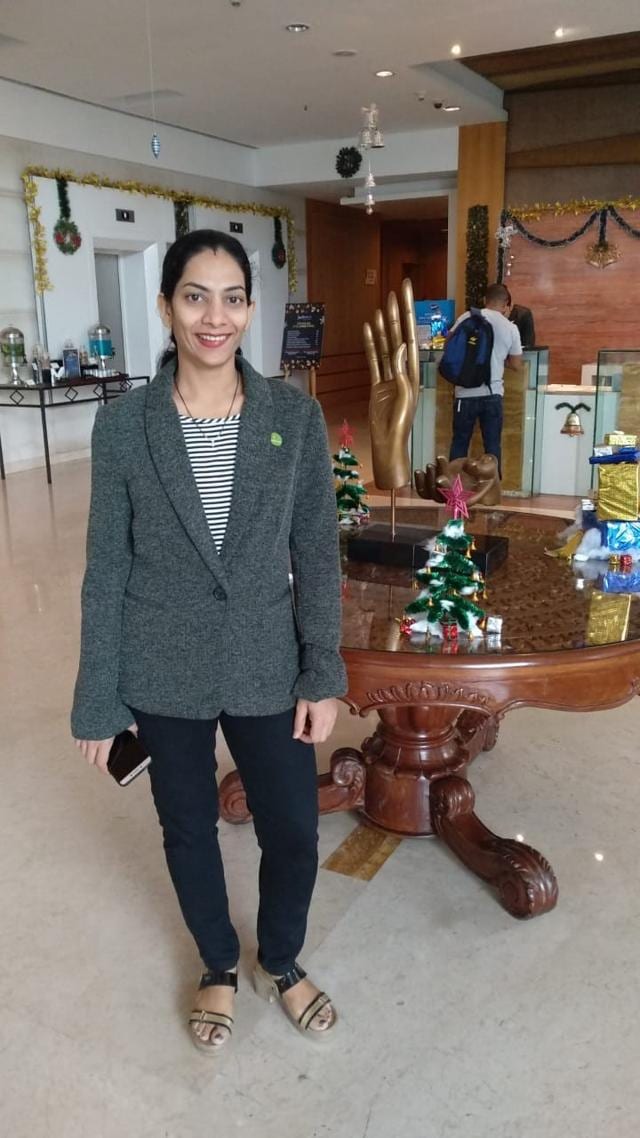
Jayashri said, “Our primary research showed these groups do not understand technology. They have smartphones but do not know how to use it for growing their businesses. Other online platform solutions were too expensive and complex for them. Our vision was bigger and especially with the learnings from the earlier failures, we knew what are the exact problems in the market and what kind of right and scalable solutions are required to solve them. In September 2022, we incorporated another company Megapod Techworks Private Limited.”
“Initially we decided to keep it simple and focus on tier 2, 3 regions across the country. Since we were helping this ‘Bharat’ market to ‘Go’ digital we finalised the brand name as ‘BharatGo,” Jayashri said.
BharatGo
Pravin and Jayashri’s entrepreneurial journey went smooth after they got the Startup India Seed Fund of ₹15 lakh from AIC-IIIT Kottayam.
Pravin said, “Some D2C (direct-to-consumer) brands or startups are exploiting artisans instead of empowering them. They buy products at a cheap rate from the artisans and sell it expensive on their platform. We want to remove such middlepersons and provide workshops of skill development and digital capabilities for artisans and provide support system to them. For this purpose, we created the SaaS DIY no-code platform of BharatGo. We want to make it so simple that any individual with zero technological knowledge should easily create and manage their own online store. BharatGo stands out from its competitors by catering to small and medium-sized businesses with a user-friendly, no-code platform, true omni-channel capabilities, and affordable pricing. Shopify, DotPe, and Dukaan may have different strengths, but BharatGo’s focus on empowering smaller businesses gives it a distinct competitive edge.”
“By omnichannel we mean that we provide a direct-to-order website, QR code, phone call order automation, aggregator marketplace for free listing to merchants and Open Network for Digital Commerce (ONDC) integration. We want to be early adopters of ONDC and are in process of integrating BharatGo with ONDC. This integration will give artisans access to huge customer base across India. The D2C and ONDC combinations makes us a brand which provides ‘unified omnichannel commerce platform.’ We are for-profit business, but we call ourselves a tech-enabled social innovation startup,” he said.
Next move
Sharing his vision and plans for BharatGo, Pravin said, “Each artisan and small business owner is an inspiration, and their success fuels our passion. My vision for BharatGo extends beyond mere transactions; it is about creating meaningful connections, preserving our rich cultural heritage, and fostering sustainable growth in every nook and corner of our incredible nation. Our mission is to promote local entrepreneurship, reduce economic inequality, and create a more equitable society. By providing an easy-to-use online store creation platform, we are fostering digital inclusion and bridging the urban-rural divide in the e-commerce landscape. As a fast-growing company, we are committed to driving positive impact in the Bharat market and revolutionising the way small businesses thrive in the digital age. We are collaborating with social groups, NGOs working with women, skill development, artisan related associations, small businesses related associations, etc. We are a team of 10 members and hiring extensively. In the next three years, our goal is onboarding 10 lakh merchants and achieve an annual recurring revenue of ₹350 crore.”


