
 E-Paper



Startup Mantra: Going green for a better tomorrow
The Green Concept is developing sustainable solutions for industry, private land owners and govt institutions

 Prefer HTon Google


When Girish Kulkarni, IIT Madras, PhD IISER Pune post-doctorate in mathematics and Machine Learning (ML); Rohan Shetti, environmental science from Kingston, London/ Master and PhD Greifswald University Germany, and Aboli Kulkarni, PhD from Agharkar University vegetation ecology and diversity post-doctoral from Max Plank institute in Germany in plant breeding; all scientists by training were living in Germany chasing their doctoral degrees in ecology, their subject became so fascinating that the three of them decided that it needed more than just plain science and theses.
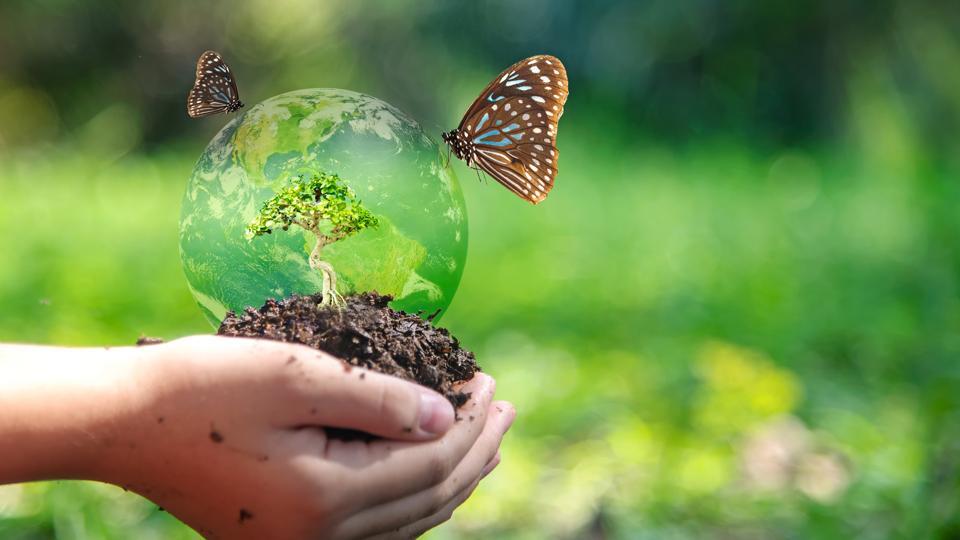
They came back to India (Girish and Aboli permanently while Rohan zips between Berlin and Pune) and started The Green Concept, a startup that helps people understand how much carbon their lives are emitting and how much is being sequestered by Mother Nature.
How it started
Set up early this year, The Green Concept has developed an app and a dashboard that can help the government, large corporations, housing societies even individuals know how much carbon they are discharging into the atmosphere and how much of that carbon dioxide they are sequestering.
Says Rohan, “ As of now there is no mechanism that can give you an idea of how much carbon we are discharging and how much is sequestered.”
When India became a signatory to the Paris Accord this matter became vital. Says Girish, “There is no available data for India. The carbon market globally is at $644.8 billion this year and will grow by 39.4% by 2030. While India has committed to reduce emissions by 50% of its carbon emissions by 2030 and become a carbon-neutral country by 2070 the task has just begun. There are reports that the Government of India will set up the carbon market by 2026, it is imperative that corporations, institutes, government bodies know where they stand in this new scenario.”
Companies will have to start counting not just their rupees but also their carbon units. Says Rohan, “But how will you do it? Recently, we read a news item where students were sent to study the value of trees on Vetal Tekdi and what would be the cost if a road was built that would result in the destruction of 18,000+ trees. Economics and the environment are closely linked. Or the paper industry that plants Eucalyptus trees to claim credits. Eucalyptus trees are very damaging to the biodiversity of the land. The British converted the Niligiri forest into an Eucalyptus plantation but this tree soaks up all the water and destroys all other plants. It’s a disaster”.
“So not only do we have to start with calculating our emissions but also know how much carbon our trees are capturing. We have built a solution that automates this whole process and provides you with a dashboard that will give you details of the trees and carbon sequestered,” he said.
Developing an app
Since the three friends all have doctorates in ecology or math and machine learning, the next step was to develop a tool that could help everyone. Says Rohan, “Since science is useless until its benefits are realised by all, Girish built an app and a dashboard that would make it easy for even a researcher studying 10 trees to someone with a large forest.”
The app and dashboard are the “first of its kind” in India. No one here has built a solution like ours, says Rohan. “Our app provides quick data entry, accurate species-specific calculations and a user-friendly visualisation. We have already done this for local industries and resorts with forest lands that have huge parcels of land that we worked on to calculate how much carbon their trees soak up.”
Business model
This would have become a chicken and egg story given that there are no parameters or guidelines set out by the government for carbon emissions and sequestering. However, with the announcement due in the next year and a half, corporate bodies have begun to show an interest. Says Rohan, “Some companies are proactive about this and we have already received interest from companies in different sectors such as automobile or even large landholders.”
“While we plan to use our product as a SaaS, the charges will depend on the company, size of land area and user accesses.”
As will the government’s guidelines. While sectors like power, cement, and chemicals spew large amounts of carbon, services, and agriculture are low emitters comparatively the numbers are expected to match their production. “Every tree is a national asset and with carbon credits, our economy is going to get stapled to the environment.”
Money matters
“Up until now the three co-founders have used their own funds and bootstrapped their business with ₹2 lakh that we spent on the tech to develop our app. While it is still early days we will need to raise funds eventually to the tune of ₹2 crore. This we will need to build a bigger team, for further development of the tech and for marketing,” says Girish.
The future
Says Girish, “As of now we are focusing on the Indian carbon market that currently as per estimates is about $ 1.2 Billion. Once the government lays down the rules and regulations for the carbon market, we will know the actual figures. We are getting ready to capture 30-40% of the domestic market, even though our app can be used globally.”
As Aboli who is also a Confederation of Indian Industry (CII) certified ecologist, “The environment and economy are always in conflict. Do people want to get rid of trees in the name of development or stop development work to conserve trees? Ideally, we would like to have both. We see the opportunity where we can apply our knowledge so we won’t have to sacrifice development and also best conserve our trees.” Amen to that.


