
 E-Paper



Startup Mantra: Improving access to healthcare
DK Health Access Foundation, a for-profit social enterprise, aims to improve healthcare access in India by leveraging technology and providing information about government healthcare schemes to beneficiaries. The organization has developed a mobile app that allows hospitals to enter information about eligible schemes, while volunteers help beneficiaries navigate the system. The foundation is currently focusing on the ophthalmology domain and plans to onboard 1,000 eye hospitals across India. They aim to reach 30 lakh (3 million) beneficiaries by 2024-25 and are integrating artificial intelligence into their technology platform to facilitate operations.

 Prefer HTon Google


Expenditure of less than 2 per cent of GDP on healthcare, shortage of healthcare personnel in rural areas, poor public health infrastructure, and lack of awareness among citizens about government schemes are some of the barriers to providing ‘healthcare access to all’ in our country.
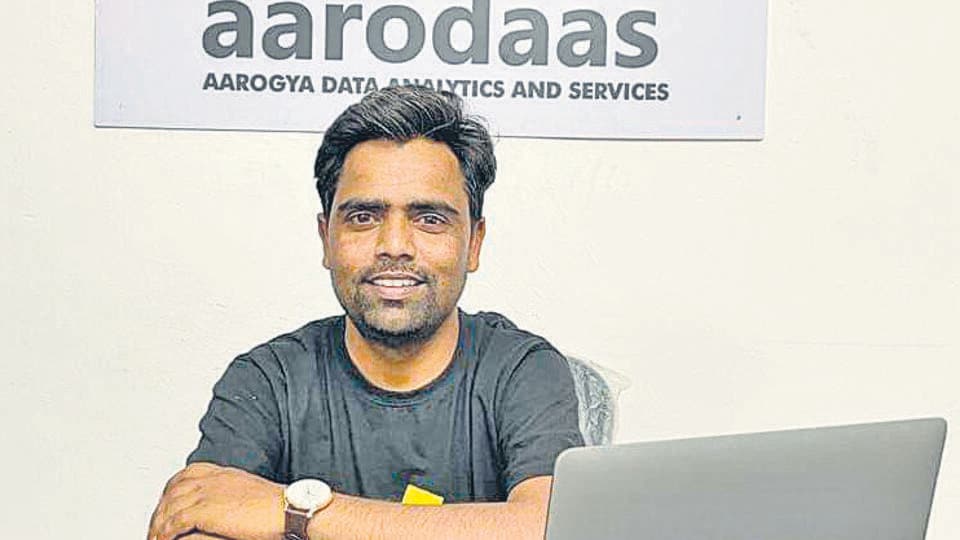
A large portion of government funds are lying unutilised while beneficiaries are unable to identify schemes and hospitals to avail of the benefit. When social entrepreneur Dayanand Patil witnessed this contrast, he decided to solve the problem in 2020 by establishing a technology-enabled and for-profit social enterprise DK Health Access Foundation.
In the beginning…
Hailing from a small village in Dharashiv and a farmer family, Dayanand did his graduation in microbiology from Latur and later got placed in the pharmaceutical industry through a campus interview. While working, he got exposure to product management and international business, with a special focus on South Asia.
Says Dayanand, “While in the job, we were focussed on the private sector, but my rural background, prompted me to do something for the underprivileged citizens. Prior to this, I had no experience working with the public healthcare systems in India or elsewhere. I wanted to utilise my knowledge and experience for the benefit of society and earn something out of it. I never wanted to do only social work, but wanted to balance things.”
Challenges
When Dayanand started his social venture, he came across various challenges and facts. He realised that although the government fund allocation is less than compared to other developed nations, whatever amounts were being released were also not properly utilised to benefit the end users. There were systemic challenges as well as attitudinal issues that needed to be addressed.
Dayanand adds, “There is no point blaming the system or government. We need to think about how to leverage the available funds with the help of technology. Government funds reach the beneficiaries through government or charitable hospitals. Usually, these beneficiaries are not tech-savvy or active on social media. In the case of private hospitals, their beneficiaries can be reached through social media marketing and lead generation campaigns.”
“Hence, when we thought of a platform we came up with the idea of a mobile app with hospitals as our target group. We appointed volunteers at the community level and started feeding information received from hospitals to our app. We got a good response, but in the process, we realised that we would turn into a grassroots NGO. If we wanted to scale up on a pan-India level, this approach was not feasible,” he said.
“After identifying the downsides, we decided to handle only the back end of the platform. Hospitals would enter on their own the relevant information about eligible schemes for beneficiaries. Meanwhile, we also did a pilot project with the Jalna district health department. We gave the front-end access of our app to the primary health centre medical officer to allow them to enter information about the citizens who need healthcare facilities,” he said.
“The OPD patients’ contact details were fed into the app and they were matched with the information entered by hospitals regarding eligible schemes. This lead generation was successful, but soon we realised that this would be heavily dependent on individuals and external parties, and would not be scalable in future. So, we pivoted our model and introduced a hybrid model based on volunteers,” said Dayanand.
Dropout
Working on the ground meant dealing with certain challenges, especially attitudinal issues. While volunteers and hospitals were reaching out to beneficiaries, they would not turn out at the last moment.
Disclosing the reasons, Dayanand stated, “We observed that out of the total diagnosed patients, only about 50 per cent would turn out for the treatment at the scheduled day, time, and location. Most of these beneficiaries knew that they were eligible for a public healthcare scheme, but were unsure about which hospital would provide them the facility. When we enquired, we got to know that most beneficiaries were sceptical, scared or had some issues in family, or social functions to attend, etc. Women beneficiaries had other concerns like menstrual cycle, etc. They were willing to get the treatment, but at their own convenient time and place. The older system could never track these ‘dropouts’ but our platform could trace them. It helped us reach them during follow-ups and provide quality healthcare service to them.”
“Some hospitals providing certain public healthcare schemes may opt out of the scheme without informing the beneficiaries. When the beneficiaries would reach the hospital, they would be told that the facility is not available. This eroded the trust in public health schemes as well as the doctors and hospitals. With our own platform, since hospitals were entering information on their own, volunteers, social workers and beneficiaries would get real-time information and decide which hospital to approach,” said Dayanand.
Hybrid model
“Hospitals were entering information related to eligible schemes at their backend of the app. Since the beneficiaries were not tech-savvy we could not ask them to enter their details. So, we appointed volunteers who would access the front-end and interact with the beneficiaries and accordingly enter the data viz name, location and disease or healthcare scheme and facility needed,” he said.
“Besides, all private and charitable hospitals also organise health camps on a regular basis and the government has Asha workers deployed on the ground. These workers would collect region-wise data or the data collected during the health camp would be then fed into the app. Hospitals would receive the beneficiary information i.e., the lead along with the volunteer’s name. Further follow-up, appointment confirmation, lead management and closure became easier through our platform,” he said.
Scaling up
Gathering wisdom from his on-field experience, Dayanand decided to focus on ophthalmology while scaling up his operations. Explaining this strategy, Dayanand says, “With varied experiences on field, we realised that it is not possible to scale up operations for the entire healthcare sector. When we started looking for a sector to narrow down, we found out that the National Programme for Control of Blindness and Visual Impairment (NPCB&VI) has been implemented for four decades. There are around 3,000 eye hospitals in the country which are funded under this programme. These hospitals further have their vision centres and medical colleges ecosystem. Despite this, we can easily find patients who are diagnosed but awaiting simple surgeries like cataracts. Hence, we decided to narrow down on ophthalmology domain. We have set a target of onboarding 1,000 eye hospitals from all states in the country.”
“Of the 3,000 hospitals, there are about 1,700 charitable hospitals. The central and state government provides funds for these hospitals. Besides, funds are also allocated through insurance schemes at the state and central level, for example, MPJAY and Ayushman Bharat respectively. The district administration or local bodies like Pune Municipal Corporation also have their own public healthcare schemes and budget allocation. Charitable hospitals also receive funding from private institutions and individuals. The challenge is that some hospitals may opt out of a certain scheme or the scheme eligibility and details change over time. We need a third party to make these changes in real-time and validate details. Here the volunteer plays a critical role,” said Dayanand.
Next moves
Dayanand and his team are eyeing a 10x growth every year. Dayanand adds, “We are currently onboarding hospitals from Maharashtra, Delhi, and Karnataka. With only 100 hospitals we are aiming to reach up to 30 lakh beneficiaries in FY 2024-25. We are also deploying our technology team, for artificial intelligence (AI) integration, while we scale up massively.”
“We are now integrating the front-end application with onboarded hospitals which will ease the operations. Hospitals will be in a better position to arrange and schedule their health check-up camps and workforce, while the government will also get data-backed insights to drive its policy decisions,” he said.


