
 E-Paper



Stranded ST pax allowed access to alternative bus service sans additional charge
Despite clear orders from the MSRTC, complaints have surfaced about ordinary ST bus passengers being denied entry into premium bus services such as Shiv Shahi, e-Shivai and Shivneri or being asked to pay the difference

 Prefer HTon Google


The Maharashtra State Road Transport Corporation (MSRTC) has made it clear that if a ‘Lal Pari’ or ordinary state transport (ST) bus breaks down during a journey, passengers are entitled to continue their travel in Shiv Shahi, e-Shivai, or Shivneri buses coming from behind on the same route, without any additional charge. Transport minister Pratap Sarnaik on Tuesday issued strict instructions that if such stranded passengers are denied entry into alternative buses or asked to pay the fare difference for the onward journey, stringent action will be taken against the concerned drivers and conductors.
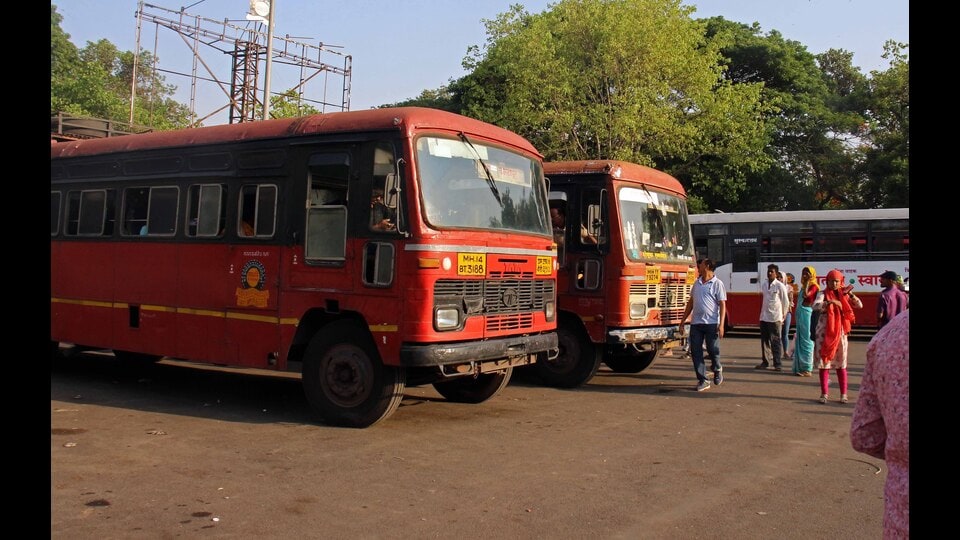
The MSRTC rules mandate that whenever any ST bus (ordinary, semi-luxury, luxury or air-conditioned) breaks down on a route due to technical reasons, the stranded passengers be immediately provided an alternative bus service coming from behind on the same route, free of cost. The instructions specifically emphasise the protection of passengers travelling by ordinary ‘Lal Pari’ buses, placing the responsibility on conductors to ensure that suitable alternative arrangements are made as per the passengers’ needs.
Despite clear orders from the MSRTC, complaints have surfaced about ordinary ST bus passengers being denied entry into premium bus services such as Shiv Shahi, e-Shivai and Shivneri or being asked to pay the difference. These practices have led to growing dissatisfaction among passengers and raised concerns over the credibility of the state transport service.
Sarnaik said, “The MSRTC has received a large number of complaints regarding service disruptions, delays, and the subsequent mistreatment of passengers. Such incidents are damaging public trust in the state transport system. When a bus breaks down due to technical reasons, arranging immediate alternative transport is just as important as operating the service itself.” He warned that neglecting this responsibility or harassing passengers would invite strict disciplinary action against drivers and conductors.
“The MSRTC has received numerous complaints about service disruptions, delays, and the inhumane treatment meted out to passengers thereafter. Such incidents seriously undermine public confidence in the state transport system. If a bus stops due to technical reasons, providing an immediate alternative service is not optional, it is a core responsibility of the driver and conductor. If this responsibility is ignored, or if passengers are harassed or forced to pay the fare difference, strict disciplinary action must be taken against those concerned,” Sarnaik said.
The MSRTC currently operates several old buses, including those nearing or exceeding their service life, especially on routes in Marathwada and parts of western Maharashtra such as Solapur, Dharashiv, Beed, Satara, Kolhapur and Sangli. Similar conditions exist in the Nashik, Sangamner and Akola regions. Buses running on rural and interior roads are more prone to technical failures, leading to frequent breakdowns. The burden of these failures is being borne by ordinary passengers, who have increasingly expressed dissatisfaction with MSRTC services.
The corporation operates a mix of ordinary, semi-luxury, luxury and air-conditioned buses, each with different fare structures. Premium services like Shiv Shahi, e-Shivai and Shivneri charge ₹100 to ₹130 more than ordinary Lal Pari buses. However, on routes such as Pune–Solapur, Mumbai-Kolhapur, some air-conditioned buses operate without conductors. Citing the lack of ticketing arrangements, drivers have reportedly denied entry to stranded passengers even when seats are available.
Mitali Kishane, a stranded passenger travelling on the Solapur route, said, “When our Lal Pari bus broke down midway, we were already delayed by over an hour. Even though a Shiv Shahi bus came from behind with empty seats, we were told to pay extra or get down. Many of us were daily wage workers and students for whom it felt unfair and humiliating. We just want a smooth journey, not arguments after a breakdown.”


