
 E-Paper



Sutradhara’s Tales: A Peshwai thaat wedding, when city was most hospitable!
This was a truly grand wedding where Pune was dressed in its best attire and was most hospitable self! (As against the frequent taunts any Punekars receives for their perceived poor hospitality skills!)


In Pune’s culture, Peshwai Bet (Peshwai feast) is a marker of how wonderful the feasts and festivities are arranged. These markers have been set by the grandest wedding of Sawai Madhavrao that took place in the year 1783.
A wedding in the family is a moment to celebrate and rejoice! It also is a testament to the stature of the family in society and calls for elaborate arrangements on all levels. One wedding, the Pune of Peshwa period won’t forget, was that of Sawai Madhavrao Peshwa!
After the black clouds of Narayanrao’s unfortunate death and the upheaval of Maratha state, it took a while for the young Peshwa and his trusted minister to regain the hold on state affairs. The crucial treaty of Salbai with the British gave the much-needed peace to undertake royal family activities.
The threading ceremony of Sawai Madhavrao Peshwa was held in May 1769. Within four years, the royal wedding of Sawai Madhavrao Peshwa was planned to be held in 1783. The wedding was supposed to take place over a number of days and it would be a befitting celebration for a young Peshwa of powerful Maratha Empire.
Nana Phadnis was at the helm of planning and executing the Royal wedding festivities, left no stone unturned to make it successful. The document ranging 22 pages which outlines the entire planning of this wedding is a fascinating read and offers a fantastic glimpse into social life of Peshwai and systematic thinking of Nana Phadnis.
The wedding invitations were to be sent to various dignitaries including royals such as Chhatrapati Bhosales, Nawab and Holkars of Indore. All the relatives, rich nobles and Brahmins were to be invited to wedding ceremonies and entertainments events were arranged. They were invited in person, and their arrangements were made as per their status and position. The animals brought by the guests were well looked after and were fed with good quality fodder. The letters arriving for the guests were duly handed over.
Palanquins were arranged for gests and kept ready at all the times.
They were offered “abhyanga snan” (special bath) with fragrant oils, milk, musk and saffron, etc. and, were welcomed with Rangolis & lamps. Sugar was offered to clean hands and cloves were provided as toothpicks.
Seating arrangement was on wooden low stools, (manchakas) which were thoroughly cleaned before and after the use and arranged in proper order and according to size. Based on how esteemed the dignitary is, the stools were decorated with silver floral motifs and had backrest. The Pangat-seatings were decorated with neatly drawn Rangolis in prescribed colour schemes.
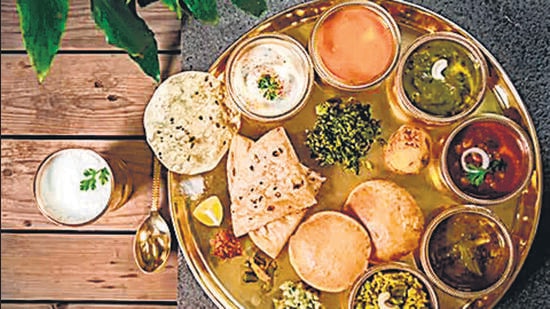
The food arrangement was most elaborate and hand description and prescriptions for each feast item. It had multiple types of rice, dals, sambars, salads, chutneys, vegetables, sweet dishes, pickles, curries. Every item was made with choicest of ingredients. There were serving instructions as well which mentions how extra helpings were to be served. Banana leaves and snack items were freshly procured. A detailed account of rations brought for various places was recorded. The Snacks served between meals, too had, an elaborate menu. The chefs were chosen with precision. Dietary and ritualistic preferences of guest were kept in mind and provided for.
The variety in the menu was maintained, what’s more, the colour palates of dishes were complementary. The dishes were rich in milk and milk products and reflected Maharashtrian menu to the core. All the general public were to be served with equal attention and care.
The betal leaves- refreshments (Pan- vida) were made and served with best ingredients, even the recipe of making them with quantities were prescribed to the last detail. The ones made for dignitaries and close relatives had gold and silver used. The lime required for Pan vida was procured from Revdanda, Paner and Dhodpe. There were special instructions not to over produce them and avoid wastage by asking the guests’ requirement in advance.
The fancy and valuable items such as Attar- fragrances were procured in best and medium quality daily form the market and kept safe. They were of course kept in front of guests and were not to be applied directly. The watchful Nana ensured that all the riches and refined choices of Peshwas were reflected in the execution and unnecessary wastage too was avoided.
Illumination by lamps and diyas were central to the decoration of all the halls, offices, wedding venues, get- together spaces, entertainment programmes and quarters. Lamps were to be of same size, unbroken, kept in rows and symmetries. They should be placed at safe distance from drapes, clothes and furniture. Exquisitely carved lamps by skilled Hindustani craftsman and that of foreign origins were procured a day before the main event. Special care was to be taken while illuminating the stage so that it doesn’t hinder the performance and cause injury to the performer.
Guests were to be escorted to their residents through servants carrying oil torches. The fuel was to be kept ready at all times. Again, the arrangement was as per designation of the guests and there were clear instructions regarding wastage control.
Decorative fireworks were arranged and manufactured by skilled workers, craftsman and should emit minimal smoke. There were no fireworks during procession and special safety measures were taken for guests, women and children. Decorative colourful lanterns, paper lanterns, artificial flowers, illuminated fountains; flowering plants were used and placed appropriately for the decoration.
The return gifts were duly arranged and presented to the guests at appropriate timings.. The decorations of procession, paraphernalia carried and the pandals, shamiyanas were paid keen attention to. The entertainment was provided through skilled performers invited from various places and performances were to be of high taste. Tiger combat show, dancing Blackbuck and various Shikarkhana animals and birds were exhibited to showcase their skills and entertain the guests.
The entire city was cleaned through Kotwal of the city- Ghashiram and no dumping was allowed. The traffic jams and vehicle people flow was to be supervised to avoid accidents. The smooth operation of all the daily services of the city as well as special requirement during wedding ceremony days was ensured through city administration.
This was a truly grand wedding where Pune was dressed in its best attire and was most hospitable self! (As against the frequent taunts any Punekars receives for their perceived poor hospitality skills!)
Saili Palande-Datar is an indologist, environmentalist, history researcher and farmer. She can be reached @ sailikdatar@gmail.com


