
 E-Paper



Taste of Life: Deadly plague gets ‘foreign’ booze binge going in British India
While the economy took a huge blow due to the plague, it had a rather amusing effect on the sales of foreign liquor, especially brandy. In 1897, Poona took 72,000 gallons of brandy and whisky as contrasted with a previous average of 12,000


In September 1896, the first case of the bubonic plague was detected in Bombay. It rapidly spread to Poona and other parts of the Presidency and killed thousands. The effects of this calamity were felt for many decades, as the plague kept visiting the Presidency every year until the 1930s.
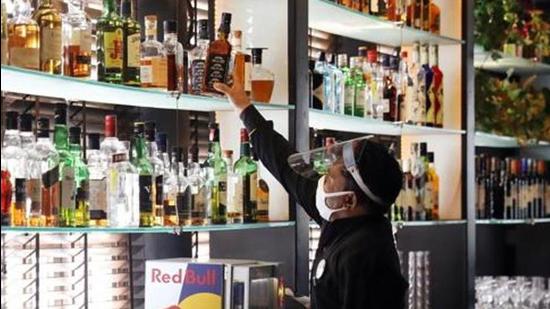
While the economy took a huge blow due to the plague, it had a rather amusing effect on the sales of foreign liquor, especially brandy. In 1897, Poona took 72,000 gallons of brandy and whisky as contrasted with a previous average of 12,000. The same phenomenon was repeated for the next four years, with the consumption of brandy increasing by almost 5% every year. The increase was steeper in the mofussil.
When the plague struck the Presidency, a rumour gained ground that consuming brandy cured the disease. It is not known how the rumour started, but records with the Excise Department show that many teetotalers started drinking brandy in a belief that the disease would not kill them. The ravages of the plague in the Deccan and other parts of the mofussil in those years greatly stimulated the drinking of foreign spirit among the up-country natives.
There was an increase in drinking among “higher caste” Hindus who adopted the “civilised” liquor of the Europeans in preference to mhowra or toddy spirit. It further helped that “foreign spirits” left little or no smell or taste in the mouth; this was no inconsiderable advantage when a man was ashamed that his friends or family would know that he drank.
The significant increase in European population in Bombay Presidency between 1897 and 1908 was another factor that led to an increase in the consumption of foreign liquor.
Initially, the Government was happy and intrigued by the jump in the sales of foreign liquor, especially brandy. Once it realised that a rumour was behind the phenomenon, it started monitoring the situation closely. Around 1901, the officials in the Excise Department found that most often there was not one drop of pure brandy in the stuff called “brandy”. The importers, retailers, and bottlers were selling diluted rectified spirit after adding flavours and essences.
While brandy was ordinarily understood to be liquor manufactured from the juice of the grape in France, much of the commercially distilled cheap foreign spirit sold in Bombay and Poona markets as brandy and rum, was principally distilled in Hamburg in Germany and Spain, from the feculae of potatoes, and diluted in Bombay or Poona, into which an essence had been put. Occasionally some other bases, such as beets, carrots, Jerusalem artichokes, saw-dust, and cereals were also used. Sometimes the brandies which came from Germany would contain rectified spirit and were flavoured by brandies containing flavours. These were often passed as brandies from France.
The practice had been in Bombay and Poona to label as “Rum” the stuff that was made locally from rectified spirit and water. They diluted the spirit, added burnt sugar, and called it rum. Tap water was used for dilution.
Messrs Treacher and Co, Cursethee and Sons, Messrs Phillips and Co in Poona got their spirits in bulk and bottled the same. The first two mentioned firms did not colour or compound the same; they only added ordinary water to reduce the strength. Messrs. Phillips and Co was the only firm that added distilled water to reduce the strength of the spirits brought by them.
Most of the labels were prepared in Bombay and put on the bottles according to their own fancy by the importers. Frequently, two different labels, e.g., “Superior Old Brandy” and “Fine Pale Brandy” were placed on bottles that had been filled with the spirit from one and the same consignment.
Often, “Fine Pale Brandy” did not have a drop of real brandy in it. “Superior Old Brandy” was likely to be closer in flavour and alcohol content to the unadulterated brandy, though it was not distilled in France.
The same quality of potato or other patent-still spirit would appear as “Vieux Cognac, Vinne Galle and Co” (with a great display of vine leaves and grapes), as “Imperial brandy, superior quality, four stars” with a portrait of the late Queen, or under a score of other equally fictitious and misleading labels.The patent-still whiskies of Glasgow were similarly described as “Scotch Whisky, Genuine Mountain Dew, finest quality” flanked with Highlanders, or “Fine Old vatted delicious whisky”, or “Finest old Highway whisky” with the names of firms below which were probably in every case fictitious. “Charles Pauline” was a popular brand, and no such firm existed in Europe.
Foreign spirit was sold at a trifle over the price of the same quantity of mhowra spirit. The ordinary price for a quart bottle of cheap foreign spirit in Poona was one rupee-two annas in the year 1900, but in some shops, it was sold as low as Re 1, i.e. the price of a bottle of country spirit.
The natives did not care for invented brand names. People who bought cheap brandies did not understand the difference between brandy and rum. They only required an ardent spirit to drink. They didn’t buy it for taste or flavour; they initially bought it as a cure for the plague, and later, out of addiction.
To put a stop to the malpractices, a “Foreign Liquor Committee” was set up in 1907 in the Bombay Presidency of which AC Logan, ICS, was the chairman. HEE Procter, Chunilal Setalwad, Arthur Powell, Kavasji Edulji Dadachanji were the members. Exporters, excise inspectors, officers, shopkeepers, bottlers, importers, and members of the Temperance societies testified before the committee.
The committee prohibited the bottling of foreign spirits or fermented liquors, or rectifying or compounding foreign spirits, and ruled that every receptacle containing foreign liquor must be conspicuously labelled showing clearly the country of manufacture, the name of the bottler, and the place of bottling.
Interestingly, the consumption of foreign liquors among the natives declined after 1910. It was the time when the fear of plague had subsided and leaders like Tilak and Dr Mann had together strengthened their fight against alcohol.
That story is for some other time.


