
 E-Paper



Taste of Life: How eel recipes became part of menu during Christmas season
Eel at Christmas was eaten all over Europe in the Middle Ages. In Spain, people used to eat them around the Christmas season. Eel was cooked in numerous ways in Italy, depending on the region. It was an important dish among the seven fish dishes served on Christmas Eve as the pranza di Natale

 Prefer HTon Google


The nineteenth-century Poona rivers and streams were fairly stocked with fish. From the middle of June, when the southwest monsoon set in, until the end of October, the rivers and streams would be in full volume. With the close of the rains, their waters gradually subsided, and, by March, they formed a series of pools connected by long reaches of feebly running streams. Some of the pools were long, deep, and rocky, safe sanctuaries for fish.
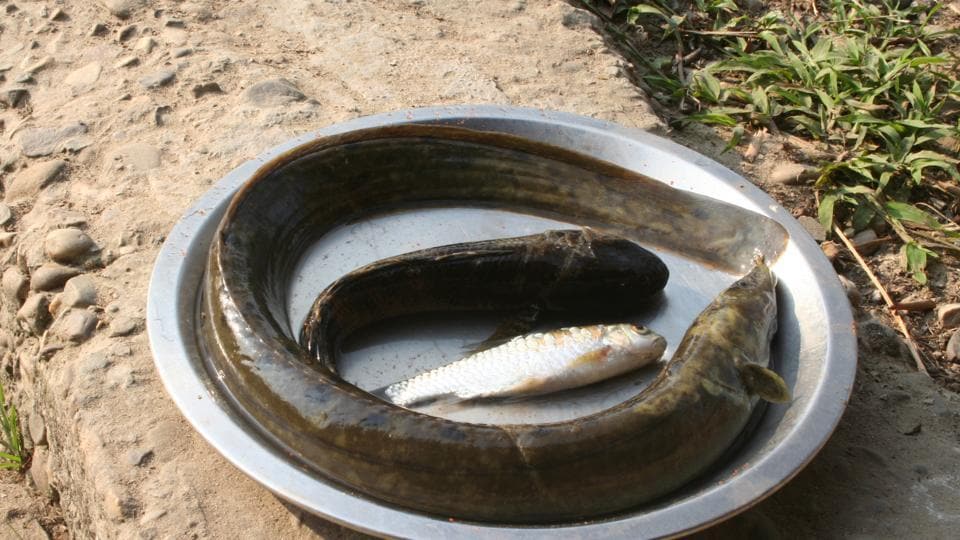
About thirty kinds of fish were offered for sale in the Poona market at prices varying from one to one and a half anna a pound. Five kinds were commonly eaten by Europeans – “vambat” (Mastacembelus armatus/zig-zag eel), “ahir” (Anguilla bengalensis/Indian mottled eel), “maral” (Channa striata/Snakehead murrel), “ shivada” or “pari” (Wallago attu), and “shengal” or “shingala” (Macrones seenghala). These fetched 4 to 5 anna a pound.
The slimy and slippery eels were particularly prized by the British. Eel recipes found a prominent place in eighteenth and nineteenth-century English cookbooks, such as those of E Smith, Hannah Glasse, and Susanah Carter. Glasse’s book had nine eel recipes, including eel soup, eel pie, stewed eel, and potted eel. While the nobility savoured their eels in sophisticated sauces, the poor fried or stewed or boiled or broiled them, served them jellied or served them grilled. The eel was appreciated for its rich, fatty flesh, and, for all the differences between Italian, French, and English cuisines, people on both sides of the Channel depended on eel for sustenance.
Eel pie was an old English favourite, stretching back to that recipe for it in “The Forme of Cury”, from 1390. In nineteenth-century Britain, it was a popular recreation to take a boat ride to Twickenham Island, also known as Eel Pie Island, stopping off for an eel pie lunch and a stroll before heading back to the city. Cooking an eel pie was a serious business, and among the ingredients needed to prepare the eel for pie were suet, mint, parsley, pine nuts, raisins, ginger, cinnamon, pepper, cloves, almonds, and saffron. Britons in Poona missed their eel pies for there was no shop in the city which would sell them.
The eel was also a Christmas delicacy. Eel at Christmas was eaten all over Europe in the Middle Ages. In Spain, people traditionally used to eat them around the Christmas season. Eel was cooked in numerous ways in Italy, depending on the region. It was an important dish among the seven fish dishes served on Christmas Eve as the pranza di Natale. Eels were as necessary to the people of Naples on Christmas Eve as hot cross-buns were to Englishmen on Good Friday, or pancakes on Shrove Tuesday. The tradition of eating capitone, a female eel, had been going on for centuries in southern Italy and was rooted deep in superstition. It was said that the eel symbolized the snake that tempted Eve in the Garden of Eden, and by eating it on Christmas Eve, it was possible to conquer it and ward off evil spirits.
The humble and most common way of serving eel was to boil it in a soup. A pound of eels made a pint of good soup. However, the dish was considered too common to be served on Christmas Eve. The British in Poona included collared eel and potted eel in their Christmas menu along with lamb’s fry, sliced ham, roast ducklings, stewed mushrooms, ragout of eggs, and pork chops. Eel stews were cooked with garlic, mushrooms, or zucchini.
James Robinson’s recipe for potted eel from “The Whole Art of Curing, Pickling, and Smoking Meat and Fish” was a hit – “The eels for this purpose should be about three-quarters of a pound each and must be skinned, and the heads and fins cut off. Split them open at the back, and take out the bones as clearly as you can, and also the gut; wash them very clean, and wipe them well. Then put sweet butter into a small saucepan, with white pepper and mace beaten fine, and cayenne pepper; simmer all together for ten minutes, and set them aside. Scatter table salt over the fish, and let them lie one hour; then wash them quite free from the salt, and wipe them again well; cut them into junks two or three inches long, put them into the saucepan to the butter, and simmer all together. Take them out carefully without breaking them, and put them while warm into pots as closely as you can; then pour a little of the butter over each pot among the eels, and when they are cold fill them up with clarified butter, and they will be excellent.”
To men who were sometimes obliged to be absent on business at the hour of the family meal, and could not control the period of their return home, potted meats were a most convenient preparation, as they immediately provided something relishing and easy to digest when fatigue and anxiety had palled the healthy appetite.
The rivers around Poona were home to eels, although they did not produce anywhere the numbers needed to satisfy the appetites and market for them in the city. Eels had to be prepared freshly killed because they went off quickly after dying. Several European families had their loyal native fishermen deliver their catch of eels without taking them to the market. Many European families made their way to remote fishing spots, sometimes hours away, to purchase eel and let it live rent-free in their bathtub until Christmas Eve.
Local fishermen from the Bhoi community valued eels too. Of the medicinal qualities of the “ahir”, Anguilla bengalensis, the local Bhois had the following belief: “On a Saturday the impotent man should strip himself naked and grind black gram. With the flour of the black gram he should bait a hook, and when he catches an “ahir”, he should put it into a broad basin of water in which it can swim. He should then rub red lead or “shendoor” on the “ahir’s” head, and, taking it in his hand, say to it – ‘Oh fish! I am changing my state for yours by taking this slimy “balas” from your skin. Please accept my offering.’ He should then remove the “balas”, and, when it is dry, roll it into pills, which when eaten will restore his manly power”.
No private rights to fisheries existed in the nineteenth century, but each village claimed the river within the limit of its land. In some sacred “dohs” or pools, the priests prevented the people from fishing. In Poona district, there were reported to be about twenty-seven sacred bodies of water of this sort. In the absence of any legislation for the protection of fish, these sacred breeding places were the only safeguard for preserving the supply. Some of the chief sacred pools or “dohs” where fish were never killed were in the Sant Tukarambuva’s pool in the Indrayani at Dehu, and Moraya Gosavi’s pool in the Pavana at Chinchwad.
On the River Indrayani, some fifteen miles north-east of Poona, there was a celebrated sacred pool containing a vast number of exceedingly large eels. The priest prevented natives from netting the pool but did not forbid Europeans to fish for sport.
However, with the introduction of other fish species in the Bombay Presidency, the eel lost its prized status. Eels disappeared from the inventory of the Christmas menu in the last century.


