
 E-Paper



Taste of Life: Poona’s agricultural legacy in the American heartland
India offered American agronomists access to sorghum and pulse varieties cultivated across the Deccan, Khandesh, Dharwad, and Gujarat

 Prefer HTon Google


On May 29, 1923, the American agronomist and plant explorer Dr Harry V Harlan arrived at the Poona Agricultural College to examine its experimental plots. Raised on a Kansas farm, Harlan directed barley investigations for the United States Department of Agriculture (USDA) and had travelled through North Africa and India seeking crops suited to difficult growing conditions.
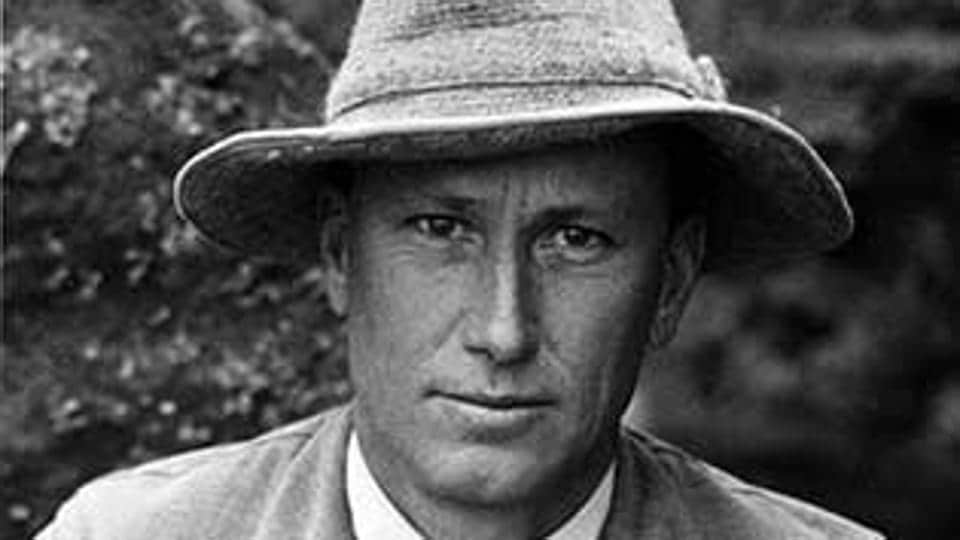
In Poona, he inspected a collection of over one hundred varieties of sorghum, known across the Deccan as “jowar”, selecting eight varieties to ship to Washington alongside seeds of guar, hyacinth bean, cowpea, and moth bean.
Farmers in the southern Great Plains and the arid Southwest of the US struggled to find field crops and forage plants that could survive high summer temperatures and irregular rainfall.
Traditional European grains and clovers repeatedly failed in these climates, forcing USDA researchers to look abroad for hardier material. In his 1908 introductory report to the department’s plant inventory bulletins, David Fairchild, head of the USDA Office of Foreign Seed and Plant Introduction, explained that private seed firms had little commercial incentive to explore foreign countries for new dryland crops because companies could not patent or control a variety once farmers began saving their own seed. Securing drought-hardy germplasm fell entirely to federal scientists.
India offered American agronomists access to varieties cultivated across the Deccan, Khandesh, Dharwad, and Gujarat, where over centuries cultivators had selected sorghum and pulse varieties adapted to local rainfall patterns and black cotton soils. By the turn of the twentieth century, Poona had become an important centre for agricultural education and botanical research in the Bombay Presidency.
Much of this research was directed by the British botanist George Alexander Gammie, who took charge of the Ganeshkhind Botanical Gardens in 1899 and published his 1908 bulletin, “Field, Garden and Orchard Crops of the Bombay Presidency”. Dr William Burns succeeded Gammie as Economic Botanist in 1908, continuing crop trials at Ganeshkhind and the Poona Agricultural College.
On April 10, 1907, the USDA received seeds of “jowar” (Andropogon sorghum) supplied by Gammie through Fairchild, who had visited Poona in 1902. In his dispatch, Gammie noted that the seed was “said to be a dwarf variety”. Dwarf stature interested American plant breeders.
Tall tropical sorghums grew vigorously in the southern US, but their height made them vulnerable to wind lodging and difficult to harvest with mechanical grain binders. Indian dwarf varieties provided breeding material for shorter, sturdier plants suited to machinery. Whether this introduction proved successful in trial plots is unrecorded in published inventories, but the accession demonstrates an established channel of seed exchange between Ganeshkhind and Washington sixteen years before Harlan’s arrival.
Soil exhaustion in the cotton belt of the US created a similar demand for Indian legumes. Continuous cotton and corn cultivation across the South stripped soils of nitrogen and organic matter. Conventional clovers withered in summer heat, leaving agronomists in need of a deep-rooted legume that could fix nitrogen while providing livestock forage.
On October 15, 1920, Burns sent the USDA three named varieties of Indian guar (Cyamopsis tetragonoloba) from Poona: “Pardeshi”, “Makhaniya”, and “Sotiya”. In Washington, the USDA forage specialist Charles V Piper described guar as “an erect annual with long stems bearing dense clusters of pods, each containing about seven pale, angular seeds”. Piper concluded that guar could grow wherever cowpeas succeeded, offering greater drought resistance than any other annual legume available for hay, pasturage, or silage.
When Harlan visited the Poona Agricultural College in May 1923, his selection of sorghum varieties addressed the practical problem of day length and crop maturity. In western India, sorghums were divided between monsoon-sown kharif crops and post-monsoon rabi crops. Most varieties in the Poona collection were winter-ripening rabi types that initiated flowering as days shortened late in the year.
Transplanted to the United States, where summer days were longer and killing frosts could arrive by October, these varieties risked remaining vegetative through summer and freezing before setting seed. To avoid that risk, Harlan selected varieties that ripened earlier in autumn, between September and November, hoping their flowering cycle would allow them to mature before frost.
This empirical concern aligned with research in Washington, where USDA scientists WW Garner and HA Allard demonstrated in 1920 that day length governed flowering and seed production, introducing the term “photoperiodism” in 1922.
Harlan also paid close attention to how Indian farmers integrated each variety into local crop rotations. From Khandesh, he selected “Aispuri”, which Gammie had documented as “Elichpuri”, noting that cultivators grew it in rotation with cotton on dry black soils, a practice of interest to American agronomists working with similar soils.
From the same area, he selected the compact-headed “Garya”, alongside “Nandyal” and “Muddi Nandyal” from Dharwad, and the tall “Sholapuri”. For livestock ranchers needing fast summer fodder, he took three early-maturing varieties: “Nilwa” and “Utavali” from the Deccan, and “Sundhia” from Gujarat, which produced fine forage stalks in sixty days. Alongside these, Harlan collected seed of local guar, cowpea, hyacinth bean, and moth bean (Vigna aconitifolia), known locally as “matki”, a drought-hardy pulse capable of thriving on thin soils and yielding repeated cuttings of green forage.
When Harlan’s shipment arrived in Washington on August 15, 1923, the sorghum varieties joined the department’s expanding seed collections. Over subsequent decades, American sorghum breeding focused increasingly on shorter plants, reliable grain production, and adaptation to mechanised harvesting. Indian varieties formed part of the wider pool of material available to breeders, but the records cited here do not establish whether Harlan’s eight selections contributed to particular American varieties.
The accompanying packets of hyacinth bean, cowpea, and moth bean remained minor subjects of trial, evaluated primarily as warm-season cover crops and livestock grazing in southern stations rather than developing into major field staples.
Although guar reached the United States from India before Harlan’s visit, Burns’s 1920 collection added three named Poona varieties to the USDA’s plant introductions.
Guar remained a minor crop for several decades until wartime blockades cut off Mediterranean shipments of locust bean gum. When industrial chemists and USDA agronomists screened alternative legumes to find a domestic substitute, they found that guar seed endosperm yielded a water-soluble gum with identical binding properties. Commercial milling companies subsequently contracted farmers in northern Texas and southwestern Oklahoma to grow the crop for paper making, textiles, and food processing, establishing guar as a regional cash crop by the early 1950s.


