
 E-Paper



Taste of Life: Woman crusader against Britain’s opium sale in India
Soonderbai in an earnest address set forth grievous wrong Britain had done to the people of India by extensive cultivation, manufacture, and sale of opium


Pune: A large and enthusiastic gathering had assembled at Exeter Hall in central London on December 4, 1891. The meeting was called specially to welcome Cheok Hong Cheong and Soonderbai Hannah Powar, who had come to protest on behalf of their fellow compatriots against the continuance of the British Opium Traffic.
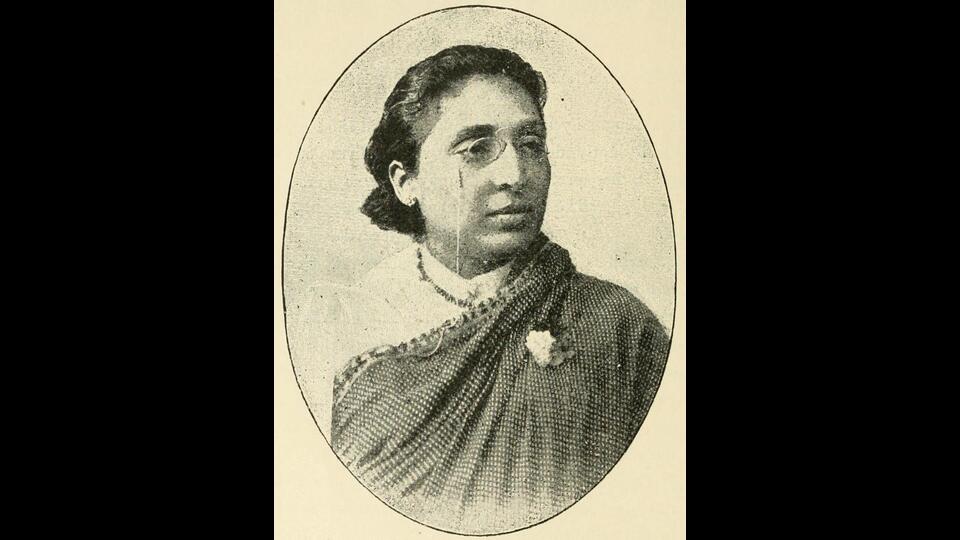
Soonderbai in an earnest address set forth grievous wrong Britain had done to the people of India by extensive cultivation, manufacture, and sale of opium. She dwelt forcibly on the moral and physical degradation of the victims addicted to its use. She also read out many momentous messages which she bore from the women of India assembled in public meetings at Poona, Bombay, and Lucknow.
Soonderbai’s contention was manifold - That thousands of “high caste” women died of starvation in their dark zenana rooms because their husbands ruined themselves by smoking in licenced opium dens; that young men were led to smoke opium through the wiles of the opium farmer who set his servants at the street corners furnished with opium pipes to tempt the youths to smoke; that they (apparently either the opium officials or the opium farmer) quietly mixed opium with tea in refreshment rooms and in hotels, so that craving for opium arose and before they knew what they were doing they would become slaves of opium.
Soonderbai’s parents were so-called “high caste” Hindus, who became converted to Christianity. She had travelled all over Maharashtra during her childhood with her parents who preached Gospel in the rural parts. She later went to Bombay to become a “zenana” teacher. She dabbled in nursing and teaching for several years before being disillusioned by the Western missionaries’ instruction method. She met Pandita Ramabai in 1883 and came to Poona with her when her school, “Sharada Sadan”, was shifted to the city from Bombay. She worked closely with Ramabai for several years before opening a Zenana Training Teacher’s School in Poona. During her work, she came across many women who were affected by the opium trade of the British and took it upon herself to preach against the vice of opium consumption.
The British had started exporting Indian opium to China in order to balance the trade deficit which was heavily tilted in favour of China. While opium wrecked the social fabric of China, it also affected several thousand families in India. In 1888, there were 767 shops for the sale of opium and consumption on the premises in the Bombay Presidency. Around 150 of these were situated in Poona.
A correspondent of “The Friend of China” visited Poona in 1886 and reported - “On Tuesday last, a servant conducted me to two opium dens in the city. I there beheld a sight which I little expected. In a low-roofed room, lay some 25 to 30 persons, men, and women, young and old; they were divided into groups of 5 or 6 around each lamp; most of them were intent on their pipes, while a few others seemed to have fallen into a semi-conscious state. In this room, the opium was rolled into a small bowl and placed in the pipe. It was with a sense of relief that we left this seat of Satan, to breathe once more the pure, fresh air. The wonder to me is, how human beings can spend day after day in such an atmosphere as pervaded that hovel. A few minutes’ walk brought us to the second den; the state of this room was better than the first, though very far from agreeable. In this place, opium was used in its liquid state. An old Mussulman with whom I entered into conversation, said to me by way of complaint, that he had repeatedly told the young men who visit the den to remain away, or in a short time they would find themselves in a bad state as himself; ‘but’, said he, ‘they will not listen; they come here, they take this thing, and here they will remain’. When will this evil be placed out of the reach of the people? The more one thinks on the subject, the darker does the stain appear”.
Before she left India, she was present at several gatherings of women who were eager to send messages to Britain condemning the opium traffic. Pandita Ramabai was instrumental in bringing together at Poona a large number of Hindu and native Christian women. So deep was the feeling against opium, that one Hindu woman declared that she and her countrymen would worship the government if it would abolish opium.
There had been unusual agitation in Britain after Soonderbai arrived in the country on the opium question. Several public meetings had been held in Exeter Hall, and these great gatherings had been addressed by representatives from the countries which suffered the most from the accursed opium traffic. It was an interesting sign of the times that the women of India, who had long suffered in silence in consequence of the government’s iniquity, had at last found a voice in the person of a Hindu Christian woman, Soonderbai. Some newspapers claimed that “the conscience of Christian England had been aroused”, although many were in the mood of the “London Times” which spoke of the anti-opium agitation as “another spasm of cheap Puritanism”.
One of Soonderbai’s public addresses in Britain was published in a paper titled “Woman’s Anti-Opium Prayer Sheet for August 1892”. When the paper reached Poona, certain government authorities took cognizance of Soonderbai’s statements. One of them, Mr JM Cambell, collector of opium and one of the members of the opium commission in India, thought that they were “strange to those having knowledge of those things there”. He wrote to a friend of his, who was a leading pleader in Poona, and was also a leading member of the Methodist Episcopal Church in the city, and asked if a meeting could be arranged with Soonderbai.
As Soonderbai was born near Poona and had spent most of her entire life in the city, the opium commission believed that her statements referred either to Poona or to Bombay. As each of these statements involved serious charges against the management of the opium revenue in the Bombay Presidency, Campbell decided to examine their truths before summoning Soonderbai for interrogation.
Inquiries made through the commissioner of police and the health officer of the Poona municipality failed to reveal any foundation for them, except that, with respect to the third statement, it appeared that there had been a rumour, in 1892, that certain Irani tea – housekeepers put poppy heads in their tea to darken its colour. As Mr Almon, the assistant collector of abkari, could procure independent information, and also as he was responsible for hotel and refreshment licences, and under the Abkari Act had the power to deal with infringements of the Opium Act, he was asked by Campbell to make inquiry into the truth of the rumour that poppy heads were sometimes put in tea. The result of these inquiries was that Mr Almon failed to find that the rumour had any foundation in fact.
Campbell later decided not to question Soonderbai. Her agitation against the opium trade continued till the very end of her life.
Chinmay Damle is a research scientist and food enthusiast. He writes here on Pune’s food culture. He can be contacted at chinmay.damle@gmail.com


