
 E-Paper



The culinary customs around Valentine’s Day
Valentine's Day celebrates love and friendship, evolving from ancient customs to a commercialized holiday with rituals like exchanging cards and chocolates.

 Prefer HTon Google


To-morrow is St Valentine’s Day,
All in the morning betime,
And I a maid at your window
To be your valentine – Hamlet
Valentine’s Day is a time to celebrate love and friendship. In Ophelia’s song, Shakespeare refers to the old belief that the first person you see on Valentine’s Day is your valentine. An author, probably of an advanced age, who chose not to reveal his name, expressed his displeasure about the youth in Poona having no knowledge of this custom. In an article in the “Golden Hours”, published on February 12, 1884; while writing about the antiquity of St Valentine’s Day, he reminded young men and women of “manners - ancient and modern” of celebrating the festival, which included exchanging cards and gifts.
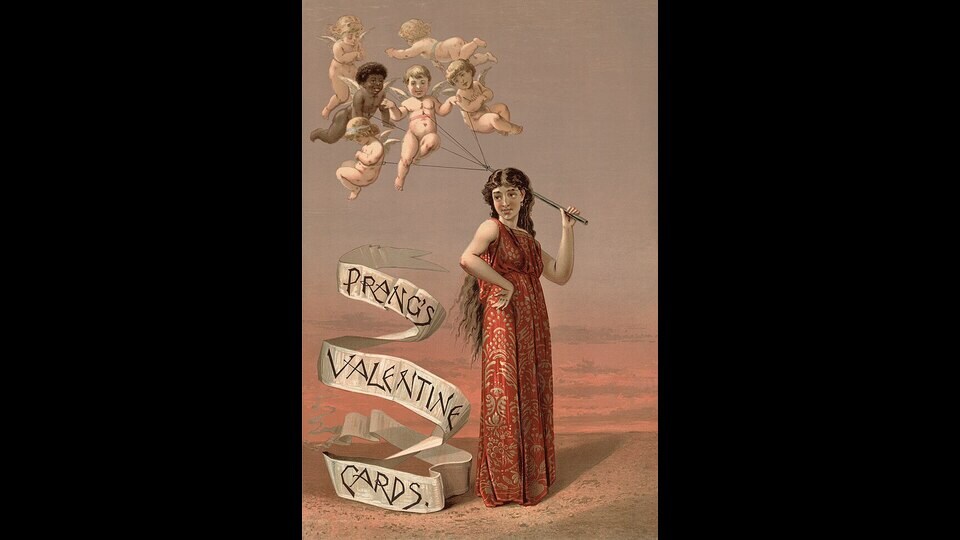
The evolution of the Day over several centuries displays a complex interplay of commerce, gender, ritual, and material culture. The medley of long-standing religious, folk, and aristocratic customs associated with Valentine’s Day met middle-class enshrinement of romantic love, sentimentalism, and fashion in the nineteenth century. The new rituals were built largely on a commercial medium, on the understanding of the “valentine” as a commodity. Valentine, which meant a suitor, lover, or close friend in the seventeenth and eighteenth centuries, came to mean an object of exchange – a card or a handwritten note declaring love – in the nineteenth century.
These “valentines” were sometimes hidden in the house or the garden to be found by the beloved. Edible valentines, in the form of heart-shaped, decorated gingerbread cookies, were popular in England and were available at Cornaglia’s in Poona.
In an article in the “Poona Advocate”, published on February 5, 1878, an author suggested serving “anything heart-shaped”, preferably cookies and cucumber sandwiches, on Valentine’s Day with the cards. Heart-shaped cookie cutters were available at Treacher’s in Bombay and Poona. The red heart had been a symbol of love for ages. It was also associated with one of the ancient Roman gods, Cupid – the son of Venus, the goddess of love. He flew around, shooting arrows into people’s hearts. The arrows didn’t kill them. They made people fall in love.
The author also enlisted certain foods and drinks that were thought to be useful to put one in the mood for love. Among these were spiced wine and eggs. Apples were also a symbol of love. Figs, pomegranates, plums, and raisins were suggested to be included on Valentine’s Day tables.
A few advertisements from the 1920s in the “Bombay Chronicle” indicate a small market for chocolates for the Valentine’s Day celebrations. Throughout the seventeenth and eighteenth centuries, the culture of drinking chocolate became increasingly popular across Europe. Chocolate was a food of the Gods in Mesoamerica, and the Europeans soon embraced its divinity. Wealthy families employed private chocolatiers to develop special blends that were thought to boost virility.
In 1854, Cadbury received a Royal warrant to be the sole purveyor of cocoa and chocolate to Queen Victoria. As another achievement and mark of distinction, the Cadbury family started the trend of mass-produced, boxed chocolates in 1868, although a heart-shaped chocolate box for Valentine’s Day was made and marketed in 1868. The first boxes of chocolate were packed and decorated in the sentimental Victorian style of the day. Such boxes were marketed in Poona in the 1920s while the Valentine’s Day celebrations were seeing a decline in the USA and Europe.
The origin of Valentine’s Day is wrapped in considerable obscurity. There are significant regional variations, including the date and manner of its celebrations. There is no single version of its origin, and in its current form, it has become popular in the West only in modern times. It was once thought to be the day on which birds began their mating season. Some poetical observers referred to the custom of lovers sending billets doux to the pairing of birds on this day. Hence, the belief that the first two single people who met on the morning of Valentine’s Day might have a chance of marrying each other.
There was lore about a holy priest of the Roman Church named St Valentine, who was beheaded by Claudius II for having assisted the martyrs during the emperor’s persecution of the Christians. Some trace the customs to pagan times. It was a practice in ancient Rome during a great part of February to celebrate the Lupercalia, which was a feast in honour of Pan and Juno, On this occasion, amidst a variety of ceremonies, the names of young women were put into a box, from which they were drawn by young men.
Late in the fourteenth century, Chaucer and his friends John Gower, John Clanvowe, and the Savoyard soldier-poet Oton de Grandson wrote poems in which St Valentine figured as a patron of the mating birds and human lovers. Jack B Oruch, in his brilliant paper “St Valentine, Chaucer, and Spring in February” (Speculum, 56, 3, 1981), attributed Valentine’s Day and its celebration in February to Chaucer. According to him, the majority of the customs and literary expressions connected with the Day appeared to be derived from Chaucer’s “Parlement of Foules”, the only poem to focus on the annual ceremony itself. The poet’s choice of including St Valentine in his love poetry evolved from the saint’s having a name thought to be beautiful and a feast day early in the “Somer” when flowers started blooming, birds started singing again, and love came to town.
The non-erotic love associated with Valentine’s Day, like the pseudo-horrors of Halloween and the universal benevolence of Christmas, was a secular celebration, like the Vasant Panchami.
Vasant Panchami was a festival celebrated in Poona when spring came. Although this festival did not have religious importance in Maharashtra, some customs that came from North India were followed in the city. The purpose of this festival was to express joy and fun due to the new life and creation in the world.
It was believed that the god Madan was born on this day. Madan and Rati were worshipped on this day to ensure a happy married life. There was a custom in some houses to perform ‘Navanneshti’ on Vasant Panchami. For this, the stalks of new crops were brought and offered to the gods of that house. After that, nine special dishes were consumed.
At the Shrikrisha Music School in Appa Balwant Chowk, Vasant Panchami was celebrated every year with a musical performance. Students from the school performed at the event. The principal of the Music School, VM Joshi, modified this tradition and arranged a buffet of fruits for his students every year on Vasant Panchami.
In a short story by NS Phadke, published in “Kirloskar” in March 1941, the hero studying at Fergusson College proposed to the love of his life, one of his classmates, on Vasant Panchami. For him, the day symbolised immortal love.
While Vasant Panchami is now celebrated in various temples in and around the city, its association with love and marriage has been largely forgotten. The reinvention of Valentine’s Day as a curiosity of the marketplace and a marvel of romantic fashion is now complete.


