
 E-Paper



Two years of Covid: Stress, domestic violence and depression also saw multiple waves
Study by experts on the social psychology of pandemics shows that temporary and short-sighted measures are insufficient to deal with any pandemic

 Prefer HTon Google


PUNE The last two years taught that the Covid-19 pandemic was not only biological but also psycho-social. Hence, the strategies to prevent and control Covid or any pandemic disease also need to be on both these fronts. To avoid pandemic of fear, suspicion and moralisation, there is a need to implement more in-depth and basic strategies to establish an egalitarian society. Study by experts on the social psychology of pandemics shows that temporary and short-sighted measures are insufficient to deal with any pandemic.
The study states that, at times, such solutions may appear beyond the domain of public health and there is a need to expand the public health reach for larger good. The lockdown shows some irrational and insensitive reaction of people towards the infected and the vaccine.
Dr Pradeep Awate, state surveillance officer, Maharashtra, said, “This century has been peculiar with respect to public health as we had to face two major pandemics in its first two decades. We confronted Influenza A H1N1 pandemic in 2009 also known as swine flu, followed by Covid in 2020 which is yet to be contained. Looking at patterns of various emerging and re-emerging diseases, climate change issues and exponential growth of international travel, such pandemics of wide-ranging severity seems to be our destiny. We need to prepare ourselves to effectively deal with these pandemics in future. For this, we need to study various aspects of the pandemics to understand its dynamics and contain it efficiently.”
Awate said the scientific community and the health infrastructure have proven itself and highlighted its shortcomings during this pandemic. The two years of lockdown, pandemic and illnesses have also highlighted the psychological and social Impact of the virus infection and this often-neglected aspect needs to be studied thoroughly.
Dr Awate, “Study of psycho-social aspects of any epidemic or pandemic gives us effective tools to contain the impacts of these hazards. The role of community is vital in controlling any epidemic or pandemic. Study of sociology and psychology of pandemic helps in appropriate intervention to finetune behaviour of the pandemic facing community in a positive way. Disruptions resulting from an epidemic might often appear to amount to chaos but, in reality, can be understood in a systematic way. Major societal changes in the last three decades following the HIV/AIDS pandemic may need some new learnings. The internet world and advent of social media have changed many dimensions of social interactions as compared to the 1990s. Infodemic is as real and equally hazardous as that of the disease itself. Its enormous extent and speed are due to omnipresent and omnipotent information technology of this era. “
The two years of the pandemic saw a diverse range of reactions which have to be comprehended to devise more robust behavioural change communication strategies. Following the biological pandemic, a pandemic of fear, suspicion and moralisation was observed. The pandemic saw multiple rumours linked to meat consumption and virus spread and linking vaccine efficacy with sterility leading to fewer people turning up for vaccination. The pandemic of fear led to fake news being spread.
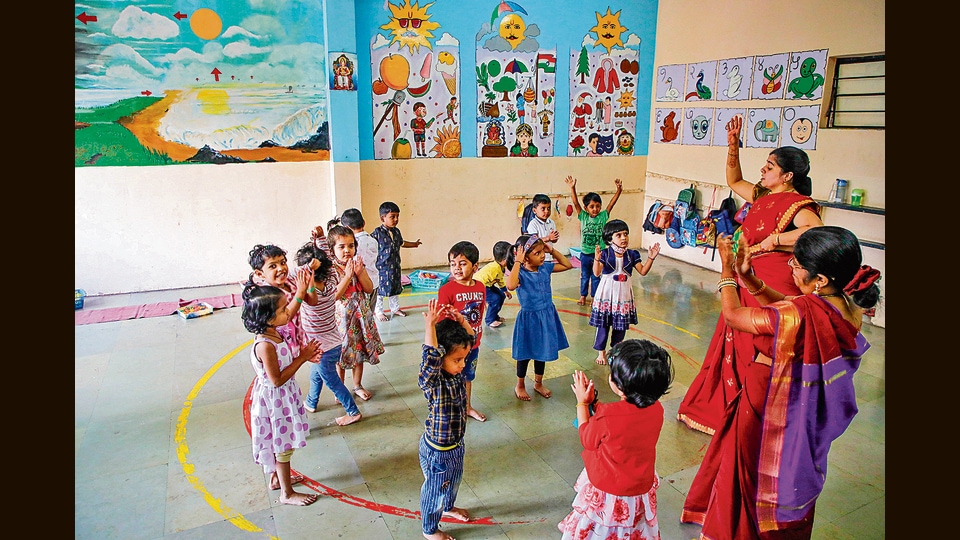
Dr Nitin Abhivant, head, psychiatric department, Sassoon General Hospital, said, “Since the past two years, especially during and post the first lockdown, we saw a drastic surge in patients coming in and also the number of calls we received for counselling. The lockdown affected every aspect of the society, socially, financially, economically, and also psychologically. Be it the fear of the pandemic or the virus itself or the measures that were taken to curb the number of cases, fear and anxiety creeped into the society. The ‘new normal’ was completely new for everyone and it is not acceptable for everyone in society. Human beings are social animals but in the past two years social life was completely shunned and every person was affected. The kids were victims because their social development skills were affected. We saw kids who had either completely withdrawn from social behaviour or had gotten aggressive due to the lockdown. Some had forgotten how to speak and some of them who were completely out of school for two years but were pressured to perform better in academics could not learn the basic skills required for schooling. Although the pandemic is not as aggressive as it was before, the side-effects are still persistent.”
Dr Abhivant said that women were the most affected as they had to balance their work and personal life. He said, “Young couples who were living a happy life before the lockdown were stressed due to the over exposure to one another. Their personal space was lost and too much of anything is also bad. The personal space acted as a defence mechanism but that no longer existed. This led to frustrations and friction among them. This led to stress among women. Women were also the first to lose their jobs and those who had their jobs had to juggle between work and personal life. In the first few months, maids were not allowed and so the entire household chore pressure was on the woman in the house. We are still not so progressed wherein the man would share the responsibilities of the house. Ultimately the pressure was on them. The elderly in the house who naturally have a lowered sleep time had lost their personal space during the lockdown. The elderly also feared the virus as they were most vulnerable and the lack of interference with others made them even more mentally stressed out. The high rate of unemployment also made more youth suicidal. We had to counsel and provide emotional support. The first lockdown led to highest rate of stress and depression to the point of suicide.”
The Pune zilla parishad data by the women’s safety and vigilance committee for Pune rural areas found that in the past two years since the pandemic, 6,032 surveys were registered of which the committee could resolve over 97% of the cases which is about 905 cases and 3% or 27 cases had to be forwarded to the protection officer for further enquiry.
Ayush Prasad, chief executive officer of Pune zilla parishad said, “When we found a case of domestic violence, child abuse, child marriage and health related issues through surveillance we would first carry out primary counselling as required through asha workers or aanganwadi workers. We find the aggrieved woman, have follow-up meets and if required forward the case to protection officer, the police, institution, family court and if required to provide assistance through NGOs.”


