
 E-Paper



Winter chills: Mercury dips by three degrees in Pune
While New Year witnessed minimum temperature of 10.8 degrees Celsius and maximum temperature of 31 degrees Celsius, the city will maintain mainly clear skies over the next four days with the minimum temperatures hovering between 10 and 11 degrees Celsius


The city witnessed a dip in temperature with India Meteorological Department (IMD) recording a minimum temperature of 10.8 degrees Celsius, with the mercury dropping 3 degrees Celsius from the average.
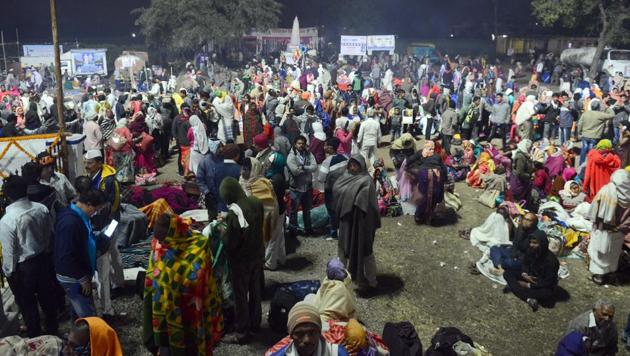
For many of the residents, the sudden chill took them by surprise. “At around 10 pm, it was suddenly quite cold and I was out at a wedding. Although I wasn’t prepared for this sudden temperature drop, it felt good to feel cold as Pune has been warm the past month and it’s not really winters in Pune without the chill it’s famous for,” said Jolene Fernandes, nutritionist and resident from Camp.
“Pune is witnessing a dip in the temperature due to clear sky and northerly winds, with the core temperature dropping due to western disturbances. The city will witness a continuous drop in the temperature for the next two to three days,” said an IMD official.
While New Year witnessed minimum temperature of 10.8 degrees Celsius and maximum temperature of 31 degrees Celsius, the city will maintain mainly clear skies over the next four days with the minimum temperatures hovering between 10 and 11 degrees Celsius and maximum temperature between 30 and 31 degrees Celsius.
According to IMD, the western disturbance created due to a cyclonic circulation over central Pakistan and neighbouring areas between 3.1 and 3.6 km above mean sea level persists. The trough aloft with its axis at 5.8 km above mean sea level now runs roughly along longitude 72°E to the north of latitude 30°N. The system is likely to move east-northeastwards, while the cyclonic circulation over Haryana and adjoining northeast Rajasthan has become less marked. The other cyclonic circulation over north Gujarat and neighbourhood now lies over south Gujarat region and neighbourhood and extends upto 1.5 km above mean sea level while another trough runs from northwest Madhya Pradesh to above cyclonic circulation and extends up to 1.5 km above mean sea level as well as a north-south trough runs from Bihar to northwest Bay of Bengal between 2.1 and 3.6 km above mean sea level creating severe cold conditions in northern part of India. The night temperatures were appreciably below normal in some parts of Odisha, Saurashtra and Kutch and in remaining parts of Punjab, Haryana, Chandigarh and Delhi, Uttar Pradesh and Rajasthan and were below normal in some parts of Gangetic West Bengal, Uttarakhand, Himachal Pradesh, Jammu and Kashmir and Konkan and Goa and in remaining parts of Saurashtra and Kutch. Night temperatures were markedly above normal in some parts of Nagaland-Manipur-Mizoram-Tripura and Telangana; appreciably above normal in some parts of Madhya Maharashtra, Rayalaseema, Tamil Nadu.


