
 E-Paper



Jharkhand panchayat polls soon, no OBC quota: CM
Jharkhand chief minister Hemant Soren said on Monday that panchayat polls in the state would be held soon, arguing that meeting the triple test benchmark set by the Supreme Court for states in quantifying OBC quota in local body elections would consume time and delay in conducting the local body election is leading to loss of financial aid from the Centre.

 Prefer HTon Google


Jharkhand chief minister Hemant Soren said on Monday that panchayat polls in the state would be held soon, arguing that meeting the triple test benchmark set by the Supreme Court for states in quantifying OBC quota in local body elections would consume time and delay in conducting the local body election is leading to loss of financial aid from the Centre.
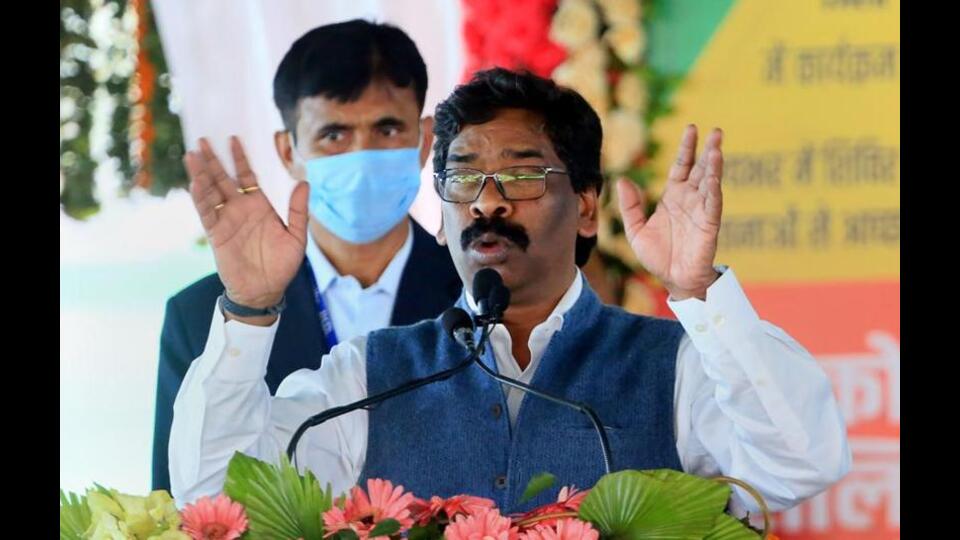
Replying to a question raised by AJSU Party legislator Lambodar Mahto, the chief minister said the SC direction was advisory, and mandatory in nature.
“As far as the SC direction is concerned, it is not that polls can be held only after the triple test benchmark is met. If that had been the case, how has election been conducted recently in states like Odisha, Bengal and Assam. On one hand panchayat representatives and opposition members demanding polls to be held immediately, they are also demanding to conduct triple test. You can’t have both heads and tails,” said Soren.
Panchayat polls in Jharkhand were scheduled to be held in January 2021 but had to be postponed twice since then. Now, the dates are likely to be announced after the budget session.
The chief minister said delay in polls is affecting government’s financial assistance from the Centre. “We already have suffered a loss of around ₹800 crore in terms of financial aid from the Centre due to delay in polls. Meeting triple test would consume time, which would lead to further loss. We would meet the criteria in due course of time,” Soren said.
On the specific issue of OBCs missing out on reservation in the panchayat polls, the chief minister said the category anyway gets sizeable representation where it is numerically dominant. “There is no reservation for OBC in the assembly. But even here, there are so many OBC members. Similarly, people would get elected in local bodies wherever there is demographic domination,” said Soren.


