
 E-Paper



Outgoing Jharkhand governor says new governor to take a call on TAC row
Jharkhand’s outgoing governor Droupadi Murmu said Article 244 of the Constitution gives special powers to the governor and it should be respected by all.

 Prefer HTon Google


Outgoing Jharkhand governor Droupadi Murmu on Saturday indicated that the end of her tenure in Raj Bhawan was unlikely to see the end of friction with the state government over Tribes Advisory Council (TAC) as she had already briefed her successor Ramesh Bais on the controversial issue. Without naming chief minister Hemant Soren, Murmu said the Constitution gives certain special powers to the governor on certain issues and it needs to be respected by all.
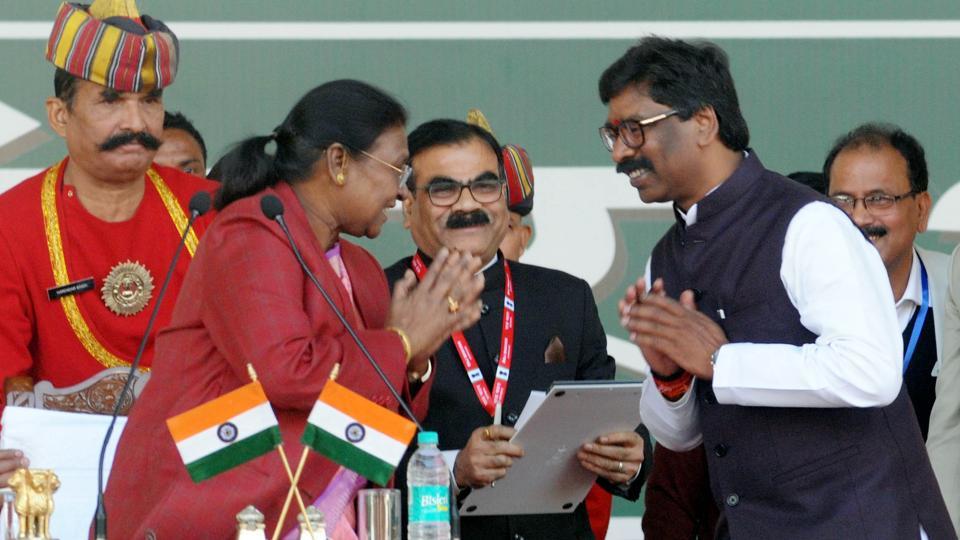
Murmu’s comments come in the backdrop of the Hemant Soren government recently transferring the power to constitute the TAC from the governor to the chief minister. TAC advises the government on issues related to tribes and their development. The CM is also the ex-officio chairman of the council.
“I had summoned the files (related to TAC). They (Hemant Soren government) are good people, but they delayed in sending the file. I was seeking legal opinion on the matter but in the meanwhile the new orders (of appointment of new governor) came,” Murmu said while interacting with journalists at Raj Bhawan in Ranchi.
“I have briefed the new governor about it. Now he would take a call on it. However, Article 244 of the Constitution gives special powers to the governor. The Constitution is a sacred book like Gita. So everyone should follow the Constitution and act accordingly,” she added.
Murmu will relinquish office after spending over six years in Jharkhand Raj Bhawan---the longest for any governor in the state. On Monday, she had also pitched for a few amendments in the pre-independence land tenancy laws saying they were out of tune with the requirements of the present times.
“For example, the restriction of a police station (for sale and purchase of tribal land) should be amended. Earlier, the size of the [areas under] police stations used to be huge. Now that is not the case. However, any amendment in such laws needs to be in consonance with their spirit,” said Murmu, the only woman governor of the state to date.
The Chotanagpur Tenancy Act and Santhal Parganas Tenancy Act are two pre-independence tenancy laws which prevent non-tribals from buying the land of tribals. Even tribals can’t buy land owned by the same community outside the jurisdiction of the police station they belong to. These two laws, besides the land acquisition law, have often lent themselves to political controversies in the state, where tribals make for over 26% of the 3.29 crore population.
“The tribals are very simple people. They need to be educated as they are not even aware of the constitution and their rights,” she added.
Ramesh Bais is set to take oath as the next Jharkhand governor early next week, people familiar with the developments said, and the incumbent is likely to leave the Raj Bhawan on Monday, they added.
The chief minister was likely to host a farewell lunch for Murmu at his residence on Sunday before she leaves for her village Rairangpur in Mayurbhanj district in neighbouring Odisha, said the people quoted above.


