
 E-Paper



SC seeks plan to install RFID at all toll points in Delhi
According to the EPCA report, the entry of commercial vehicles at 13 entry points has reduced from a maximum of 38,000 per day to 3,000 per day after the introduction of ECC and RFID system.

 Prefer HTon Google


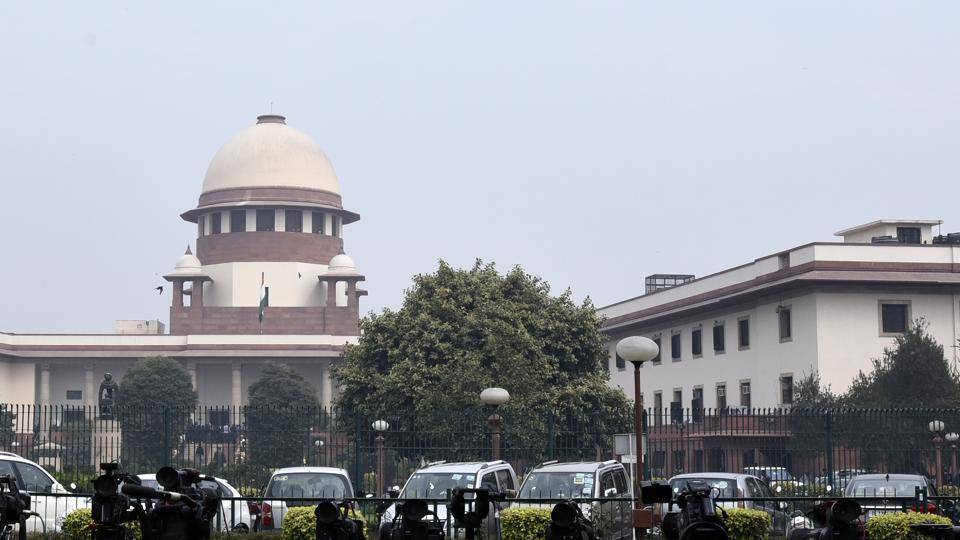
The Supreme Court has sought a plan from the civic agencies in Delhi for installing Radio Frequency Identity (RFID) system at 111 toll points to electronically deduct municipal toll tax and the environment compensation charge (ECC) from e-wallets of commercial vehicles. The plan has to be submitted by August 20, the court said.
The RFID system is already working at 13 toll points in Delhi. There are total 124 toll points in Delhi.
The Supreme Court order, passed on Monday, came on a suggestion by Environment Pollution (Prevention and Control) Authority (EPCA) -- an expert statutory body assisting the apex court in matters relating to environment and pollution. EPCA pointed out to the court that with the introduction of RFID technology, it has been possible to check the entry of commercial vehicles older than 10 years. It has further improved online collection of the environment cess, EPCA said. The ECC was imposed on commercial vehicles by the Supreme Court to dissuade their entry into the Capital in order to reduce air pollution.
In its latest report dated January 28, 2020 submitted to the top court, EPCA said, “The results from the 13 entry points are substantial and suggest that the efforts to mitigate pollution have been rewarded. There is a 95% reduction in the total particulate load from trucks entering from 13 locations, as compared to 2015. There is 87-94% reduction in NOx loads from light-heavy duty vehicles entering from 13 locations.”
A bench of justices Arun Mishra, Br Gavai and Krishna Murari said, “It is agreed to by the learned counsel appearing for EPCA and the municipal corporation that on all the 111 entry points, RFID should be implemented and that can be done within the budget which is available. Let the steps be taken in this regard for implementation of the RFID and plan be placed on record before the next date of hearing on August 20.”
Senior advocate Aparajita Singh assisting the Court as amicus curiae in this matter told HT, “The 13 locations were selected since 80% heavy vehicles used them to enter city. But in the latest assessment, the South Delhi Municipal Corporation (SDMC) informed the court that commercial traffic was increasing at the 111 other entry points to the Capital.”
According to the EPCA report, the entry of commercial vehicles at 13 entry points has reduced from a maximum of 38,000 per day to 3,000 per day after the introduction of ECC and RFID system. “The number of commercial vehicles entering Delhi also reduced after the opening of Western and Eastern Peripheral expressways last year,” Singh said.
According to the EPCA report, “Vehicle owners (of commercial vehicles) are seeking new entry points to avoid payment of ECC.”
To plug this loophole, the EPCA urged the apex court to extend RFID to all entry points of the Capital on an urgent basis. The project, to be undertaken by SDMC, will incur a cost of ₹36 crore. For the first phase (in 13 locations), ₹80.94 crore was spent. The total cost for both phases will be ₹116.94 crore, which is within the stipulated ₹120 crore sanctioned as project cost by the court, EPCA stated.
A senior official of the South Delhi Municipal Corporation (SDMC), which is the nodal agency to collect ECC in Delhi, said 111 more toll points are to be equipped with RFID for which the SC has asked to submit a report by August 20. “EPCA has convened a meeting to discuss the issue on Thursday. Once the Supreme Court clears the plan, we will start work on it,” the official said, requesting anonymity.


