
 E-Paper



Seminar on crop diversification: ‘Maize has potential to replace rice in Punjab’
Chief principal secretary to chief minister of Punjab said farmers are willing to diversify but they need viable option

 Prefer HTon Google


Maize has a huge potential to replace production of rice in the region. Farmers are willing to change, but they need a viable option. In this context, maize is a credible option for crop diversification to prevent loss of groundwater, degradation of soil, loss of crop and increase biodiversity.
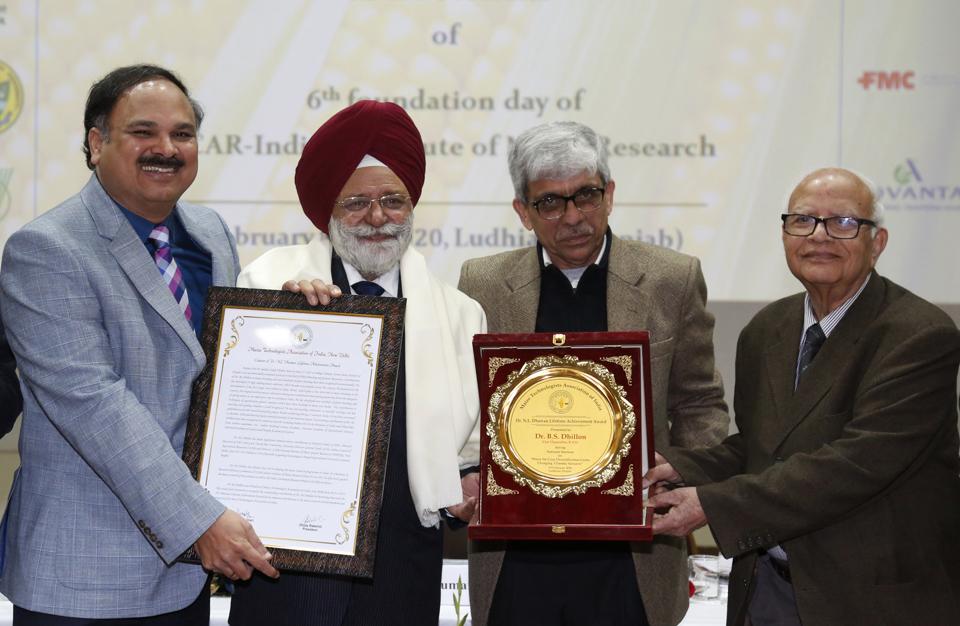
This was stated by Suresh Kumar, chief principal secretary to chief minister of Punjab, who was chief guest at the two-day national seminar on ‘Maize for Crop Diversification under Changing Climatic Scenario’ at Punjab Agricultural University (PAU) to mark the sixth Foundation Day of the ICAR-Indian Institute of Maize Research (IIMR), Ludhiana. The seminar began on Sunday.
The seminar is being organised by the Maize Technologists Association of India (MATI), New Delhi, in collaboration with ICAR-IIMR and PAU . Nearly 150 delegates from across the country are attending the seminar.
He stressed on taking steps to mitigate the factors of climate change affecting agriculture, which is a major driver for the economy of Punjab. There was a need to increase expenditure on research and development in agriculture for sustaining the economy, he added.
The policy change was required to meet the market requirement and sustainability as, at present, there was more subsidy on rice cultivation than maize, he observed.
PAU vice-chancellor Dr Baldev Singh Dhillon emphasised that research on new frontiers such as double haploid and GM crop needed to be strengthened for combating the upcoming challenges.
Other factors such as mechanisation, micro-irrigation, water use efficiency, weed control and awareness among farmers about new technologies also needed focus for the faster adoption of maize cultivation, he added.
World Food Prize Laureate Dr SK Vasal emphasised on single strategy and low-cost skilful innovations in maize for solving the complex problems.
Dr BM Prasanna, director, Global Maize Programme, CIMMYT, who was special guest, said spring maize had tremendous opportunity in the Indo-Gangetic region.
Dr Sujay Rakshit, director of ICAR-IIMR, highlighted that the institute had released three hybrids in addition to four hybrids, identified for release at the national level. “The institute is moving aggressively to commercialise the released hybrids. The institute had also bagged five externally funded projects worth ₹19.6 crore and signed several memoranda of understanding (MoUs) for maize hybrid seed production for taking technologies to farmers in 2019,” he said.
Dr Dhillon was conferred with the “Dr NL Dhawan Lifetime Achievement Award” by MATI. Five MoUs were also signed between IIMR and various organisations (NSC, NDDB, LPU, CDAC, AgriInnovate and CCS University) in the area of maize research and development. On the first day, four technical sessions were held in which eight lead lectures and 12 rapid fire presentations on maize research and development were presented.


