E-Paper



Six elephants die of bacterial disease in Odisha, highest in any sanctuary
While four female elephants were found dead in the Karalapat Wildlife Sanctuary of Kalahandi between February 1 and 12, two more died in last two days.


Even as two more female elephants in Odisha's Karlapat wildlife sanctuary of Kalahandi district succumbed to bacterial disease in last two days, wildlife veterinarians on Sunday confirmed that all the six animals died of haemorrhagic septicaemia or Pasteurellosis.
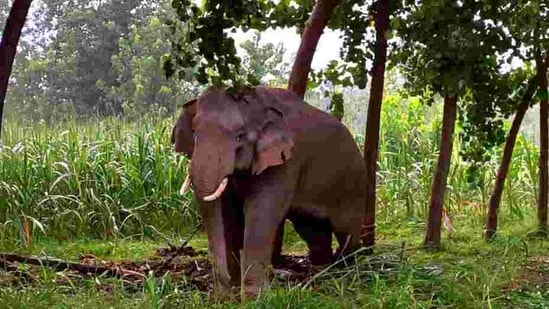
While four female elephants were found dead in the Karalapat Wildlife Sanctuary of Kalahandi between February 1 and 12, two more died in last two days taking the death toll to six.
The veterinary experts from the Centre of Wildlife Health in Odisha University of Agriculture Technology, Bhubaneswar, conducted tests on the viscera of the carcasses. The experts also carried out molecular tests and confirmed that the deaths were due to haemorrhagic septicaemia or Pasteurellosis. The disease affects mainly water buffaloes, cattle, and bison in tropical areas of southeast Asia where the population of water buffaloes is high. Acute infection can persist up to three days and less often 5 days. The disease and is characterised by high fever ranging 104°–106°F, restlessness and reluctance to move, hypersalivation and nasal discharge.
"Our tests confirmed that the elephants were infected by a bacteria called Pasteurella multocida, that resides mostly as a commensal in the nasopharynx of animals. It's a disease that affects the respiratory and digestive tracts of the affected animals. However, we are yet to pinpoint the source of the bacteria. There are 4-5 villages located inside the sanctuary with domestic cattle population that may have spread the bacteria," said Dr Niranjan Sahu, head of the College of Veterinary Sciences, who had conducted the tests.
Also read: JeM planned terror attacks in Delhi, says J-K DGP
Sahu confirmed that this is the first case of haemorrhagic septicaemia in the wild in Odisha. "There have been some cases of haemorrhagic septicaemia in India and the rest of the world. But not in Odisha," he said. He said no case of death due to haemorrhagic septicaemia have been reported from any of the livestock in Karlapat wildlife sanctuary so far.
Divisional Forest Officer, Kalahandi (south), T Ashok Kumar said of the 17 elephants in the sanctuary, the dead elephants were part of a 7-member herd. "The male elephant of the herd is fine. The other male elephants in the sanctuary are also doing fine. We believe the elephants have developed an immunity. We have separated the other elephants and started vaccination of the livestock across the 4-5 villages of the sanctuary. We have also disinfected the water bodies in the area over fears of possible contamination," he said.
Renowned wildlife veterinary expert Arun Zachariah from Kerala said that the death of six elephants due to haemorrhagic septicaemia could be the largest ever in Indian forests. "There have been sporadic deaths of elephants due to haemorrhagic septicaemia, but never a case of mass deaths. The animals developing haemorrhagic septicaemia can die of pneumonia. But there are various other symptoms. The Odisha deaths could be the single largest case of deaths due to haemorrhagic septicaemia," said Zachariah.
In 2020-21, so far, 61 elephants have died in Odisha of which 28 were due to unnatural causes. While 10 elephants have been either poached or poisoned to death, more than a half a dozen were been electrocuted.
In August and September 2019, five elephant calves in Nandankanan zoo and adjoining Chandaka elephant sanctuary had succumbed to elephant endotheliotropic herpesvirus. It was the first reported case of EEHV-related deaths in an Indian zoo.