
 E-Paper



‘Unprecedented efforts on to develop Covid-19 vaccine, parallel investments being made, too’
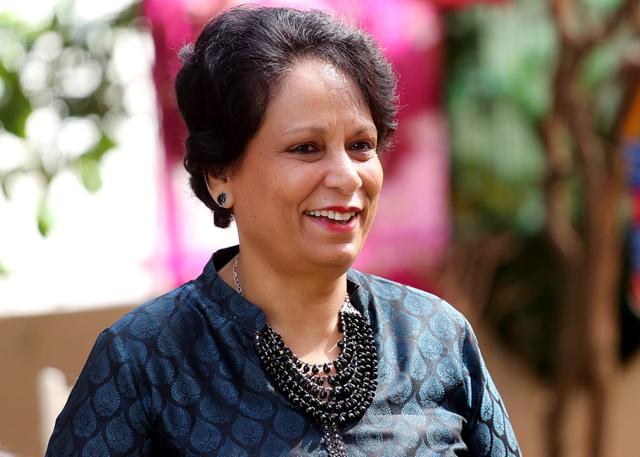
Geneva-based Global Alliance for Vaccines and Immunisation (Gavi) deputy chief executive officer Anuradha Gupta says community transmission of coronavirus in India will be extremely challenging and vaccines are the best bet to stop the contagion’s transmission


Chandigarh: The race against time for developing a Covid-19 vaccine and expediting its availability despite disrupting the routine immunisation services and increasing economic disparities are only some of the challenges the pandemic has thrown up. Deputy chief executive officer (CEO) of Global Alliance for Vaccines and Immunisation (Gavi), a Geneva-based international organisation, Anuradha Gupta, also a former Haryana bureaucrat who served in the Union health ministry, shared this while speaking on the Covid situation in India, the strategy to speed up availability of the vaccine and measures to prevent disruption of essential health services.

How do you see the Covid situation in India?
Given India’s large population, the situation could have been much worse had the government not acted in time. With relaxation of lockdown measures, the disease trajectory will need careful monitoring as a sharp spike can overwhelm health systems.
Do you think we are prepared if there is widespread community transmission after the lockdown exit?
Widespread community transmission of Covid-19 in India will be extremely challenging. Safe and effective Covid vaccines are the best bet to interrupt, and eventually stop, community transmission of the contagion.
What’s the status of Covid vaccine development?
Efforts going into Covid vaccine development are unprecedented. There are more than 100 vaccine candidates with eight technology platforms. A few are entering human trials. For the first time, parallel investments are happening in manufacturing scale-up so as not to lose time once safety, efficacy and appropriateness of a vaccine is established.
How is Gavi contributing towards the Covid-19 situation?
We have played a key role in establishing a Covid Vaccine Global Access Facility (Covax Facility). On June 4, Gavi launched an advance market commitment (AMC) for Covid-19 vaccines, an innovative financing instrument which provides volume guarantees with an aim to provide equitable access to low and middle income countries. AstraZeneca, which is developing a Covid-19 vaccine in collaboration with the University of Oxford, became the first vaccine manufacturer to sign up to the AMC with a guarantee to provide 300 million doses of vaccine upon licensure.
How are you addressing the immunisation equity issue vis-a-vis children from the marginalised sections?
We are supporting countries in preventing the disruption of routine immunisation services, restoring them as early as possible and catching up on children who might have missed their vaccinations because of Covid-19.
How is Covid -19 affecting lives and livelihoods?
To flatten the disease curve, countries resorted to lockdowns. The poor were the worst hit and many lost their livelihoods. Women, many of who work in the informal sector, are disproportionately affected and are at an increased risk of domestic violence. With economic slowdown, governments in lower income countries struggled to maintain public financing and provision of essential services, further exacerbating inequities. Disruption of essential health services such as immunisation could bring a real risk of losing hard-won gains, leading to resurgence of diseases.
How has India fared in controlling the pandemic?
Investment in primary health care and strengthening public health systems under the National Rural Health Mission has equipped the country with community-based structures and capacities, an invaluable asset in a pandemic. More than 10 lakh ASHAs and six lakh village health, sanitation and nutrition committees combined with over three lakh ANMs, and anganwadi workers, have enabled the country to do house to house outreach and mobilise community on a large scale.
Do you see a collateral damage in the spread of the pandemic in India?
Already we are seeing disruption of immunisation services which means 2.5 crore children born every year in India would be at risk of not receiving on-time vaccination against diseases such as polio, measles, diphtheria, pneumonia, diarrhoea. India successfully eliminated polio in 2011. We don’t want it to strike back.


