
 E-Paper



Wildbuzz: Genocide of fish
The report findings reeked of an excavation of Holocaust mass graves.


The findings of two surveys conducted by the Punjab Forests and Wildlife Preservation department and WWF-India has estimated a loss of 31 tonnes of fish in the wake of the dumping of 10,000 kilolitres of molasses in the Beas on May 16-17, 2018.
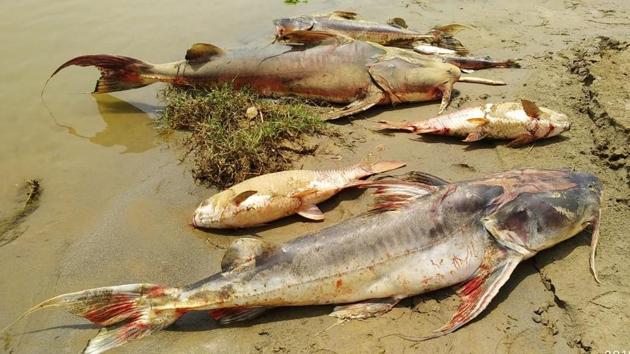
Titled, ‘Field Survey Report’, the teams conducted the study over a 120-km Beas stretch from Kirri Afgana to Harike, the former being the point from where the molasses were dumped by Chadha Sugars Pvt Ltd. The sugar mill-cum-distillery belongs to the close relatives of Punjab chief minister Amarinder Singh’s religious advisor, Paramjit S Sarna.
“This incident led to the destruction of aquatic biodiversity, its habitat and the prey base in Beas Conservation Reserve...Aquatic biodiversity was sighted escaping the river. All the birds, bigger animals like Gharials, turtles came on mid-channel islands or along banks. All-sized fishes tried to escape the river and came to the sides but eventually died due to depletion of oxygen in water and highly acidic environment...Aquatic biodiversity which escaped this adversity is under severe stress due to shortage of food and restricted availability of shelter,” stated the report.
Breaking up the fish loss into seven river segments, spanning the 120km stretch, the report stated that from Kirri Afgana to Bagha Serow village (35km segment), 300kg was annihilated, per kilometre, with a total loss of 10,500 kg.
The survey methodology deployed gill/cast nets to compare fish catches with the situation prior to dumping. Overall, as against 70 species of fish estimated in Harike zone, only 21 species were recorded in the post-dumping surveys.
The findings — the impact on Beas biodiversity were ghastly — they reeked of an excavation of Holocaust mass graves. For example: (i) fish catch in the 10km stretch from Kirri Afgana to Kangra village was 4kg in the post-catastrophe surveys. Previous studies and interaction with the local fishermen indicated that the average catch over the same stretch, per country boat, with two fishermen using cast and gill net, before the incident was 60-150 kg in eight hours per day (ii) catch in the 10km stretch from Beas Dhera to Verowal village was only 750g while previous studies indicated that the average catch per country boat with two fishermen was 100-250kg per day.
DARING THE MONSTER
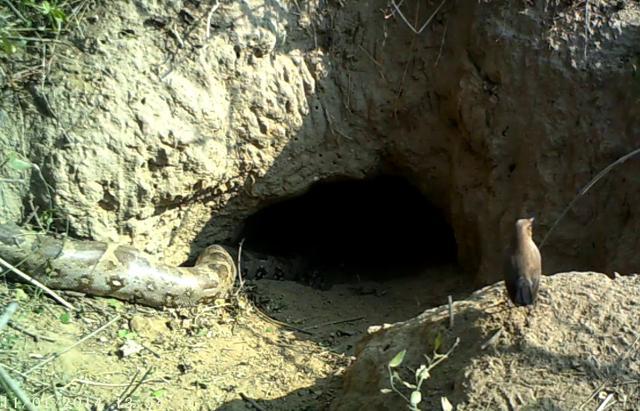
When an Indian robin steals into the dreaded lair of Rock pythons, the bird has to be quick when gobbling tasty ticks, worms and insects thriving in the burrow’s microhabitat.
The foraging robin is like a thief who has but a few minutes to clean out the safe of sparklers before guards race to the crime scene! Robins feed inside the python burrows with perfect team work. One mate sneaks inside the dark cavern, while the other perches nearby to issue alarm calls on the python’s slithering journey back home. Not only robins but migratory Bluethroats also resort to similar team work while taking turns to feed inside the burrows. However, peacocks prefer not to duck into the burrow and instead pick wandering ticks by skirting the python’s forbidding gate.
Such fascinating forays into the “monster’s chamber” by small but daring avians were photo documented during years of dedicated studies at Keoladeo National Park, Bharatpur, by SACON’s project investigators, Dr HN Kumara and Subramanian Bhupathy, and field researcher, Aditi Mukherjee.
All the 4,000 sampling sites monitored via cameras/field observations showed birds thriving on the prey base attendant to burrows of pythons, monitor lizards, porcupines and jackals.
On one memorable occasion, the female robin on guard was caught napping! The python had nearly reached the burrow while the robin’s hubby was still inside. She realised the danger in the nick of time and jumped with the alacrity and shrieks of say, a human, who has somehow trodden upon the tail of a Russell’s viper! Alerted by his wife’s hysterics, the male made good his escape and the plucky couple lived to tell the tale in a conjugal babble of quivering calls.


