


 Live Score
 Cricket Teams
 Cricket Players
Bangladesh receives support from Pakistan, ICC accused of bias: ‘Standards cannot change from country to country’
Mohammad Yousuf criticizes the ICC for inconsistent security standards, highlighting Bangladesh's exclusion from cricket due to perceived biases.

 Prefer HTon Google


Former Pakistan cricketer, Mohammad Yousuf has stepped into cricket’s most uncomfortable overlap with geopolitics, using a blunt, public message to question how the game’s global regulator applies “security” standards across countries.
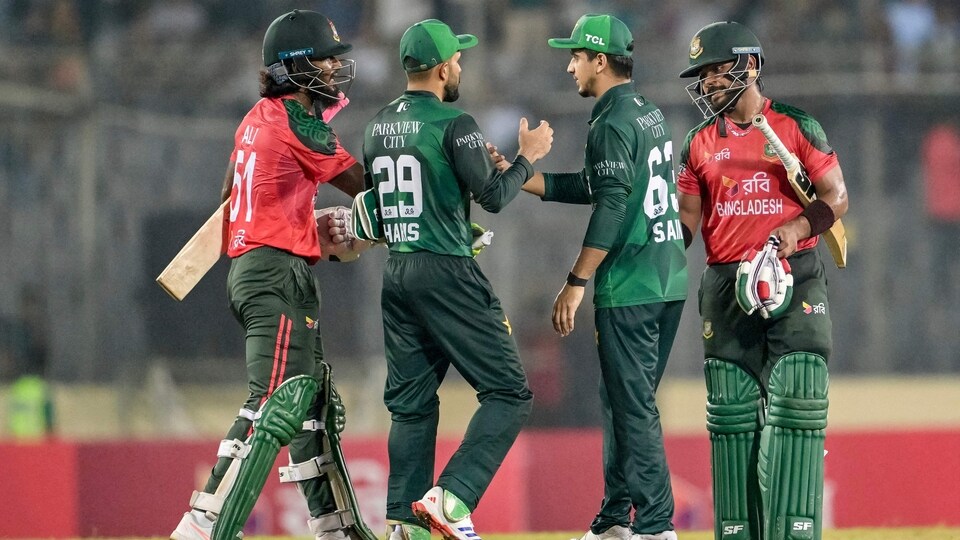
In a post on X on Saturday, the former Pakistan captain said it was “very sad” to see a cricket-loving nation like Bangladesh being “deprived of cricket” because security concerns were, in his view, not addressed, and he argued that the ICC’s approach has lacked consistency.
Yousuf’s tweet is constructed like a fairness brief, not a rant. He begins with an emotional appeal — Bangladesh as a “cricket-loving nation” — before shifting quickly to the core charge: precedent. “When similar concerns were raised earlier, a neutral venue was approved,” he wrote, implying that Bangladesh’s case should have triggered the same solution rather than a hard insistence on the published plan. The line that follows is the pivot point: “Standards cannot change from country to country.” It is a direct allegation that the ICC’s bar for accommodation is selective.
The sharper edge arrives in the next sentence, where Yousuf redefines what he believes the ICC’s job is. “ICC must act as the International Cricket Council, not appear to serve the interests of any single board,” he wrote. That phrasing is careful — “not appear” — but the meaning is unmistakable: optics matter, and the perception of favouring one powerful stakeholder can be as damaging as the decision itself. He closes by grounding the argument in principle rather than personality: “Fairness and consistency are the foundation of global cricket.”
Also Read: ‘Blackmail world cricket’: Mohsin Naqvi slammed for ‘foolish bravado’ over Pakistan’s T20 World Cup boycott talk
What the tweet really does is push a familiar Pakistan cricket argument into a fresh controversy — that the ICC’s decisions are flexible when it suits powerful boards, and rigid when it doesn’t. It’s a neat line for social media because it reduces a messy situation into one simple claim: “same concern, same solution.” But that framing skips the uncomfortable detail that every security question in international sport is judged on specifics — intelligence inputs, threat perceptions, host preparations, and the willingness of the touring party. By choosing a broad comparison rather than addressing what assessments said in this case, Yousuf’s post reads less like a careful critique and more like a political narrative designed to travel.
There’s also a second layer here: the subtext of equivalence. Yousuf’s reference to neutral venues taps into the India–Pakistan template that has shaped modern cricket scheduling, but Bangladesh’s situation cannot automatically be stapled to that history. The ICC, for its part, has maintained that it reviewed security arrangements and found no credible threat — which makes Yousuf’s “standards cannot change” line feel like a rhetorical charge rather than a fact-based conclusion. In the end, his tweet reflects how quickly cricket decisions get pulled into geopolitical messaging: not as a solution for Bangladesh, but as a public-pressure statement aimed at the ICC — and, indirectly, at India’s role as host.


