


 Live Score
 Cricket Teams
 Cricket Players
Captain Morgan and his men: Why England are still favourites for the World T20
This England team would be a top contender at the world cup no matter how this series had turned out.


Don’t draw conclusions just yet. Saturday’s loss can be worked into tomorrow’s gains. Trust England to tell themselves exactly that after losing the T20 series decider in the last seven overs. If this was to be a dress rehearsal of the T20 World Cup later this year - chances are high Ahmedabad might host the final - then England have a lot of data to work with now. They didn’t have to face a full-strength India with Jasprit Bumrah, Mohammad Shami and Ravindra Jadeja but England’s fine-tuning too has only just begun. Back-to-back failed chases may prompt them to fiddle with the idea of promoting Eoin Morgan. All-rounder Sam Curran may be looking at a broader role after mediocre returns from Chris Jordan. And while not giving Moeen Ali a single game makes little sense for their Test rotation policy (Ali and Jos Buttler left after the first Test in Chennai as part of England’s plan to rest to multi-format players), expect England to be smarter and pair him with Adil Rashid on pitches that are expected to turn more.
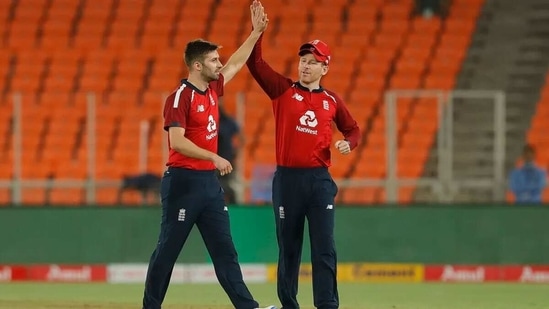
Point is, this England team would be a top contender at the world cup no matter how this series had turned out. England won the 2010 World Twenty20 and reached the final of the 2016 edition in India. In the five years since that nightmare final against West Indies, England have improved in leaps and bounds, evolving into a more talented, competent and professional unit. Only India have beaten them home and away, in all the three bilateral T20 series since 2016. That apart, England have been on a roll, winning against West Indies, South Africa, New Zealand, Australia, Sri Lanka and Pakistan. Lifting the ODI World Cup in 2019 has only provided further impetus to England’s endeavour of becoming the best team across formats. How did they achieve this consistency?
The Indian Premier League is a good starting point. Rebuffed and held in suspicion by English cricket at its onset, the IPL now attracts their best talent. “It’s been obvious from the upturn in results in the white-ball game in England, and the number of players who have been participating in it (IPL), just how beneficial it is to all of us,” Buttler had said earlier this month. “I would say the IPL has had an outstanding effect on English cricket and on the individuals involved in it. Obviously financially, but also the cricket it’s produced and the players we’re producing now.” This year, 13 English players are slated to play - Eoin Morgan at Kolkata Knight Riders; Jofra Archer, Buttler, Ben Stokes and Liam Livingstone for Rajasthan Royals; Sam Curran and Moeen Ali for Chennai Super Kings; Chris Woakes and Tom Curran for Delhi Capitals; Jonny Bairstow for Sunrisers Hyderabad and Dawid Malan - the No 1 T20I batsman in the world - for Punjab Kings. That’s a massive improvement from the slow trickle of English players in the IPL (Kevin Pietersen and Andrew Flintoff were the first two notable England players to avail its riches) for the first couple of years.
From an immediate perspective, this year’s tour of India followed by the IPL means a massive learning experience just before the T20 World Cup, something very few first international team players are poised to get. “Taking advantage of the upcoming IPL is going to be huge,” said Morgan after the series. “As a team and as individuals we don’t want to stand still, we want to continue to move forward. Any opportunity guys get at the IPL, you want to try and make the most of it, because we’re going to be playing at home for our summer and then we go to Bangladesh and Pakistan but there is limited opportunity to get our best XI in those games. The experience over the next couple of months is the most valuable.”
Morgan knows a thing or two about India, having played most T20Is here after at home. Having gone through the hoops himself in an IPL career spanning over a decade, Morgan understands how taxing India can be not just on the body but also on the mind. That is why Morgan tends to go the extra mile when playing in India. “One thing I like to think I do is deal on an individual basis pretty well and keep an eye on the guys, how they’re travelling, and the guys who aren’t playing,” he had said before the 2016 World Twenty20 final against West Indies at Eden Gardens. “That’s very important that their contributions and morale around the group is high, given that we’re touring India and a lot of the guys haven’t been here before, it’s important to keep talking about conditions, make sure there’s no novelty and no pre-conceived ideas that we came to India about.”
That England turned a corner under Morgan is an understatement: he is the brains behind the transformation from a hesitant bunch to a world-beating unit. The third England player to be given an IPL contract (in 2010, after Pietersen and Flintoff), it was the Irishman who had gently pushed the English and Wales Cricket Board (ECB) into prioritising IPL over county cricket (the board gets a fixed percentage of the IPL contract of every English player). Morgan’s style of captaincy may seem ruthless at times, keeping Joe Root out of the scheme and icing out Alex Hales for failing a drugs test just before the 2019 World Cup. But at his core, Morgan keeps the team’s interest above everything else, be it at dropping to No 4 to accommodate Bairstow or shaping the narrative that prompted England prioritise talent over nationality and integrating the likes of Archer. Safe to say, England couldn’t have won the World Cup without that Super Over by Archer.
The only English IPL captain, Morgan has also carefully cultivated this image of a free thinker who is open to new ideas and technology. England benefitted as a result, transforming into a smart team that dabbled in controversial ideas like sending coded signals from the team balcony during the T20 series in South Africa last year. The analyst behind that idea - Nathan Leamon - has joined Morgan’s Kolkata Knight Riders as strategic consultant this season. It’s clear indication that England wants its top analyst to spend two months with its captain working through a grinding season of IPL ahead of the T20 World Cup.
This sea change in approach was time-consuming and frankly, inconceivable when Morgan was handed England’s captaincy barely three months before the 2015 World Cup. That campaign ended in a shambles, allowing Morgan a free hand in building the team from scratch, ridding it of fear of defeat while enhancing his reputation as an audacious finisher. It’s nothing Morgan hadn’t done on a personal level at first; not often has a foreigner become captain of an IPL team where he was once considered surplus to requirements. That confidence slowly rubbed on to an England team that currently tops the ODI and T20I rankings owing to its matchwinners - Jason Roy, Buttler, Malan, Mark Wood, Bairstow, Stokes and Archer come first to mind. Too many, most would agree, given Stokes bats at No 6 in this team. But England don’t seem vexed by their selection headaches. One-day superiority already validated, they have now trained their sights on the T20 World Cup. First step towards that was this T20 series.


