


 Live Score
 Cricket Teams
 Cricket Players
England SWOT analysis for T20 World Cup: Harry Brook and his boys look to flip the narrative after Ashes debacle
With the T20 World Cup 2026 approaching here is a detailed analysis of the England squad for the tournament.

 Prefer HTon Google


England’s provisional T20 World Cup 2026 squad isn’t a nostalgia pick or a “best XIs on paper” flex. It’s a group built around tempo -batting and enough bowling variety to survive the India–Sri Lanka February-March grind, where one sticky surface can make 165 feel like 205.
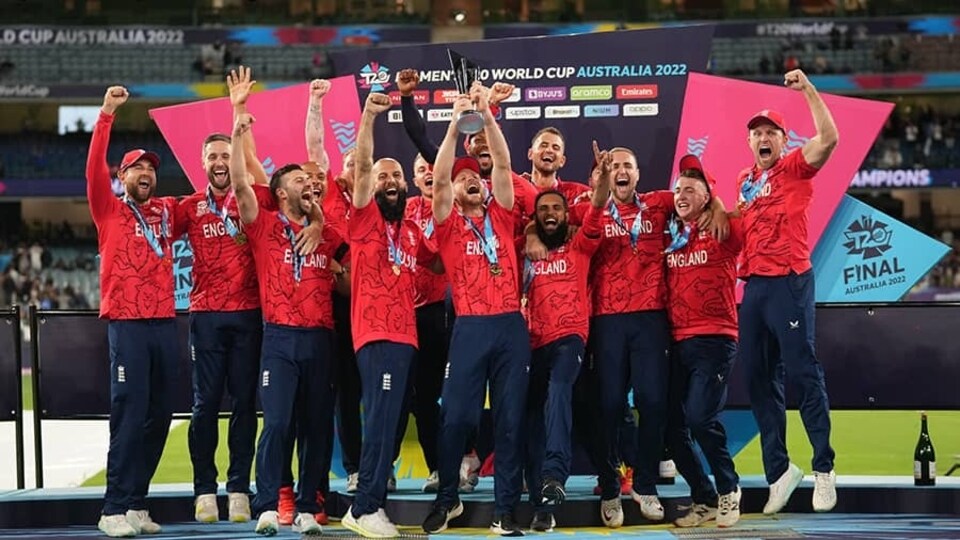
Named on December 30, 2025, the 15 has Harry Brook as captain, with Jos Buttler and Phil Salt headlining the batting and Adil Rashid still the middle-overs compass. England have also taken a calculated fitness punt on Jofra Archer, who is in the World Cup group while continuing rehab from a left-side strain.
England squad for T20 World Cup 2026
Harry Brook (c), Rehan Ahmed, Jofra Archer, Tom Banton, Jacob Bethell, Jos Buttler, Sam Curran, Liam Dawson, Ben Duckett, Will Jacks, Jamie Overton, Adil Rashid, Phil Salt, Josh Tongue, Luke Wood.
Strengths of England for T20 World Cup 2026
Powerplay firepower without a single point of failure
England can start fast in multiple ways. Salt and Jos Buttler can go full demolition from ball one, Duckett gives a left-hand disruptor at the top, and Brook/Jacks/Banton means there’s no “one wicket and the engine stalls” problem. The shape screams intent: win the first six overs often enough and you don’t need perfect cricket later.
Spin spine plus match-up fillers
Rashid remains England’s most reliable weapon because he controls games even when batters know what’s coming. Rehan Ahmed adds another legspin look, while Dawson gives left-arm control that can choke the “take no risks, target one bowler” plans on grippy pitches. Jacks and Bethell then become the match-up glue when a phase needs overs without gifting momentum.
Left-arm pace angles and all-round overs coverage
Curran and Wood change hitting arcs and force different boundary options, which matters in Sri Lanka/India where batters love setting up a single line. England also aren’t begging for part-time overs: Curran, Dawson, Jacks, Bethell can cover a lot of tactical ground.
Weaknesses of England for T20 World Cup 2026
Fitness sensitivity at the highest-impact role
Archer is the ceiling-raiser, but also the risk marker. England have named him while he continues rehab and is set to miss the Sri Lanka tour, so the question isn’t talent, it’s readiness and rhythm. If Archer isn’t fully sharp, England’s powerplay and death plans need re-writing mid-tournament.
Death-overs clarity can get fuzzy on flat nights
On surfaces where you need 18 “good balls” at the end, England’s options depend heavily on who is in form: Curran’s change-ups, Overton’s hard lengths, Tongue’s hit-the-deck style, Wood’s angle. It can work — but it can also become “spread the risk” bowling if a settled closer doesn’t emerge early.
Role overlap in the middle order
Brook, Jacks, Jacob Bethell, Banton can all play similar styles if left to instinct. England’s best version is ruthless role discipline: one batter absorbs, one accelerates, one finishes. If everyone tries to be the accelerator, collapses arrive fast in the subcontinent.

Opportunities for England in T20 World Cup 2026
Sri Lanka/India conditions reward spin depth and left-right disruption
This squad has the tools to win the middle overs rather than merely survive them. Dawson’s control into the pitch, Rashid’s wicket threat, Rehan’s variation — paired with left-right batting combinations — can force opponents to bowl honest overs instead of stacking match-ups.
Brook’s captaincy can harden the identity quickly
England’s white-ball reset is happening in real time, and Harry Brook has publicly owned a leadership wobble and the standards conversation around it. If that translates into sharper on-tour habits and clearer tactical choices, England can find tournament rhythm faster than teams still debating their best XI.
Threats for England in T20 World Cup 2026
Conditions mismatch and dew chaos
If nights are dewy and flat, the tournament can flip into a pace-execution league. That’s when you need elite death bowling and minimal over-correction when plans don’t grip. England’s bowling has variety, but dew can neutralise the very spin control they’re banking on.
One close loss can distort qualification routes
England’s group-stage start matters because T20 tournaments punish slow starts brutally — you end up chasing net run-rate, not match-ups.
Also Read: Australia SWOT analysis for T20 World Cup: Mitchell Marsh’s well-oiled unit arrives prepared for subcontinent challenges
England’s X-factor for T20 World Cup 2026
Jacob Bethell

Jacob Bethell is the squad’s structure player. If he lands, England can play an extra specialist bowler or stack batting without losing overs coverage. In subcontinent tournaments, that kind of flexible piece is often the difference between a good XI and a tournament XI.
Best possible playing XI for England
Phil Salt, Jos Buttler (wk), Ben Duckett, Harry Brook (c), Will Jacks, Jacob Bethell, Sam Curran, Liam Dawson, Adil Rashid, Jofra Archer, Josh Tongue


