


 Live Score
 Cricket Teams
 Cricket Players
ICC: Having an event every year will help our broadcasters leverage their investment
In the ongoing IPL and ICC rights cycle, the digital and TV rights are also all held by Star India. But, with the soaring demand for digital platforms, the standalone digital numbers could see a steep rise.


Expectations around the upcoming IPL media rights tender for the next five years (2023-27) have heightened after Board of Control for Cricket in India’s R 12715 crore bonanza from the sale of two new franchises. Interestingly, the International Cricket Council (ICC) is also expected to go to the market with their events (2024-31) early next year.
With the ICC media rights hugely dependent on the Indian market, expect a big churn in this space in the months ahead. Currently Star India hold rights of both these properties (IPL: R16348 crores for 5 years, ICC events: USD 1.9 billion for 8 years). But one entity holding on to both is extremely unlikely given the premium at which both these properties are likely to go for.
Would one not eat into the other? Is ICC scaling down expectations?
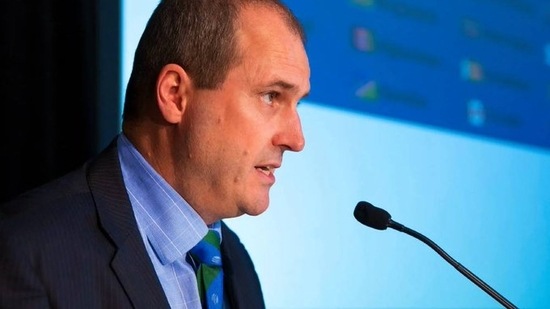
“No, I don’t think so,” Geoff Allardice, ICC’s acting CEO said in an interaction with select media. “Cricket is a very sought-after property in the Indian market, and the ICC events are very much towards the top of the pie. If our discussions with broadcasters are anything to go by, the interest in obtaining ICC rights is very high.”
The ICC continues to bank on the popularity and prestige attached to World Cups. That’s one of the reasons the next rights cycle will see two additional events, which would mean one ICC event every year (two ODI WCs, four T20 WCs and two Champions Trophies). “Having an event every year, certainly helps our commercial and broadcast partners. It gives them an opportunity to leverage their investment on an annual basis,” Allardice said.
Is there a chance of overkill, of audience fatigue with big ICC events?
“I don’t think high quality global events are being played too frequently. T20 cricket World Cups every two years is right. We have identified that format to grow the international game and that goes hand in hand with expanding the number of teams,” Allardice said. The ongoing T20 World Cup is being played by 16 teams. It will go up to 20 teams from the 2024 edition.
There have been some discussions in the ICC of going to the Indian market for the first time with a four-year proposition, to ensure the back end of an eight-years right cycle is not undersold. They are not saying it just yet. “In terms of the duration of the partnerships, we are still working through the detail of that and various permutations,” Allardice said.
The next big rights war: Digital
In the ongoing IPL and ICC rights cycle, the digital and TV rights are also all held by Star India. But, with the soaring demand for digital platforms, the standalone digital numbers could see a steep rise. Facebook (now Meta) had unsuccessfully bid Rs3900 crores in the last IPL rights cycle. With Reliance, Amazon and others looking to enter the fray, expect a massive change on that scene.
“There is a real shift in the market in terms of the interest and types of companies that are interested in earning the rights. You are seeing a bit of a shift from traditional some of the broadcasters to the large digital companies as well. I think it’s a very good time to be in the market,” said Allardice.
WTC format tweak unlikely
The fourth of the ICC events in the next rights calendar is the World Test Championship final, which is a culmination of a two-year cycle of Test cricket. Although the format and spread of series is unequal and far from ideal, ICC says that for now this is the best formula they have to offer. “At this stage, the limiting factor is the number of teams we can fit into two years. We tried to fit eight series over two years initially and it was just too congested. We settled on six. At this stage it looks like (continuation of) a nine-team edition,” he said.
ICC also made it clear there are no prospects of India-Pakistan facing off against each other in WTC, unless the two teams make the finals. “If both make it to the final, then they play each other at a neutral venue. It’s just a pragmatic approach to keep them apart and let the competition function,” said Allardice.


