


 Live Score
 Cricket Teams
 Cricket Players
India, BCCI won’t blink if Pakistan T20 World Cup clash gets cancelled; IND-PAK rivalry has long lost its edge
The aura may remain, but the India-Pakistan rivalry, as a contest, no longer does.


There has always been a confluence of sports and politics, no matter the game, no matter the country. While politics has often fuelled rivalries on the field, sports, paradoxically, has also brought people together across borders, irrespective of political fault lines. Few sporting contests embody this paradox better than cricket’s greatest rivalry: India versus Pakistan.
When India won the Prudential Cup in 1983 and ushered in a new era for world cricket, then BCCI president NKP Salve and his Pakistani counterpart, Air Marshal Nur Khan, together challenged the Old World Order to bring the World Cup to the subcontinent in 1987. Despite being on the brink of war, India and Pakistan co-hosted the tournament, a rare triumph of sports over politics.
Earlier that same year, Pakistan President General Zia-ul-Haq travelled to Jaipur to watch his national team play India in a Test match. The visit, coupled with his meeting with Indian Prime Minister Rajiv Gandhi, helped ease tensions between the two nations.
ALSO READ: Pakistan branded ‘minnows’, told they’re ‘not in the same league’ as India as T20 World Cup row deepens
The subcontinent hosted the World Cup again in 1996, with Sri Lanka joining India and Pakistan. That tournament produced one of the most enduring moments of the India-Pakistan rivalry, Aamer Sohail’s aggressive send-off and Venkatesh Prasad’s emphatic reply at the Chinnaswamy Stadium. In the same match, Javed Miandad, playing the final innings of his career, was jeered by the crowd. Yet the very same Bengaluru crowd stood up to applaud the visiting Pakistan team when they defeated India at the venue three years later.
In 2004, India toured Pakistan for the first time in over a decade. Sourav Ganguly’s men lived up to Prime Minister Atal Bihari Vajpayee’s vision, not just through their dominance on the field, but also through warmth and camaraderie that won hearts across the border.
Politics remained a constant subplot, but the fierce contests of the 1990s and early 2000s, the rise of stars like Wasim Akram, Shahid Afridi, Sachin Tendulkar and Sourav Ganguly, defined the rivalry’s aura and shaped the mythology that still surrounds an India-Pakistan clash.
That landscape, however, changed dramatically after the 2008 Mumbai terror attacks. Since January 2013, the last time India hosted Pakistan, the two sides have met only in multi-nation tournaments. The Indian team never travelled to Pakistan again, but the Men in Green were hosted in India during ICC tournaments, as recently as the 2023 ODI World Cup. However, when it was India's turn to return the favour, the government did not allow the team to travel to Pakistan for the 2025 Champions Trophy, sparking a war of words between the two cricketing boards, which was eventually put to rest when the ICC adopted the hybrid model. While Dubai staged India's matches during the ICC tournament last year, Sri Lanka was picked to host Pakistan's World Cup games in the upcoming edition.
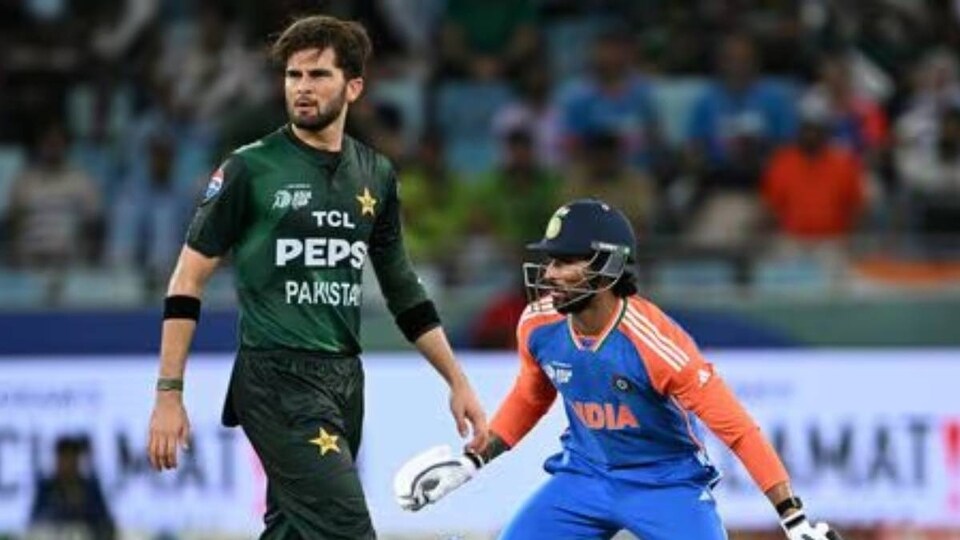
However, the geopolitical situation deteriorated further following the Pahalgam attack in April last year. At their first meet-up since the incident, the Indian men's team refused to shake hands with their Pakistan counterpart at the Asia Cup in September last year. Later, the women's team, the India A team and the U19 men's team followed suit in their respective face-offs against Pakistan.
Yet the hype has endured, fuelled largely by nostalgia. Tickets continue to sell out in seconds, broadcasters build weeks of pre-match programming, and campaigns like ‘Mauka, Mauka’ tap into collective memory. A report by The Age revealed that each India-Pakistan match between 2023 and 2027 is valued at around USD 250 million (approximately ₹2,300 crore) under the ICC–JioStar deal, with advertising slots priced at no less than ₹40 lakh.
What those narratives often ignore is the recent cricketing reality, barring Virat Kohli’s iconic knock at the MCG in 2022, there have been few contests worth retelling. The Asia Cricket Council has tweaked formats to maximise potential India-Pakistan meetings, while the ICC continues to place the two teams in the same group. The reason is obvious: no fixture generates comparable revenue.
But the rivalry itself has faded. India’s T20I captain Suryakumar Yadav acknowledged this bluntly last September ahead of the Asia Cup final. “According to me, if two teams play 15–20 matches and if the head-to-head is 7–7 or 8–7, then that is called a rivalry. But 13–0, 10–1… I don’t know the stats. This is not a rivalry anymore,” he said.
The numbers back him up. Since their last bilateral series, India and Pakistan have faced each other 23 times across World Cups, Champions Trophy and Asia Cups. India have won 19 of those matches. Across ODI and T20 World Cups combined, India lead 14–1, including a staggering 7–1 record in T20Is.
Suryakumar’s comments came just days before India defeated Pakistan again in the Asia Cup final, marking their eighth straight win in men’s internationals since their previous loss in Dubai in 2022.
The imbalance extends to women’s cricket as well. India have won 13 of their 16 T20Is against Pakistan and boast a flawless 12–0 record in ODIs.
There is a reason that players like Virat Kohli and Rohit Sharma have often described India-Pakistan encounters as “just another game.” That mindset will define the current Indian T20I squad as well, regardless of what Pakistan ultimately decides.
Whether Pakistan proceeds with the boycott, as appears to be likely given the directive from its government, or stages a late reversal and takes the field in Colombo next week, India will not blink. The aura may remain, but the rivalry, as a contest, no longer does.
In terms of a financial loss for ICC and the BCCI, both will recover. And even without the India-Pakistan match, the World Cup will be played till the end. But the ones who will lose the most will be the fans, the greatest stakeholders in the game, the ones who have built and lived up to the hype around the rivalry.


