


 Live Score
 Cricket Teams
 Cricket Players
India pay the price for poor selection calls
The tame semi-final elimination in the T20 World Cup was due to poor planning and ignoring players who would have been far better suited to deliver.


As fevered debate over India’s semi-final loss at the T20 World Cup begins to settle down and stakeholders seek clarity on what went wrong, India will look at Pakistan’s record with envy: semifinalists in 2021, runners-up in 2022.
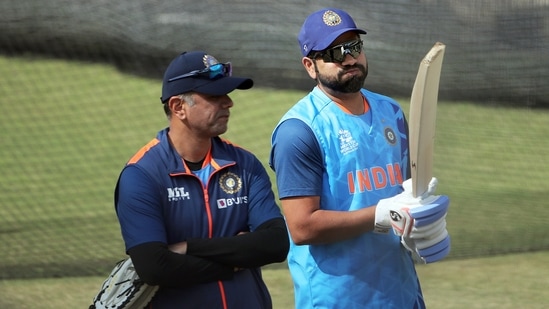
There are lessons there. Despite reaching the semis, skipper Rohit Sharma and coach Rahul Dravid would know they were far from convincing through the league phase.
Sunday's final is a good case study. Pakistan’s batting doesn’t really stand out compared to India’s. Rohit Sharma’s team got 168 versus England in the semi-final loss, Pakistan managed just 137. The stark contrast is in bowling. While the focus in T20 cricket is on economy rate, skipper Babar Azam packed his side with wicket-taking options.
Give Shaheen Shah Afridi, Naseem Khan, Haris Rauf and Mohammad Wasim 168 to defend against England at Adelaide and watch the fun. The success of Pakistan’s tactic announces that at international level there is no point even considering a pacer who can’t bowl 140 kph. It’s a combination of high skill delivered at high speeds. The highest total against Pakistan at this World Cup was 160 by India in their successful chase in the opening game.
Nothing can be worse for a captain than not being able to pick a single wicket, as it happened against England. The camera pans on you repeatedly and you don’t know where to look. It wasn’t the first time. A year ago, India failed to pick a single Pakistan wicket after setting 152 to win. Virat Kohli was the captain who endured that frustration in Dubai of the 10-wicket loss.
The alarm bells rang at the Asia Cup in the UAE in August-September when Sri Lanka and Pakistan chased down 182 and 174 respectively.
On Sunday, Pakistan lost to England in the final, but Babar Azam had the bowling arsenal to make a match of it. Only Ben Stokes stood between them and the trophy with an injury to spearhead Shaheen Afridi helping England’s cause.
IDENTIFY PLAYERS
Half the job of a captain and coach in building a team is identifying the right players who can deliver when the heat is on. Sourav Ganguly was a great example as skipper. His success was mainly built on the effort he made to scan for talent, with help from teammates, and then backed them. Yuvraj Singh, Harbhajan Singh, Zaheer Khan, Munaf Patel and Virender Sehwag were backed to the hilt. For Pakistan, it was the same with Imran Khan–Inzamam-ul Haq, Wasim Akram and Waqar Younis were identified and blooded early.
And what did India do at this World Cup? Bank on Bhuvneshwar Kumar. There is that one moment in a player’s career when everyone knows it is over. For Bhuvneshwar, it was the 2021 World Cup match against Pakistan. He was pedestrian with the new ball against Babar Azam and Mohammad Rizwan, conceding 18 runs in two powerplay overs to finish with figures of 3-0-25-0. It was like the treatment Manoj Prabhakar got from Sri Lanka openers Sanath Jayasuriya and Romesh Kaluwitharana at the 1996 ODI World Cup game in Delhi. After his spell of 4-0-47-0, he didn’t play for India.
Bhuvneshwar though was persisted with. He did well in bilateral series under helpful conditions, but it's how you turn up on flatter pitches when the batters are on top that matters. When the pressure was on in the semi-final, he bungled again.
The India selectors and team management must ask themselves whether they really built a world-class attack for the tournament.
When Jasprit Bumrah was ruled out due to injury, India lost their best attacking option. It demanded a rejig of bowling plans, selecting a line-up with more attacking flair. India needed bowlers with sharp pace, given that it has been proved time and again that banking on anyone who clocks less than 140kph is a waste of time against world class opponents. India needed bowlers with sharp pace. They found one in IPL, Umran Malik, but played it safe by not backing him for the World Cup.
When India picked so many 30-plus players (Sharma, Kohli, R Ashwin, Dinesh Karthik, Bhuvneshwar, Mohammed Shami, Yuzvendra Chahal and Suryakumar Yadav), it looked like they had taken a leaf out of the Chennai Super Kings IPL gameplan.
CSK though are brilliant in getting the best out of the seniors. Experienced campaigners in form are great match-winners–Shane Watson is an example—he got 117* for CSK in the 2018 IPL final and 90 in the 2019 final.
India were neither here nor there. They did have a few 140-plus options at home. Umesh Yadav was one. Yadav and Shami with the new ball and Arshdeep and Hardik Pandya as the 3rd and fourth seamers would have made for a more incisive attack. The two experienced pacers were standout performers last IPL with the new ball and also have a fine record in Australia.
PRITHVI SHAW QUESTION
If going hard at the top was India's strategy, then why was Prithvi Shaw sitting at home? Trying to get a player into adapting a different style seldom works out. India kept banking on KL Rahul to play the role of an enforcer. It didn’t work out as he finished with an average of 21.33 and a strike rate of 120.75. Shaw knows no other way than attack—his T20 strike rate is 151.67. It’s about taking tough selection calls. It was not easy for Ganguly to omit VVS Laxman from the 2003 World Cup. He did. India’s think-tank didn't take the hard calls.
 ABOUT THE AUTHORSanjjeev K Samyal
Sanjjeev K Samyal heads the sports team in Mumbai and anchors HT’s cricket coverage.


