


 Live Score
 Cricket Teams
 Cricket Players
India vs England semifinal pattern too strong to ignore: Will the unnoticed T20 World Cup script unravel again in 2026?
The India vs England semifinal at Wankhede Stadium has historical significance, as the winner has gone on to win the T20 World Cup title.

 Prefer HTon Google


The stage is all set for the India vs England semifinal at the iconic Wankhede Stadium in Mumbai. While there will be discussions about strategies, team compositions, and players to watch out for in the match, an interesting trend has emerged around the fixture that might elate Indian cricket fans.
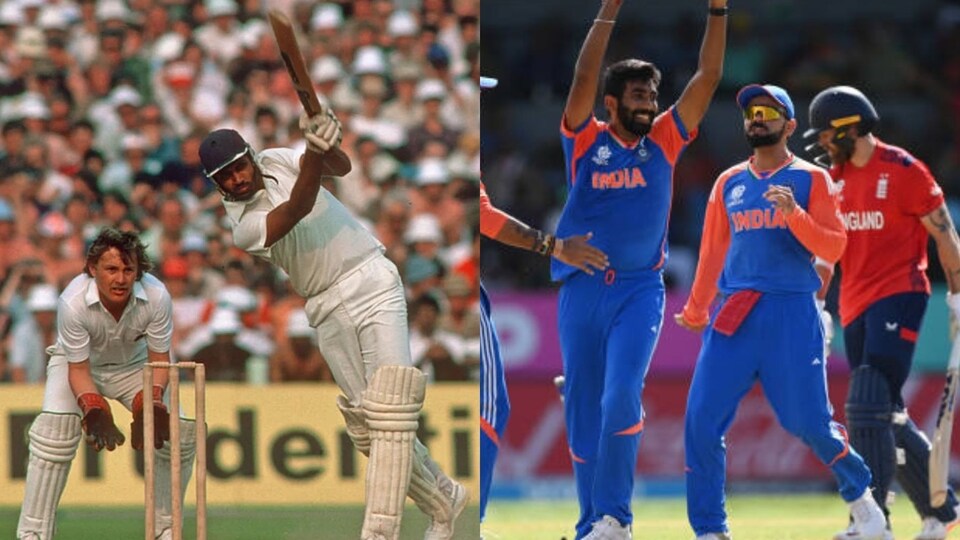
India vs England in a World Cup semi-final has been, more or less, a tournament verdict. The sample size is small, yes, but the pattern is sharp enough to make this rivalry one of the fascinating omen fixtures in ICC events.
In the Men’s T20 World Cup, the trend is especially striking; the winner of the India-England semi-final has gone on to win the title every time they have met at that stage. England knocked India out in the 2022 semi-final at Adelaide and then went on to win the trophy, while India beat England in the 2024 semi-final in Providence and went on to become the Champions.
While that alone is an interesting storyline, it gets even more interesting when viewed from India’s perspective.
When India beat England in a World Cup semi, India finish the job
Across men’s ODI and T20I World Cups, India have beaten England in a semi-final twice - and on both occasions, India ended up as the champions.
The first instance occurred in 1983 during the ODI World Cup. In the semi-final at Manchester, India beat England by six wickets. Three days later, Kapil Dev’s side caused one of cricket’s greatest upsets by defeating Clive Lloyd’s “invincible” West Indies in the final at the home of cricket, Lord’s.
The second came in the 2024 T20I World Cup semi-final, where India outplayed England by 68 runs before going on to win the title. So, one can say, India beating England in a World Cup semi-final has, so far, been a direct route to a trophy.
There is, of course, an important caveat. If we widen the frame to every India-England World Cup semi-final across all formats, the pattern breaks in ODIs. England beat India in the 1987 ODI World Cup semi-final at Wankhede, but then lost the final to Australia. This is even more significant because the same two teams meet at the same venue in the 2026 clash.
So this is not destiny, and it is certainly not predictive science. But as a historical lens for a high-pressure contest, it is gold. In T20 World Cups, the India-England semi-final has recently behaved like a title decider, and whenever India have beaten England in a men’s World Cup semi, they have gone all the way.


