


 Live Score
 Cricket Teams
 Cricket Players
Indian team's marketability not always a boon in cricket World Cups
Being poster boys of world cricket comes with a price, especially due to scheduling that can prove disadvantageous.


Indian cricket’s highly marketable status ensures it gets a world event almost every alternate year. But for the players, being the poster boys of the game comes with a price. Every India game is slotted for prime time viewing, at the biggest of stadia to attract record viewership and ground attendance.
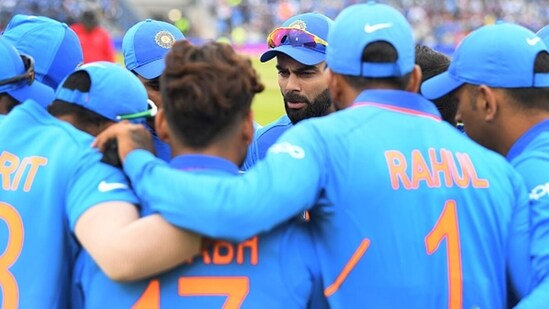
Often, it has a consequence on their road to the title - be it India having to clock the most air miles and risk fatigue during the league phase of the upcoming ODI World Cup, playing on dew-affected Dubai evenings in the 2021 T20 World Cup or being asked to overcome a five and four-Test series hurdle against England and Australia respectively, to qualify for the World Test Championship (WTC) final.
Cricket’s global body ICC learnt its lesson the hard way in 2007. India’s group stage exit from the ODI World Cup in the West Indies marred market sentiments around the tournament. Sponsors complained, advertisers renegotiated bargain deals and the tournament lost its buzz. To compound matters, Pakistan too crashed out and the blockbuster face-off of the arch-rivals never happened.
Since then, scheduling of ICC events has been a well-calibrated exercise. Plenty of commercial safeguards that include a longer league phase, primetime TV slots for the big games and a guaranteed India-Pakistan clash early into the tournament. Commercially speaking, big games in a cricket World Cup start and end with an India match. They attract most eyeballs and the media rights bankrolls ICC’s coffers.
“During the 2011 ODI World Cup, matches were fewer. So, BCCI state units were given the choice to either take an India match or opt for knockouts. Ahmedabad, Mohali and Mumbai went for knockout matches but each ended up being India games too, as the team went all the way,” recalls Ratnakar Shetty, who was tournament director.
ON THE ROAD
The league phase of the current edition is a gruelling 45-match exercise. “In most cricket-playing countries, nine home matches are a lot. But with a body like BCCI, it means you can only keep 9 of the 38 state units happy,” said a BCCI official.
Pakistan matches, with huge focus on their security in India, are restricted to five venues, two of them back-to-back at one venue with an eight-day breather in between. In a marathon event like the ODI World Cup, this energy saved will help the team stay fresh in the later stages.
Afghanistan and Bangladesh get to play consecutive games in the same venue twice, which will reduce their travel time. Australia and South Africa too enjoy that advantage, once during the league phase.
INDIA’S DUBAI WOES
The commercial balancing act around the 2021 T20 World Cup schedule in the UAE – India held the hosting rights – became a problem for the Indian team. All 10 evening matches at the Dubai International Stadium were won by the chasing team with dew altering playing conditions sharply in the second innings. To suit Indian prime time TV, matches began at 6pm local time, which didn’t help.
India were allotted four of their five league matches in Dubai, all prime time. Other teams got to play some day games and in varied pitch conditions at Abu Dhabi and Sharjah. As luck would have it, India lost important tosses, their batting was miserable in the key matches against Pakistan and New Zealand in Dubai. And it all but ended their playoff hopes. “The wicket eased out when you came on to bowl second,” Bharat Arun, India’s then bowling coach, had said.
R Sridhar who was the fielding coach, elaborated in his book. “For all practical purposes, our tournament was over even though we had three more matches to play. The draw could have been better. India, Pakistan and New Zealand, the three main contenders from the group for semifinal slots — with all due respects to Afghanistan — played a triangular series in the first week of the World Cup,” he has written. “I have a feeling it was perhaps more the broadcasters than the organisers who wanted this schedule and I think they shot themselves a little in the foot.”
TOUGH ROAD TO WTC FINAL
India faced a familiar problem during the WTC as well. Only India, Australia and England generate media-rights revenue from hosting Tests. Therefore, they play two five-Test series each during a two-year WTC cycle. India will play five-Test series against Australia from this WTC cycle.
South Africa and Sri Lanka have curtailed their Test calendar and will play only the bare minimum 12 Tests across six series in the current cycle. If South Africa play it right, they can look to maximise home advantage with the right pitches as each of their opponents are sub-continental sides – India, Pakistan and Sri Lanka.
Though qualification for the final is decided by equating percentage points for each Test won, making the most of home conditions across a longer series can be a lot more difficult as India found out in the home series against Australia with the loss of the third Test at Indore.


