


 Live Score
 Teams
Teams Players
INR 1.76 core money heist: Rinku Singh breaks into LSG's match vault with IPL 2026's biggest all-round show
Rinku Singh led Kolkata Knight Riders to a dramatic win in Lucknow, scoring an unbeaten 83 and taking five catches, including a crucial one in the Super Over.

 Prefer HTon Google


Kolkata Knight Riders did not get a clean win in Lucknow. They got a rescue job, a late collapse scare, a Super Over escape, and one of the most complete individual performances of their season.
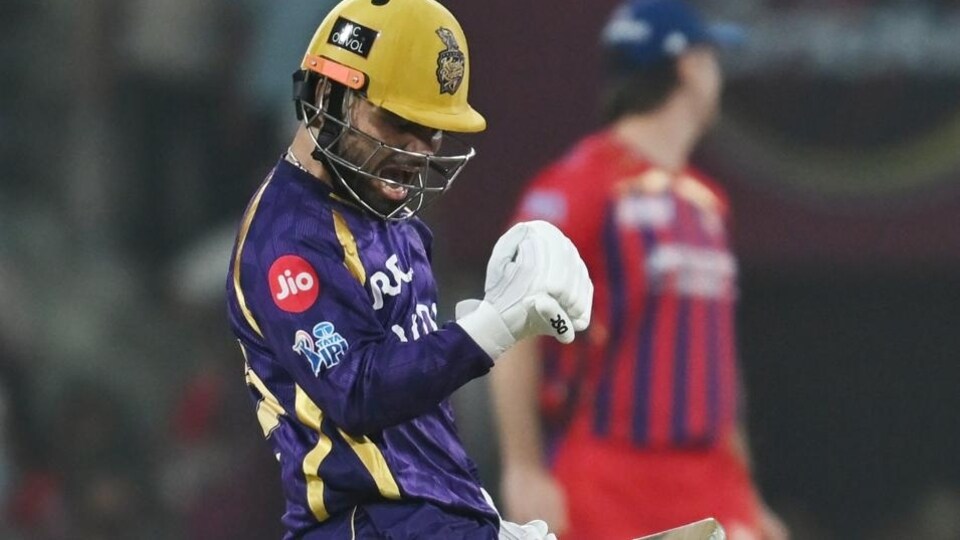
Rinku Singh was at the centre of almost every turn. He walked in with KKR broken at 31/4, dragged them to 155/7 with an unbeaten 83, took five catches, helped reduce the damage from Kartik Tyagi’s final-over no-balls, and then contributed again in the Super Over. By the final calculation, Rinku’s match was worth approximately ₹1.76 crore, giving KKR a surplus of around ₹75.60 lakh over his rolling match cost.
Rinku Singh turns 31/4 into a defendable 155
Rinku Singh’s innings cannot be judged as a simple 83 not out. The entry point matters. KKR were 31/4 after 6.1 overs. That is a survival zone. At that stage, the innings needed someone to first stop the bleeding, then stretch the total, then somehow manufacture a final-overs push. Rinku did all three.
His 83 off 51 balls gave KKR a total they had no right to reach from that position. The early part of his innings was control. He had to absorb pressure because KKR had already lost the top order and had no freedom to keep gambling.
The death overs changed the value of the innings. Rinku’s late hitting turned a possible 125-130 total into 155. That difference was the match. KKR won because 155 was just enough to keep the game alive.
Five catches, one Super Over grab
The fielding layer was not decorative. Rinku took five catches, including one in the Super Over. He dismissed Aiden Markram in the chase, removed George Linde in the death phase, caught Himmat Singh in the final over, and then took another catch to remove Markram in the Super Over.
The Super Over catch was the biggest one. KKR were looking to restrict LSG to a manageable total. In that situation, one clean hit could have shifted the entire game. Removing Markram there was not a normal fielding act. It was a match-closing intervention.
The Himmat Singh catch also carried value. It came immediately after Kartik Tyagi’s no-ball chaos had opened the match for LSG. Rinku did not merely complete the dismissal. He helped stop the over from spiralling further.
That is why his five catches cannot be treated like routine scorecard entries. In a tied match, with one of those catches coming in the Super Over, the fielding value has to be read through pressure and timing.
Kartik Tyagi’s no-balls almost erased KKR’s Rinku advantage
Kartik Tyagi nearly turned Rinku’s rescue into a wasted effort. LSG needed 17 off the final over. That was difficult but still manageable for KKR. Then Kartik lost control. Two no-balls changed the equation, added direct runs, created pressure, and gave LSG the opening they needed to drag the match into a Super Over.
The direct no-ball cost was eight runs. The practical damage was bigger because the sequence changed the final-over equation and pushed KKR into panic territory. At that point, Rinku’s catch at 19.3 became a repair act. It did not erase every bit of damage, because Mohammad Shami still hit the final ball for six, but it stopped the over from fully escaping KKR before the final delivery.
This is what makes the performance complete. Rinku built the total. Kartik damaged the defence. Rinku then helped pull the match back.
How Rinku’s value rises to ₹1.76 crore
Our model values Rinku’s match contribution at approximately ₹1.76 crore after accounting for the innings, the five catches, the Super Over involvement and the no-ball damage he helped reduce.
Against his rolling match cost of about ₹1 crore, that gives KKR a surplus of roughly ₹75.60 lakh from one game.
That profit alone is more than four Hyundai Creta N Line cars at around ₹17.83 lakh each. In one night, Rinku gave KKR the equivalent of a small luxury garage in surplus value, while also saving them from a match they nearly threw away.
The exact number matters, but the cricketing idea matters more. Rinku was not just KKR’s best batter. He was their stabiliser, accelerator, catcher, crisis-handler and Super Over finisher.
KKR’s night nearly split into two stories: Rinku’s rescue and Kartik’s no-ball collapse. Rinku made sure only one of them survived the result.
How the match worth is calculated
The valuation is based on a match-specific impact rate, derived from the total value generated across the game and the total impact created by all players. Rinku’s contribution is then assessed across batting, fielding and match context, with additional weight given to pressure events such as the final-over catch and the Super Over catch.
The final figure also includes the value of the no-ball damage he helped reduce through his fielding intervention. On that basis, his match worth comes to approximately ₹1.76 crore, leaving KKR with a surplus of around ₹75.60 lakh over his rolling match cost.


