


 Live Score
 Teams
Teams Players
INR 5.04 crore reminder of class: Jofra Archer gives Rajasthan Royals the elite force money was meant to buy
Jofra Archer's all-round performance led the Rajasthan Royals to a crucial 30-run victory over the Mumbai Indians.

 Prefer HTon Google


Jofra Archer turned Rajasthan Royals’ 30-run win over Mumbai Indians into the kind of game that explains why franchises still invest heavily in fast-bowling all-rounders. RR needed a result with the playoff race at the edge, and Archer gave them control in both innings, first with a 14-ball 32 that pushed the total to 205/8, and then with a three-wicket spell that broke MI’s chase before it could settle.
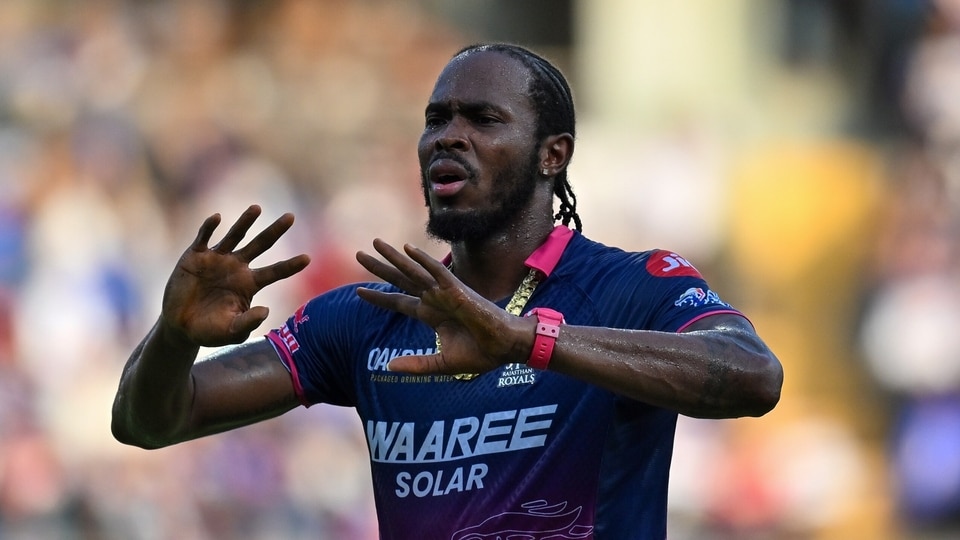
The performance carried extra weight because it came at a stage where expensive players are judged by consequence, not reputation. Archer’s season price stands at ₹12.50 crore, and Rajasthan needed more than presence from him. They needed match-shaping value. At the Wankhede Stadium, he gave them runs, wickets and control in one package.
Archer’s batting contribution was brief but decisive. Rajasthan might have fallen short of a competitive total, but the final push changed the shape of the match. His 32 off 14 balls gave RR the late force required to cross 200, creating a target that immediately placed Mumbai under pressure. At Wankhede, where chases can turn quickly if the batting side survives the powerplay, that extra lift gave Rajasthan room to attack.
Archer then converted that batting value into bowling control. He removed Rohit Sharma for a duck in the first over and denied Mumbai the clean start they needed. He then bowled Naman Dhir during the powerplay, leaving MI without the second layer of stability required after losing Rohit early. Later, he returned to dismiss Hardik Pandya, one of the remaining batters capable of dragging the chase back into dangerous territory.
His final figures of 4-0-24-3 gave Rajasthan the scorecard headline, but the deeper value came from the timing of the wickets. Archer did not collect late wickets after the chase had already collapsed. He struck at points that shaped the chase itself. Rajasthan’s 205 gave them the platform, but Archer’s spell protected that total by stopping Mumbai from building the partnership rhythm required for a Wankhede chase.
Archer’s ₹5 crore profit match
The monetary ledger made Jofra Archer’s performance look even bigger. His match cost for Rajasthan stood at around ₹83.33 lakh, based on his ₹12.50 crore season price and the cost window used for this stage of RR’s campaign. Against that cost, his performance value for the match was estimated at ₹5.88 crore.
That left Rajasthan with a net profit of roughly ₹5.04 crore from Archer alone. RR effectively spent around ₹83 lakh of his season cost for this fixture and received more than seven times that value back in one match. For a player bought at a premium, this is exactly the kind of return that changes the tone of a season ledger.
The number climbed because Archer gave Rajasthan value across both innings. His batting impact was worth 51.72 points, while his bowling impact stood at 72.63. The bat gave RR late-innings acceleration. The ball removed Mumbai’s top-order base and later cut off Hardik’s route into the chase. Those were not isolated contributions. They worked together to tilt the match economy heavily towards Rajasthan.
There was one debit on the sheet. Archer’s dropped catch created a fielding impact of -10.5, and the model does punish those moments because missed chances can alter games. In this case, the damage was absorbed by the scale of his batting and bowling work. His two major disciplines produced enough value to keep the final reading firmly in elite-profit territory.
The manual rating gave the performance its final lift. Archer received a 15.0 rating for the match, reflecting the quality of his involvement and the pressure value of his contributions. His base impact worth was already strong at ₹2.35 crore, but the rating layer lifted his adjusted worth to ₹5.88 crore because his runs and wickets arrived at high-value points in the contest.
Also Read: INR 23 crore loss tells MI's real IPL 2026 story: Scouting worked, superstar investment failed
The scorecard says Archer made 32 off 14 balls and took 3 for 24. The ledger goes further. It measures how those contributions changed Rajasthan’s match economy. His batting stretched RR from a strong total to a demanding one. His new-ball spell damaged Mumbai before the chase could settle. His wicket of Hardik removed one of MI’s last serious routes back into the match.
Archer finished as the most profitable player of the game. This was not a supporting performance inflated by a formula. This was a premium player producing a premium result at the stage where Rajasthan needed him to justify the price.
For a ₹12.50 crore player, the season argument is never settled by one match alone. Franchises pay that money for repeated high-impact performances across the campaign. But games like this show why Archer still carries that valuation ceiling. Very few players can change the final overs with the bat and then return with the ball to attack both the opposition’s top order and middle order.
Against Mumbai, Archer did exactly that. Rajasthan’s ledger put the return at ₹5.04 crore in profit. The match gave the cleaner verdict: when Archer is fit, involved and decisive, an expensive contract can look like a bargain for one game.
Method note
This analysis is based on the match monetary ledger, which estimates a player’s single-match rupee value by comparing performance worth with match cost. Match cost is derived from the player’s season price and the team’s relevant match-count assumption for the stage of the tournament.
The performance value includes batting, bowling and fielding impact, with a rating layer used to reflect pressure, match situation and quality of involvement. These figures are analytical estimates for performance evaluation by a model exclusively designed by the author. They are not official IPL salary payments, franchise accounts or audited financial numbers.


