


 Live Score
 Cricket Teams
 Cricket Players
Jhulan Goswami: a career ends, not the story
She retires as an all-time great but mere numbers can’t measure her contribution

 Prefer HTon Google


Jhulan Goswami is retiring. With that ends a truly spectacular career and a story worth countless retells. The mindboggling numbers—more than 20 years as top-flight fast bowler, over 350 wickets across formats, most balls bowled (9945 till Friday) in ODIs and also the youngest (23 years, 277 days) to take a 10-wicket Test haul—alone lend a sense of completeness to a career that has seen everything barring a World Cup win. Pronged by a probing inswinger and a stifling yorker, Goswami’s hit-the-deck brand of bowling was the chief reason India were not pigeonholed as a team of batters and allrounders.
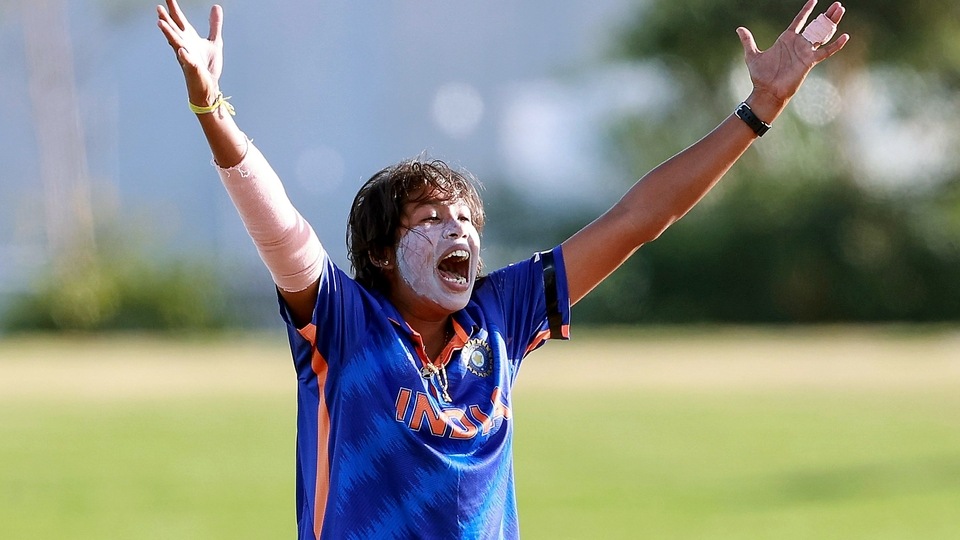
Still, that’s barely half the reason why Goswami is a legend. It was her story that helped sow many dreams. “Girls from villages are playing cricket, dreaming of representing India, all because of Jhulan,” Rumeli Dhar, former India allrounder and one of Goswami’s earliest friends, told HT from Baroda. “She has inspired not just bowlers or batters, but cricketers, only because of that work ethic.”
Chakdaha, a 90-minute train ride from Kolkata, is where this journey started in the early 1990s when Goswami casually bowled to her male friends at school or after tuition. But Eden Gardens inevitably became the pivot of this story when in 1997 Goswami—then a ball girl—watched Australia captain Belinda Clark lift the World Cup trophy. That kicked in the impulse to take up the game seriously but it was not before Swapan Sadhu—a popular face at grassroots cricket—persuaded her parents to allow Goswami board the train to Kolkata for regular training at south Kolkata’s Vivekananda Park. “We never skipped training,” said Dhar. “And she never backed out of anything, be it dancing or trying to speak English early on. She was always a cut above the rest when it comes to persevering. That’s why she is Jhulan Goswami.”
“What stood out was her courage and conviction,” said former India coach and allrounder Purnima Rau who first saw Goswami as a teenaged gangly fast bowler who had joined Air India as a professional. “She was a very self-assured youngster and an avid learner. Every day she wanted to add something new to her experience.”
At 19 came her India debut but by no means was Goswami unprepared for it. “I used to make her open with the new ball, bowl the middle overs with the old ball, basically prepare her for all situations,” said Rau. “The idea was she should be ready for any situation when she plays for India.”
So unrelenting was Goswami in her quest to be the best that she even sought help from Tarak Sinha at Delhi’s Sonnet Club. Sinha made her bowl alongside Ishant Sharma to some of the best India and Ranji cricketers at the time. Like then, she still makes many male batters hop. Rohit Sharma knows the feeling, having faced Goswami recently at the NCA nets during his rehab. “I was challenged by her inswinger,” he said during a press conference before the Australia series.
What Goswami means to Indian women’s cricket has little to do with how many wickets she has or the years she played. Of much greater value is the example she has set about being a thorough professional irrespective of whether you are accorded due recognition. Like in 2011, when the Cricket Association of Bengal (CAB) forgot to mention her on a special plaque listing India captains from Bengal; Pankaj Roy and Sourav Ganguly being the other two. Goswami didn’t care to react. The generation to come after them will be more dashing and a better breed, said Rau. But they must not forget the fundamentals that made Jhulan what she is now. “She works hard every day. And she relies so much on basics, like taking a deep breath at the beginning of her run-up. These are small things hopefully the youngsters are watching,” she said.
To the world, Goswami will retire as one of the most impactful bowlers of all time. In India, she will live on as an institution and an inspiration, with far-reaching, unquantifiable influence across generations. The sense of gratitude is palpable as well. “She's someone who has taught us a lot,” said Harmanpreet Kaur, who made her ODI debut under Goswami’s captaincy in 2009. “When I debuted, she was a leader and I learned a lot from her and now our young bowlers are also learning from her.”
Many feel the focus on women’s cricket wouldn’t have been possible without the reboot engineered in equal parts by Goswami and Mithali Raj. “Let’s put it this way,” said Dhar. “I wouldn’t call it struggle per se but every generation of women’s cricket has had its share of difficult times. But it also helped the next generation in some way. What Shanta Rangaswamy, Diana Edulji or Purnima Rau did, we got some exposure because of that. Whatever Jhulan and the others did, the next generation will benefit from it.”


