


 Live Score
 Teams
Teams Players
Just 23 in Rajkot, yet Virat Kohli proves he's in a league of his own
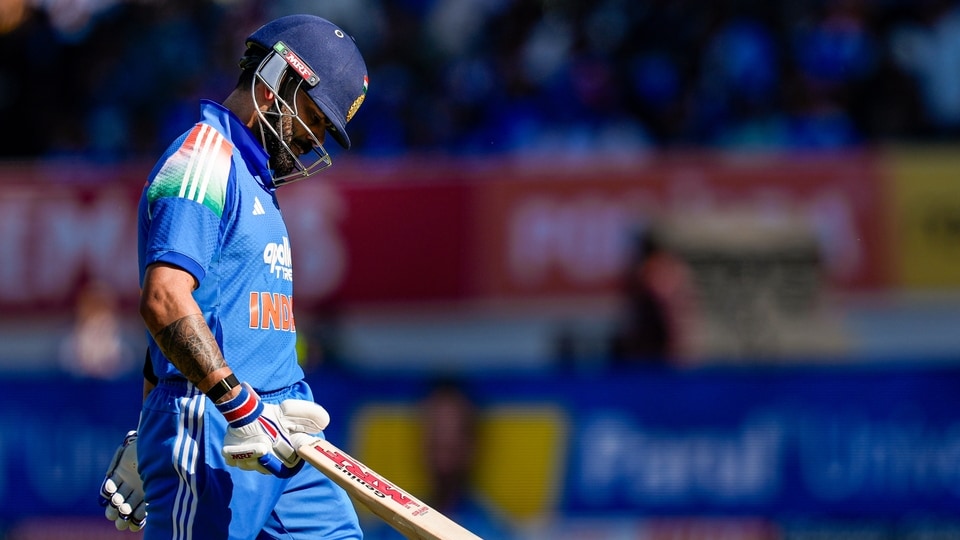
Virat Kohli's dismissal for 23 in the second ODI against New Zealand highlights his unusual tendency to avoid the 20s.

 Prefer HTon Google


Virat Kohli’s 23 in Rajkot in the second ODI versus New Zealand looked like one of those “he got in… then got out” moments that instantly becomes a talking point.
But if you zoom out and treat getting out in the 20s as a proper data problem, it actually ends up reading like a compliment to his ODI career - not a flaw.
The Rajkot 23 was a reminder
Across Kohli’s ODI career, he has:
- 310 ODIs, 298 innings, 47 not outs
- 14,673 runs at an average of 58.45
- 53 hundreds, 77 fifties
Those 47 not outs matter, because they tell you how many times he actually got dismissed:
298 innings - 47 not outs = 251 dismissals
Now let us see this through the 20s lens:
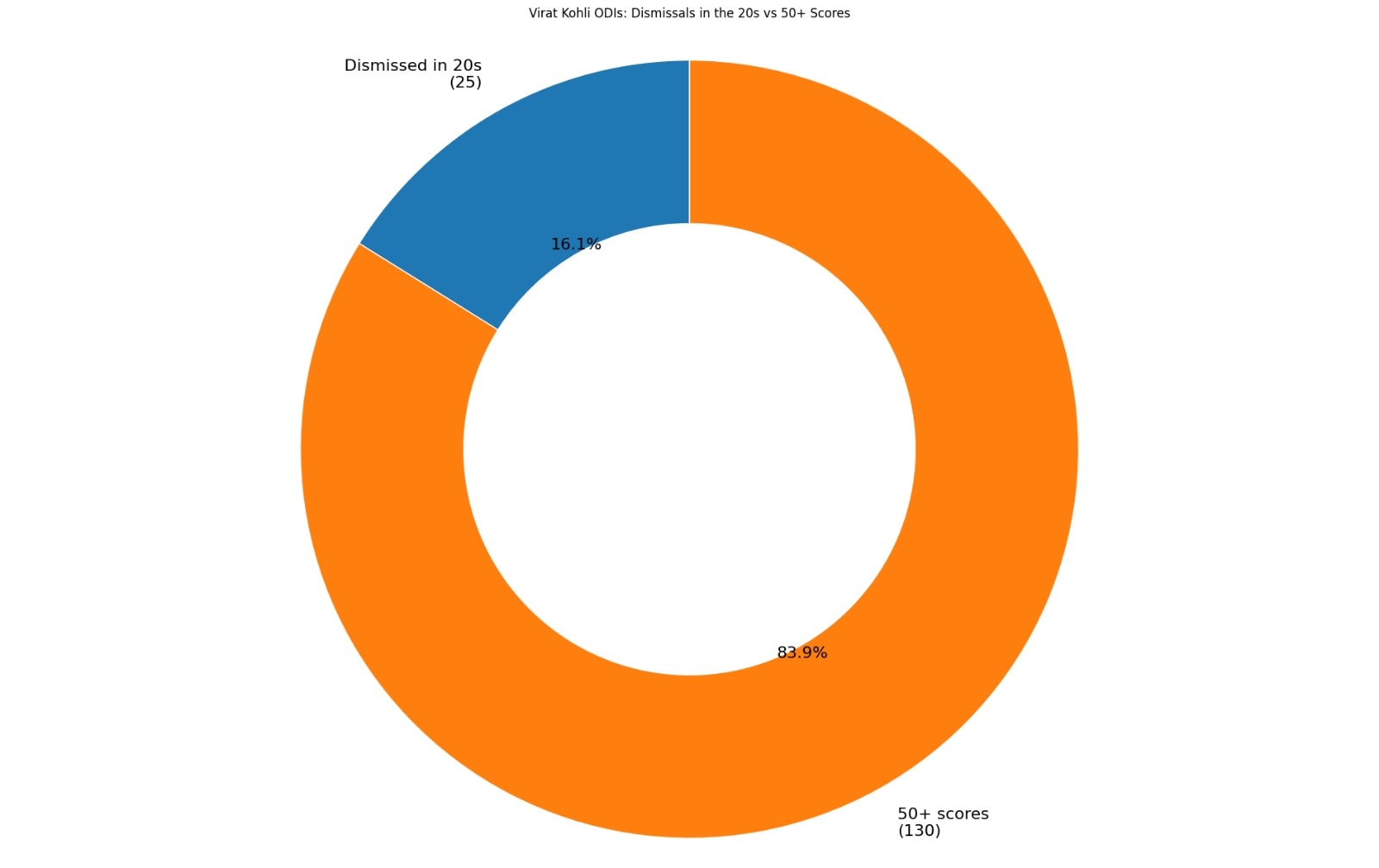
Kohli has 27 ODI innings where he finished between 20 and 29. Only two of those were not outs. So, he has been dismissed in the 20s exactly 25 times.
Here is what those 25 dismissals in the 20s mean in context:
- As a share of dismissals: 25 out of 251 = about 10%
- As a share of innings: 25 out of 298 = 8.38%
So roughly nine out of every ten Kohli ODI innings do not end in the 20s, they mostly push beyond that.
That is why a Kohli 23 feels newsworthy in the first place: because it’s very unusual for him to end there.
Kohli's 20s: Home vs Away
Kohli’s “dismissed in the 20s” number also looks even less dramatic once you split it by venue. Of his 25 ODI dismissals in the 20–29 range, 14 have come overseas and only 11 at home. That’s basically the reverse of the narrative fans instinctively carry — that these starts are an “India thing” or a recurring pattern in familiar conditions. If anything, the distribution underlines how rare this mode is in Kohli’s ODI life: even across 298 innings, he doesn’t “camp” in the 20s anywhere — home or away — because his career has been built on pushing past that awkward limbo into 50s and hundreds far more often than the scorecard noise suggests.
Also Read: Virat Kohli, the relentless run-machine of India: What his return to No.1 ODI rankings say about his game
Why the 20s the right place to appreciate Virat Kohli
In ODIs, the 20s are basically the sport’s most annoying limbo:
- You have spent time.
- You have absorbed pressure.
- You have done the hard part.
- And yet, the scorecard reads mid.
For many batters, that limbo becomes a frequent address. For Virat Kohli, it’s a brief stepover.
The easiest way to see it: 53 ODI hundred and 77 fifties across 298 innings is an outrageous conversion volume, and you don’t build that kind of conversion career if you are routinely dying on 20-29.
So Rajkot isn’t exposing a long-term weakness. It shows the cost of doing business in the toughest batting job in ODIs: playing top order, facing the newer ball, and still keeping an average north of 58.
What Rajkot actually said
Rajkot ended up being New Zealand’s story. India’s 284/7 was a strong score, but not a knockout punch, and New Zealand’s effort made the match about one thing: control in the chase. Daryl Mitchell’s 131* and his stand with Will Young swung the game.
That context matters, because in matches like this, every start gets magnified: you start mentally adding 25-30 runs to the total and wondering if the game changes.
Sometimes it does. Often it doesn’t. But what the data says is: if you are looking for a batter whose ODI career rarely gets stuck in the 20s, Kohli is basically the poster boy.


