


 Live Score
 Teams
Teams Players
Let's not seek thrills of T20 in one-dayers
In T20, big score takes on big score on the way to an exciting climax but what ends as a crack over 40 overs grows into a chasm over (a possible) 100.

 Prefer HTon Google


As England, struggling with their batting, bowling and fielding, not to mention thinking, went down by 229 runs in Mumbai on Saturday night, there was little of the glee that accompanies an English debacle. Far be it from us to blame the inventors of the game, and then its reinventors via the bromantic spiritual movement known as Bazball. They put all they could into the meltdown, even suggesting that had they known at the toss (when it was very hot and very humid) that it would be very hot and very humid in the afternoon, they might have chosen to bat first instead.
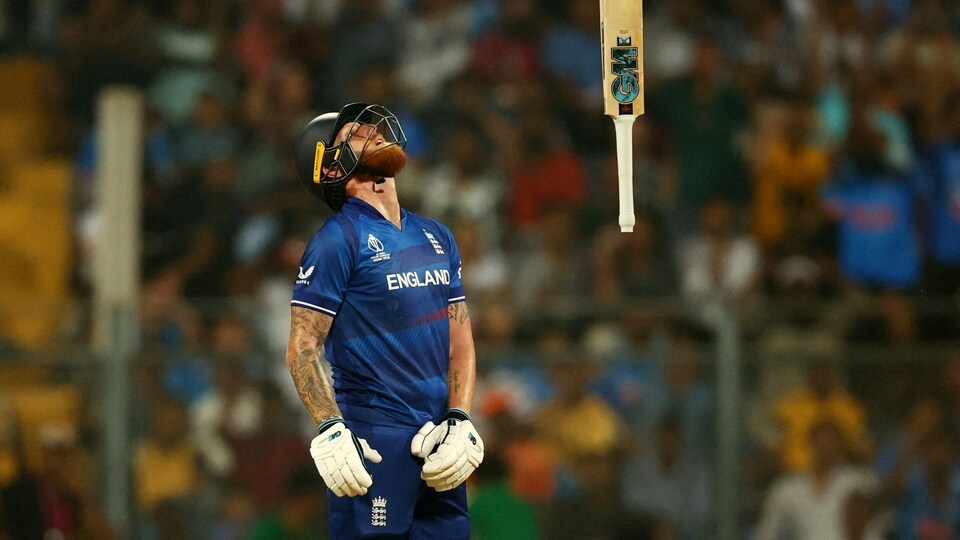
No, it was our own weighty expectations standing in the way. For some reason we allowed ourselves to assume that the ODI World Cup would serve up some excellent ODI matches; why, went so far as to speculate that this match-up, played out before a near full-house at the Wankhede, might just be one of them. We got a match so one-sided it could be classified as propaganda.
The game, such as it was, was set up by South Africa’s total of 399. Earlier in the competition they racked up 428 in Delhi and 311 in Lucknow. Australia battered 367 in Bengaluru, England 364 in Dharamsala, Pakistan overhauled Sri Lanka’s 344 in Hyderabad. I haven’t gotten around to listing the remaining 300-plus totals: ten in 21 matches. The average rate of scoring in the 1979 World Cup was 3.54 runs an over; in 1999, it was 4.47. This World Cup has been galloping along at 5.84. The 266 sixes struck thus far in 2023 is already higher than the total from 49 games in 2011 and equal to the 2003 figure from 52; by the end, the tally will soar past the record 463 sixes of 2015.
ALSO READ | From going past Jayasuriya to equalling Sangakkara: Full list of records Virat Kohli scripted with magnificent 95 vs NZ
This would have been all well and jolly if the brisk scoring and big hitting were accompanied by thrilling finishes. Unfortunately, there has been none of those. Even that Pakistani chase in Hyderabad ended with ten balls to spare and five wickets in hand; similar was the case in Sunday night’s fine match in Dharamsala. Across the tournament’s first 20 matches, ESPNcricinfo puts down the average win margins for teams batting first as 110 runs, while teams batting second have won with about seven wickets and ten overs in hand.
We can perhaps posit a connection between the two trends. In T20, big score takes on big score on the way to an exciting climax, that is the basic formula. But what ends as a crack over 40 overs grows into a chasm over (a possible) 100. In trying to become Fifty50, one-day cricket flops. The odds of it being able to conjure up a climax over totals so high are poor. Neither can it promise tight finishes in small or medium totals. Teams, versed in T20, take down these targets barely have they begun – the way India did against Afghanistan, Pakistan, Bangladesh.
To burnish its fading aura, therefore, one-day cricket is best off offering what only it can: something closer to a long day of compressed Test cricket. And the best way to achieve it is to even out the conditions. Up against dew, heat, strong tails and fat bats it is the least bowlers deserve.
Perhaps the most gripping contest of this World Cup was India’s opener against Australia at Chennai. This wasn’t down only to the drama of India’s 2 for 3 score in the chase of 200. The tension in the first innings was just as great, with Australian batters battling the superb spin trio on a turner. Something, you sensed would have to give, and it was the Aussie batting that did.
That tension rather than the tall score is the secret of ODI cricket’s success. By popular consensus, the two greatest one-day matches of all time are the tied semi-final of 1999 and the tied final of 2019, with scores of 213 and 241. The latter was let down, in fact, by administrators mindlessly forcing T20-style deciders on to the result: a super-over was one thing, a boundary countback quite another.
Don’t misunderstand, please. This column does not yield to anyone in its admiration of contemporary hitting. At the Wankhede, South Africa’s Nos 6 and 7, Heinrich Klaasen and Marco Jansen, put on 143 pyrotechnical runs in the final ten overs. This was a staggering rate even for the back half of a T20. One aspect that distinguished it from T20 was Klaasen doubling over with cramp, as David Willey the bowler was. The physical challenge recalled the endurance examination that is Test cricket. Klaasen afterwards likened the experience to “running in a sauna”.
But ODIs needn’t rely on cruel weather to differentiate them from T20. A bit in the pitch will do. For the misdemeanour of aiding spin, the Chennai pitch in the Australia game received an “average” rating from the ICC. “If you wanted to only see fours and sixes being hit, then we have T20 for that. Why do we need anything else?” said Rahul Dravid in rebuttal, and this a man whose defence has never failed anybody.


