A cornerstone of South Africa's sporting return following decades of international isolation, Allan Anthony Donald carried the nation's bowling attack through its formative re-emergence in the early 1990s. Born in Bloemfontein, Orange Free State, the tall right-arm speedster combined a poetry-in-motion run-up with an explosive delivery stride, generating sharp outswing and genuine pace that instantly re-established South Africa as a formidable cricketing nation. Wearing his trademark zinc sunblock across his cheeks and nose, he earned his legendary 'White Lightning' moniker for representing the fierce competitive resolve of a nation proving its place on the global sporting map.
Donald made his One-Day International debut during South Africa's historic return match against India at Kolkata in November 1991, claiming 5 wickets for 29 runs to signal his world-class quality. His Test cap arrived against the West Indies at Bridgetown in April 1992, where his six-wicket match performance laid the foundation for a brilliant 12-year international career spanning 72 Tests and 164 ODIs. In the red-ball format, he accumulated 330 wickets at an elite average of 22.25 with 20 five-wicket hauls, becoming the first South African bowler to breach the 300 Test wicket mark.
In limited-overs cricket, Donald was a cornerstone of South Africa's initial World Cup campaigns from 1992 through 2003, snaring 272 ODI wickets at an average of 21.78. His career featured legendary duels that captured the imagination of cricket traditionalists, most notably his high-intensity spell against England captain Michael Atherton at Trent Bridge in 1998. On the domestic front, he represented Free State with distinction and enjoyed an iconic 11-year tenure with English county side Warwickshire, winning multiple domestic trophies and earning widespread reverence across county cricket.
Inducted into the ICC Cricket Hall of Fame in 2019, Donald transitioned into elite fast-bowling coaching, mentoring international setups and global franchise teams across England, New Zealand, Bangladesh, and South Africa. His historical footprint remains foundational to the country's fast-bowling lineage, having set the technical standard and psychological benchmark for every Proteas pace attack that followed.


 Live Score
 Teams
Teams Players
 SOUTH AFRICA
 South Africa
 South Africa
 FreeState/Griquas
 SL
SL
 WI
WI ZIM
ZIM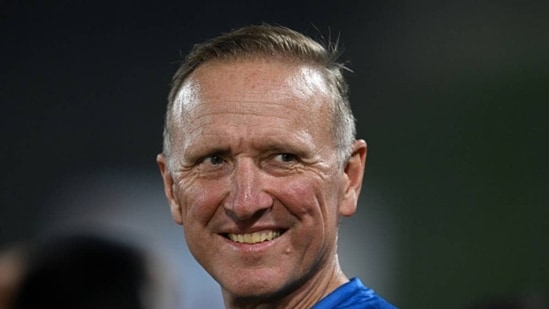




 Experience
 Very Bad
 Bad
Bad Ok
Ok Good
Good Excellent