


 Live Score
 Cricket Teams
 Cricket Players
Rahul Dravid was India's Wall, Cheteshwar Pujara its shield: Sai Sudharsan is not even close at No. 3 and stats prove it
Sai Sudharsan's early Test innings reveal a stark contrast to legends Dravid and Pujara, lasting less than half the balls faced by them.

 Prefer HTon Google


Sai Sudharsan walked back again in Guwahati, undone by Simon Harmer. For a batter fast-tracked into India’s most sacred Test position, the early numbers now make for uncomfortable reading.
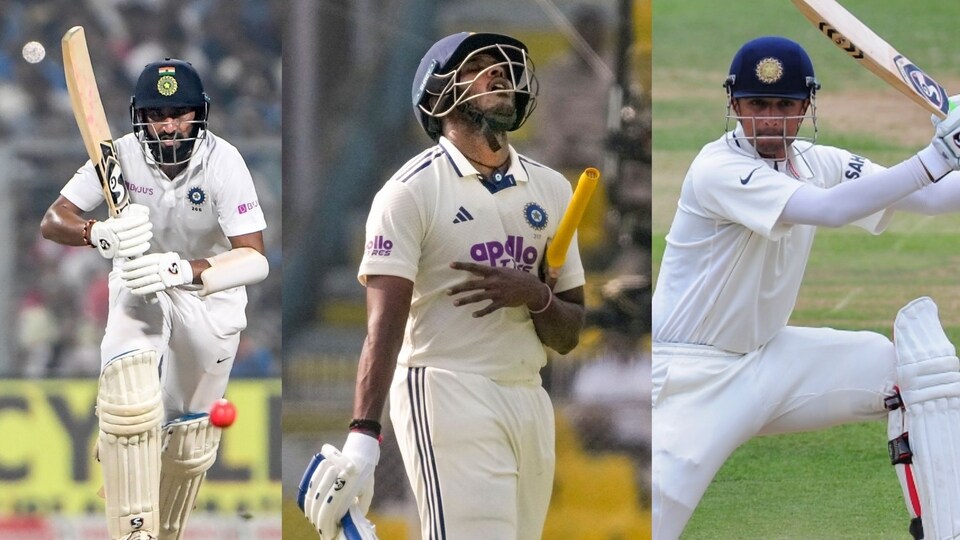
Because after 10 innings at number three, Sudharsan is no longer just settling in. He has a full block of data that can be stacked alongside the names he is supposed to succeed, Rahul Dravid and Cheteshwar Pujara, and the contrast is stark.
Record of three batters at number 3 after first 10 innings

Dravid and Pujara both started at a level that was either elite or downright freakish. In their first 10 knocks at number three, they produced 5 and 4 fifty-plus scores respectively. Sai Sudharsan has just two. Where Dravid and Pujara used their first stretch to announce, “this spot is safe with us”, Sudharsan’s block of the first 10 innings still feels like an audition.
Time at the crease: the real currency for number 3

In other words, even when they were new, Rahul Dravid and Pujara were already batting like finished products - grinding attacks down for more than 150 balls per dismissal. Sudharsan, across his first 10 innings, is lasting less than half of that.
Guwahati once again highlighted the pattern: flashes of class, but not the long, draining occupations that could help pace India’s innings.
Also Read: India vs South Africa Day 3 LIVE Score: Cautious approach by Sundar-Kuldeep, IND lose 7 wickets in total collapse
What the numbers suggest, India must decide
This is still not a verdict on the young batter’s career; 10 innings are still a small sample, but they are long enough to reveal trends.
- Dravid’s first 10 innings at number three basically match his long-term persona: high average, low error, huge time investment.
- Cheteshwar Pujara’s first 10 innings were super-charged, which set a standard that even he couldn’t sustain forever, but ensured stability at the position for a long time.
- Sudharsan, by contrast, looks like a modern, stroke-playing top-order batter trying to learn an old-school job on the fly. The tools are there, but the number currently says promising talent, not yet a successor to Dravid and Pujara.
India can still help him grow into the role. But the cold data after the first innings in Guwahati is brutal: on runs, average and most crucially balls faced, Sai Sudharshan’s first chapter at number three does not read like the next Dravid or Pujara story. Now the decision to be made is - do you wait for the graph to turn, or do you go hunting for another custodian of the most crucial seat in Test batting?


