


 Live Score
 Cricket Teams
 Cricket Players
Sanju Samson to DC, Tristan Stubbs to RR: Who really wins if the trade move takes place ahead of IPL 2026 auction?
Sanju Samson's move to Delhi Capitals and Tristan Stubbs to Rajasthan Royals reflects each franchise's strategic focus for 2026.

 Prefer HTon Google


Sanju Samson to the Delhi Capitals and Tristan Stubbs to the Rajasthan Royals isn’t just a player A for player B move. It is two franchises quietly answering very different questions about who they want to be from 2026 onwards.
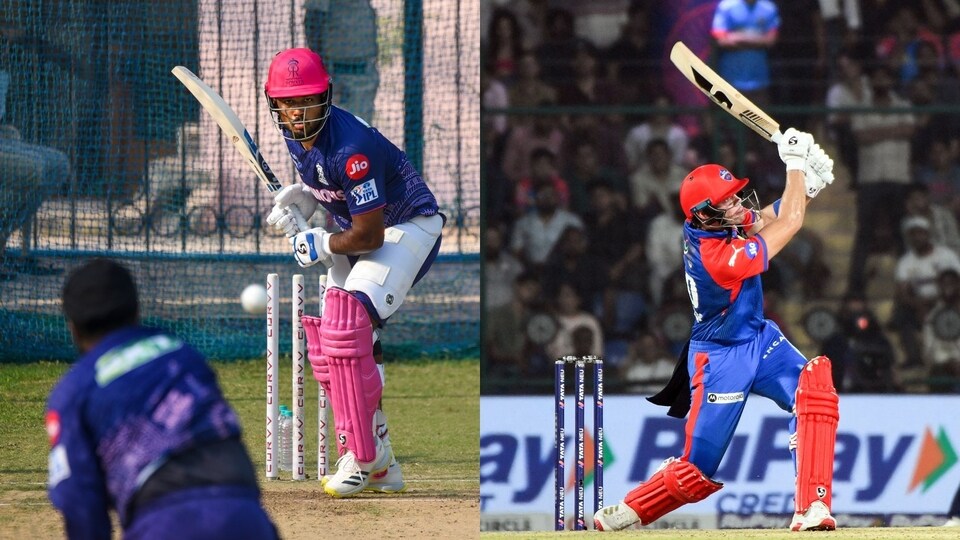
This move stands as a question of roles, resource allocations, and risk management, not just who got the biggest star.
What problem are the Delhi Capitals really solving?
Strengthening the Indian core and leadership
Delhi’s long-standing structural issue has not been talent; it has been balance and Indian core depth. By bringing in Samson, DC add:
- A proven Indian batter who can give the volume of runs at a good strike rate.
- A captaincy-ready mind who has already led a franchise through high-pressure campaigns.
- A second Indian pillar alongside KL Rahul, both in cricketing and branding terms.
DC often felt like a Rahul or nothing operation in their last campaign. Samson could be a high-impact presence at the top of the order with Rahul stablising the middle-order. This would reduce their dependence on one player and give them redundancy in leadership.
Clarifying batting structure
On a tactical board, DC can shape a very modern template:
- Sanju Samson could provide them with the firepower at the top.
- Rahul stays as the stabilizer and solid presence in the middle-order, and now they would look for a lower middle-order hitter in the auction.
Samson’s value is not just volume; it is versatility:
- He can play the gear-shift role, absorbing pressure if early wickets fall or scoring at 140+ strike rate from ball one if there is a platform.
- As a right-handed batter who handles both spin and pace well, he helps DC manage middle-overs match-ups more deliberately.
- Samson allows them to decide whether KL Rahul should be a controller, a finisher, or a hybrid, rather than forcing him to be everything at once.
The cost for Delhi: Can Stubb’s role be replaced?
This is where the move becomes risky. Tristan Stubbs profiles as a top-tier modern finisher:
- Naturally suited to number 5 or 6.
- Comfortable entering in the phase between 13th to 17th over.
- Used to operating in the 180-200 strike rate band, especially at the death.
These kinds of players are rare. They are even rarer at a price point and an age profile that still has headroom for growth.
What are the Rajasthan Royals optimising for?
Rajasthan’s repeated pattern over the last few seasons has been clear: when the top order doesn’t go deep, the innings often collapse. Even with Riyan Parag’s growth, they have lacked a reliable, high-ceiling number 5 or 6 who can:
- Walk into 45/3 and rebuild, or
- Walk into 130/3 and turn it into 190.
Stubbs fits the template. He is a chaos specialist:
- Comfortable starting against spin or pace.
- Naturally wired for high-impact finishing.
From a role-scarcity lens, RR are trading a top-order Indian run-bank for a world-class finisher archetype.
Who actually wins in this trade?
In the short term, Delhi is likely to gain more certainty. They get a stronger Indian spine, leadership depth, and a clearer middle-order structure, provided they manage to cover the loss of Stubbs.
In the long term, Rajasthan can quietly come out ahead if Stubbs continues his upward curve as a finisher, and Yashasvi Jaiswal and Parag mature into reliable leaders and top-order anchors.
This trade move is a test of execution, while Delhi are buying certainty and structure, Rajasthan are ensuring growth and talent investment.
The verdict won’t be decided when the trade is announced; it will be decided by how well each franchise builds around this move.


