


 Live Score
 Cricket Teams
 Cricket Players
Unbeaten, yet exposed? India's vulnerability laid bare as Gambhir left with serious headache before Super 8 campaign
With six left-handers in the XI, opposition teams have predictably turned to right-arm off-spin, and the results have been telling.

 Prefer HTon Google


As a player, Robin Uthappa might have sidestepped the question or settled for a diplomatic response. Even as a commentator, he paused briefly when asked about India’s biggest weakness, something he would target if he were on the opposition side. But once Aryan Dutt troubled India’s top order with his accuracy, and Colin Ackermann chipped in with control, the answer became clearer.
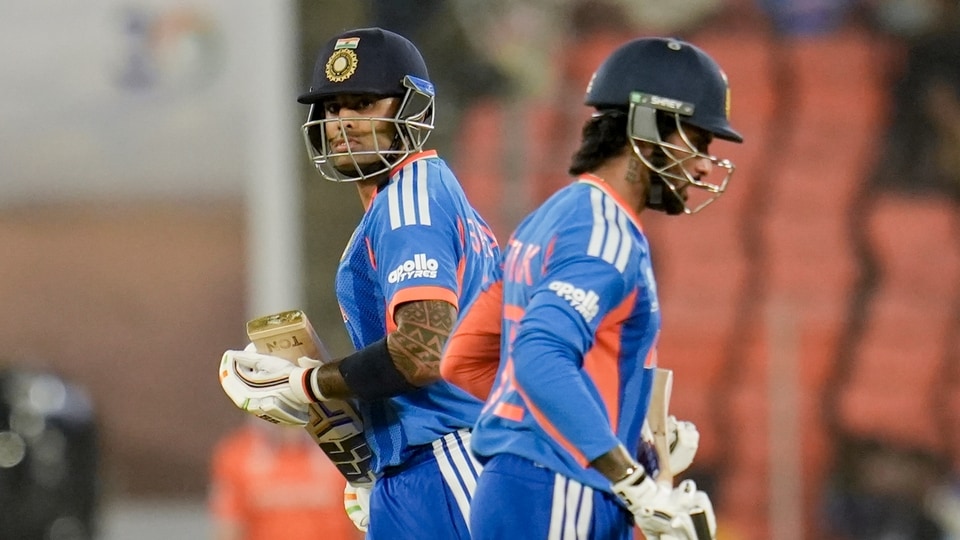
“India have an off-spin issue,” Uthappa said, just before India sealed an unbeaten group-stage finish on Wednesday in Ahmedabad against the Netherlands
It was hardly a revelation. With six left-handers in the XI, opposition teams have predictably turned to right-arm off-spin, and the results have been telling.
Among all 20 teams in the T20 World Cup 2026, only 11 have faced 10 or more overs of right-arm off-spin. India have been dismissed 11 times by the variety, the joint-most, alongside Nepal, in just 20.1 overs. Their scoring rate (6.36) and average (11) against off-spinners are the second-worst in the tournament, behind only Nepal.
ALSO READ: Abhishek Sharma found out or the current slump is going to make a man of him?
What's more concerning is that the problem is not limited to left-handers. They account for eight of the 11 dismissals, scoring 84 off 81 balls. The remaining three wickets have fallen to right-handers, who have managed 37 off 31 deliveries, the second-worst return among teams whose right-handers have faced five or more overs of right-arm off-spin.
Hardik Pandya has fallen twice in four balls to off-spin, including a golden duck against Pakistan. Suryakumar Yadav has also been dismissed once, scoring 30 off 29 against the variety. Against slow left-arm orthodox, both have another dismissal to their name, though Hardik’s scoring rate improves significantly, while Suryakumar remains restrained. Tilak Varma, too, has shown similar vulnerability.
Although three of India’s four group matches came against associate nations, the threat was real. Gerhard Erasmus’ variations and Dutt’s discipline in Ahmedabad would have tested stronger sides as well. Add the subtle changes of pace from Saim Ayub, Usman Tariq and even Salman Agha in the Pakistan clash, and the pattern becomes difficult to ignore.
With the weakness now evident, India’s Super 8 opponents, South Africa in Ahmedabad, Zimbabwe in spin-friendly Chennai, and West Indies in Kolkata, will be eager to exploit it.
South Africa may miss Donovan Ferreira, but Aiden Markram could join Tristan Stubbs and Keshav Maharaj in targeting India’s left-handers. West Indies boast the tall Roston Chase alongside Akeal Hosein, while Zimbabwe have Sikandar Raza, who even took the new ball against Australia.
Ultimately, it will come down to the tactical adjustments India make with the bat, calls that will largely rest with head coach Gautam Gambhir. How effectively they counter off-spin, particularly in the crucial clash against South Africa, could determine whether this vulnerability remains a temporary concern or becomes a defining flaw as the tournament enters its decisive phase.


