


 Live Score
 Teams
Teams Players
Virat Kohli kills his old self to unlock version 2.0: This not a comeback, it is an upgrade
Virat Kohli showcased a new aggressive approach in ODIs against South Africa, scoring 302 runs at a strike rate of 117.05.

 Prefer HTon Google


For a decade, Virat Kohli’s ODI genius was defined by soak-then-surge - cruise in the second gear, stack up one and twos, and only turbo once the game was under his thumb. Against South Africa, that template got ripped up. What we saw across the three ODIs felt like Virat Kohli 2.0: same control, same chase-mastery, but with T20-style intent wired in from ball one.
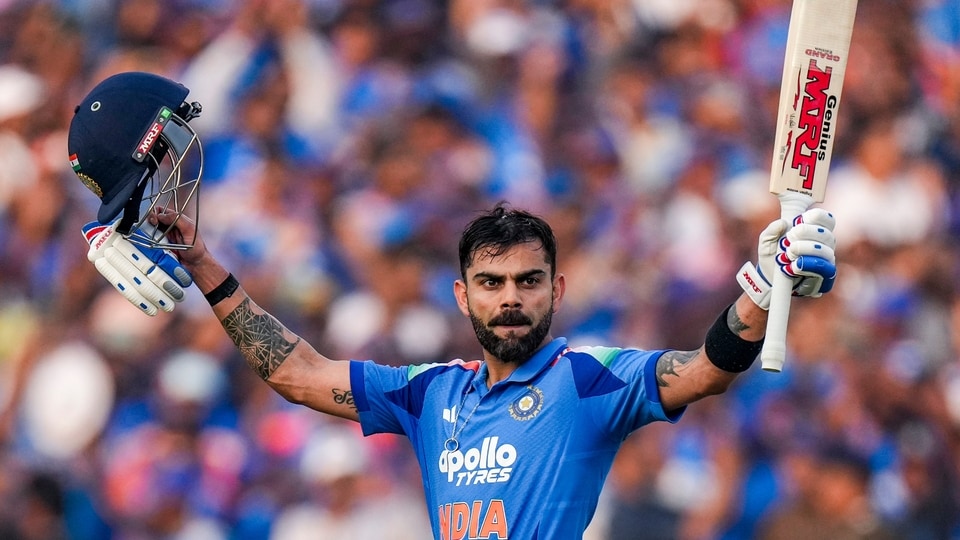
Across Ranchi, Raipur, and Visakhapatnam, Kohli scored 302 runs from 258 balls at a strike rate of 117.05, with two hundreds and an unbeaten 65* in the chase in Vizag. That’s about 24 runs per 100 balls, higher than what he has scored throughout his ODI career (93.65) and well above what he was scoring in the last year (84.05). This is not just back to his best; it’s a more violent version of that best.
A strike-rate spike that rewires his ODI template

Virat Kohli’s career ODI strike rate sits around the 94 mark, built over a lifetime of ones, twos, and late surges. Against South Africa, he was batting at 117.05, roughly around 25 runs more per 100 balls than he has done for so long.
- Ranchi (1st ODI): 135 off 120 (SR 112.50), with 11 fours and 7 sixes. Two-thirds of his runs came in boundaries, but he still ran 40 singles, proof that the classic engine of rotation never switched off.
- Raipur (2nd ODI): 102 off 93 (SR 109.68), 7 fours and 2 sixes. Here, the mix was closer to traditional Kohli: fewer big shots, more control, but still above run-a-ball in an innings where India reached 358.
- Visakhapatnam (3rd ODI): 65* off 45 (SR 144.44) 6 fours and 3 sixes, finishing a 271 chase in 39.5 over as India won by nine wickets.

Across the three games, that’s 24 fours and 12 sixes - the kind of six volume he rarely stacked in such a short span even in his so-called “2016 prime” phase. Yet the running blueprint remains intact: in Ranchi alone, he logged those 40 singles, exactly the kind of strike rotation the Indian management identified as crucial before the series.
Also Read: ‘I haven’t batted like this in 2-3 years': Virat Kohli admits after 12 sixes, 302 runs and POTM award vs South Africa
The real shift is when he is willing to show his teeth. Throughout the series, the narrative keeps circling back to one word - intent. Not slogging, but earlier release shots: lofted drives in the early stages, spin taken on during the middle phase, and sixes used to force field changes instead of waiting for the death.
What makes this Virat Kohli 2.0 rather than a random hot streak, in his own admission, after Visakhapatnam, he said he “hasn’t played like this in two-three years,” calling this his most satisfying series in a long time and talking about feeling mentally freer at the crease. The numbers match his statement, a man whose ODI game was already complete has simply pushed the pace band upwards.
For India, that changes what a Kohli innings means in ODI cricket. The older version guaranteed stability and a back-end surge. The new one generates pressure from ball one, keeps the singles machine running, and still leaves enough in the tank to finish.


