


 Live Score
 Cricket Teams
 Cricket Players
With advanced data and analytics, T20 fielding zones evolve by the day
Kaif (India: 1999/2007) says the flying catches he and Yuvraj Singh took at short third man, backward point and point are no longer the busiest fielding zones in T20 cricket.


It’s the winter of 2004. India and Pakistan are playing the first ODI of the friendship tour at the National stadium, Karachi. At the business end of a high-scoring run chase, Shoaib Malik skies to the straight boundary. Mohammed Kaif sprints from long-off to meet the ball that is going to land on the leg side. He beats the fielder coming in from long-on, after avoiding a collision, and holds on to a catch that is a highlight of his brilliant fielding during his India career. Such anticipation, mobility and judgement would have made Kaif a fielding hit in T20 cricket today. He now coaches Delhi Capitals “to be the best fielders they can be”.
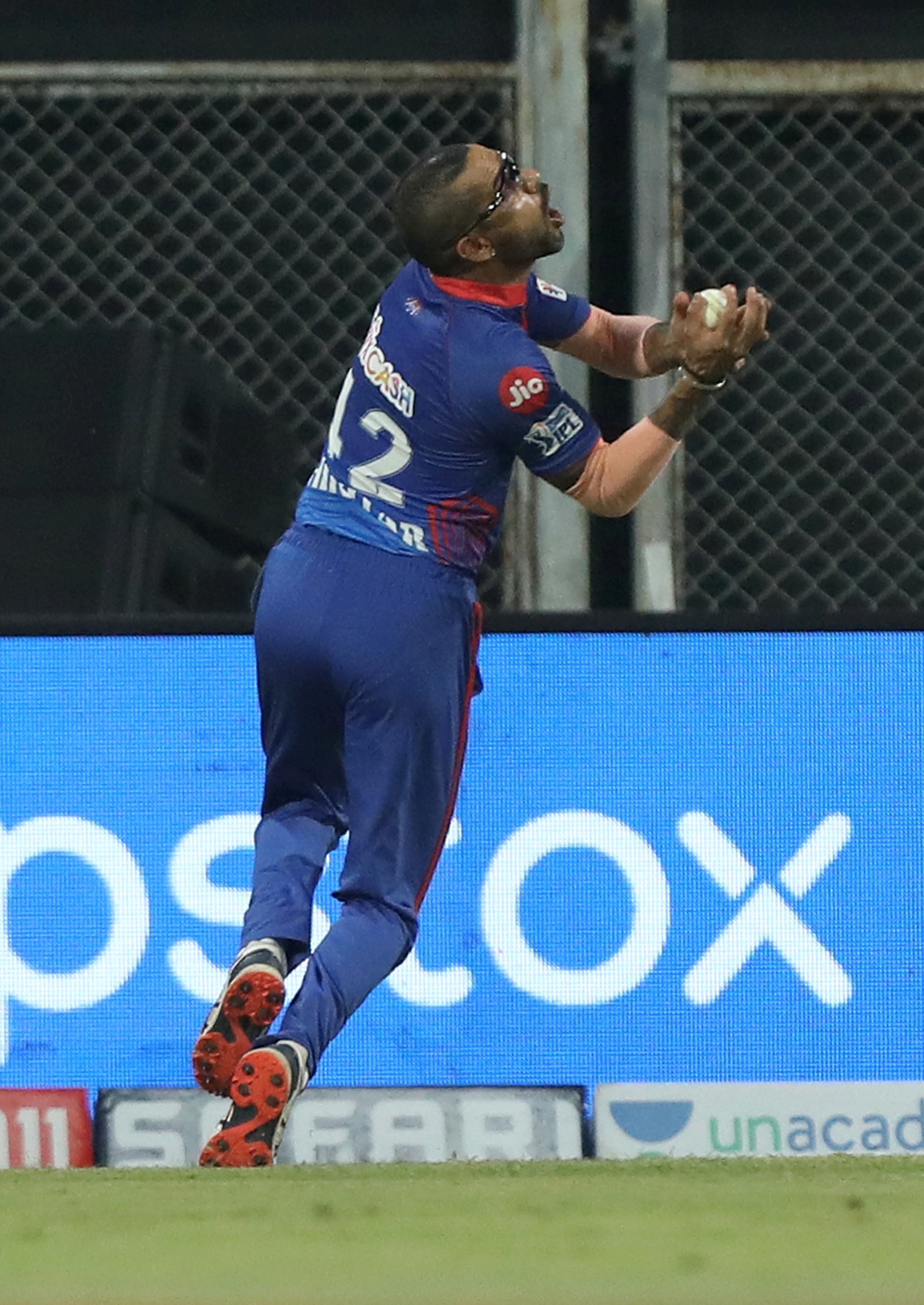
Kaif (India: 1999/2007) says the flying catches he and Yuvraj Singh took at short third man, backward point and point are no longer the busiest fielding zones in T20 cricket. When field restrictions are in place, the entire ground becomes a hitting zone, even the reverse V. As the match progresses, the power-hitters take over.
Just the way bowlers are learning new ways to contain power-hitters, fielding plans are constantly changing too. “Batsmen are targetting long-on and deep midwicket a lot more, so that’s where the best fielders are,” he says. “Fence fielding has become very important; particularly at the death with so many yorkers being attempted, batsmen are using a lot more bottom hand. Even balls outside off are hit over long on and deep mid-wicket. That’s where the bat swing takes it.”
The latest great instances were in the India-England series—the relay catch by Chris Jordan, running full tilt from the long-on boundary, to throw the ball back to waiting deep midwicket’s hands (Jason Roy) before running over the ropes, and the six saved by KL Rahul, pushing the ball back leaping at long-off before falling over.
“It happened because Jordan ran and reached there first. The hands and eye came in a lot later. 60 percent of fielding is feet movement,” says Kaif.
“When Surya (Yadav) hit the ball, I quickly judged how hard it will come off the bat. From there I tried to cut down the angle as much as possible,” Jordan says, taking us to those moments when he pulled off that wonder catch. “It may sound weird but when I go to a fielding position, I have already assessed six or seven scenarios I may have to take the ball. It comes from visualisation and anticipation. When I first took off, I wasn't sure if I was going to make it, that's why I went full pace and did not give up on it too early. When I got closer, I realised I’ll have a chance. Then it was just about trusting my hands, having the awareness of where the rope was. We have team chemistry where we do a lot of such training. I knew Jason would have positioned himself just in case I needed a helping hand. And he was there to complete the catch.”
SAFE FIELDING
While the most athletic of fielders—with fast legs, alert eyes, soft hands—will pull off catches and saves that make the highlights reel, there’s a contrarian view too, that fielding rarely makes a winning difference to a T20 contest. The theory goes that choosing power-hitters, who may not be the most agile, can provide a bigger impact as match-winners. “We will never be a great fielding side, but we can be a safe fielding side. We might bleed a few runs here and there, but as long as we use our experience, we'll make it up with our batting and bowling,” MS Dhoni had said in 2019 of his “dad’s army”. Even after the disastrous last season, Chennai Super Kings haven’t gone searching for young legs.
Nothing is more fitting than Chris Gayle’s example. It’s evident the 41-year-old is no longer athletic, but he can still hit the ball long. To make sure Gayle does not become a liability on the field, Punjab Kings’ fielding coach Jonty Rhodes comes to the fore. “What I tried to work with him (last season) is to get him to stand very close to the bat, even though he is fielding in the ring,” Rhodes says in a virtual interaction. “In previous years, because he was standing in the ring, and let’s face it, he is not going to dive, he wasn’t able to save any runs. With him coming in, batsmen did not take the risk because they knew he could run them out.”
USING DATA
The jury may be out if a good fielding side can win T20 matches, but a poor catching side can certainly lose them. Advanced data metrics look at the difference dropped catches make—based on the match situation. Negative marks go against the fielder's name. When the beneficiary batsman goes on to make a big score, the dropped catch pops up in post mortems.
Rhodes cites a different data to explain why Punjab came unhinged in the last IPL season after catches were dropped. “I got a summary from our analysts on efficiency of catches taken to catches dropped, and Punjab Kings and KKR were the top teams with efficiency of 78 percent,” he said.
Kaif disagrees with the idea of negative data marking. He says in a high-pressure tournament like IPL coaches prefer to use data, but positively. “Our goal is to get players to get two wickets in the field, be it a run out or a diving effort to catch or save runs. Data is useful to encourage players in meetings so that they know fielding also matters.”
FIELDING TACTICS AND MATCHUPS
All fielding coaches concur that data and strategy are becoming an intrinsic part of fielding plans. “Our players are briefed on each individual in the opposition. The same amount of tactical work goes into fielding as batting and bowling,” Malolan Rangarajan, RCB fielding coach, says. “We assign a fielding captain who is in charge of all the fielding matchups because there is only so much the skipper will be able to do on the field.”
Jordan, whose English team uses data extensively, cites his example. “I moved myself from slips to mid-off in T20 cricket while I still field in the slips in long form and ODI cricket, because we figured out mid-off is a hot spot in the powerplay and there is more happening there. That's how data affected my shift in position,” he says.
Kaif talks up the importance of fielding matchups. “For Pollard (MI) we planned to keep a fielder straight. A lot of teams do that,” he says. “Then a suggestion came that we must have a tall fielder. I felt it’s not about having a tall guy, but he should be a good fielder. Such planning is becoming common. Sometimes the captain needs to be reminded during strategic time-outs to find the right fielder and position against a specific batsman.”
During training the focus is not on the spectacular that has an injury risk, but on match simulation. “The fielding drills have to be competitive. They must be of match pace. Also, I look to cover the background of the stadium,” says Dishant Yagnik, Rajasthan Royals’ fielding coach. “The volume of training goes down by half as the tournament progresses, but the competitiveness remains the same.”
As IPL is a long, tiring tournament, man management becomes critical. “You have to talk to the players on how much time they want to devote to fielding. IPL is not a place to become a significantly better fielder,” Kaif says. “We know that the batsman has spent his energy on power-hitting for an hour, hour-and-a-half already. Bowlers also like to have a long bowl. Training can’t be one size, fits all.
“Rahane, for example, likes to take a lot of catches. Someone else may feel he is tired, and I allow him to take a break. If someone is lagging behind others in the group, you have to coax him to spend time in fielding. It happened with Prithvi Shaw last year. Later, he began to ask us for more catches. That was pleasing to see,” he adds.
While the spotlight will be on a Pollard or Andre Russel to muscle the ball beyond the ropes, on days when they mishit and the ball is airborne, it needs to be lapped up. Dropped catches can make a fielding unit go flat. “Especially now when you have no atmosphere to feed off in an empty stadiums,” says Rhodes.


