
 E-Paper



A first in 25 years: Departmental elephant at Corbett gives birth to calf
The 102-kg calf was born to Kanchambha, a departmental elephant that was brought to the reserve from Karnataka in February 2016

 Prefer HTon Google


The Corbett Tiger Reserve on Thursday welcomed a new member in its fold — a male elephant calf. The 102-kg calf was born to Kanchambha, a departmental elephant that was brought to the reserve from Karnataka in February 2016.
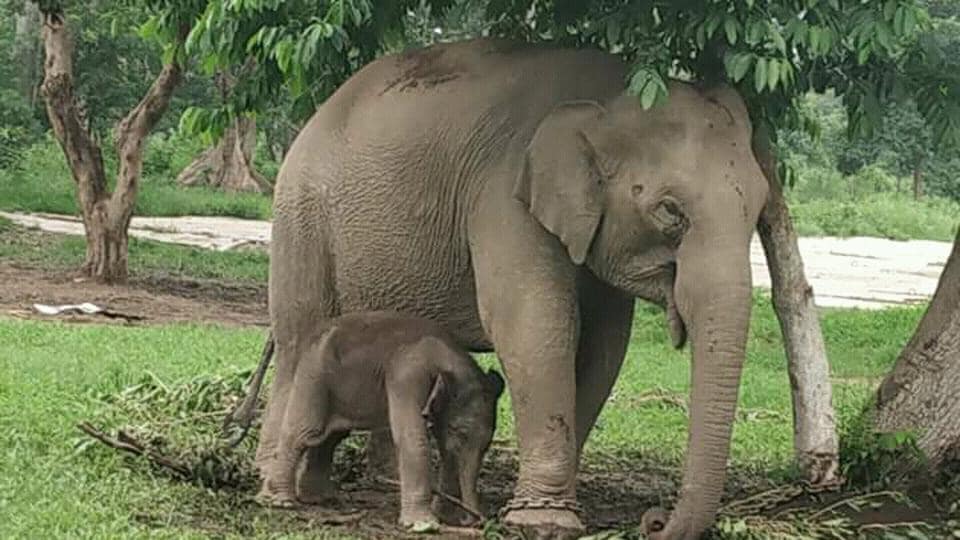
It is after a gap of 25 years that a calf has been born to a departmental elephant at the reserve. Earlier, another departmental elephant, Sonpari, had given birth to female calf Albeli in 1993. Albeli too is serving the department.
The birth took place in the Kalagarh elephant camp. Apart from the veterinarians, the authorities had called in a mahout from Assam for assisting in the delivery. Both the mother and calf were said to be doing fine.
Deputy director of the reserve, Amit Verma said that the calf was healthy and was being taken care of by the staff and Mahouts. “We have not decided upon any celebration or ceremony as right now the mother and the calf are being kept in quarantine,” he said.
“This is a sensitive period for the mother. It might remain in the camp for 6-8 months while the calf will remain with the mother for the next two years,” he said.
Verma said they will soon take a call on organising a ceremony to name the calf.
The departmental elephants at Corbett are utilised for patrolling, safari and related activities. The forest department takes care of such elephants.
Corbett had got nine elephants — seven adults and two calves — from Karnataka in 2016 for patrolling. Three elephants, brought from Assam some 30 years ago, were relived of safari duty in January following which the forest department decided to bring 10 more jumbos from Karnataka. Elephant safari is permitted only in Dhikala and Bijrani zones of Corbett that houses 240 tigers, as per the All India Tiger Estimation of 2015.
The protected area is currently shut down for night stays and is opened for day visits in two zones. Tourists could enjoy night and day tours in the reserves from November 15 till June 15.
The reserve is visited by nearly 3 lakh people during seven month tourist season — November 15 till June 15 —generating nearly Rs 9 crore.


