E-Paper



HC rejects review petition on dissolution of Badri-Kedar Temple Committee
Petitioner’s counsel Vivek Shukla said that they will now approach the Supreme Court


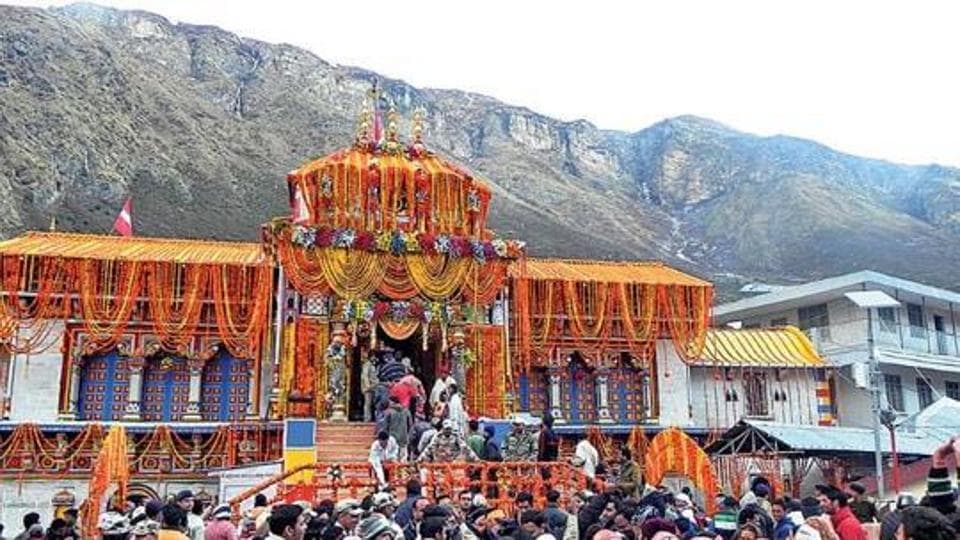
The UttarakhandHigh Court on Thursday rejected a review petition against the its July 11 judgment that upheld a state government order to dissolve the cash-rich Shri Badrinath-Kedarnath Temple Committee, the body responsible for management of the Badrinath and Kedarnath shrines.
The review petition was filed by Diwakar Chamoli, a member of the Shri Badrinath-Kedarnath Temple Committee, and came up for hearing before a division bench of Chief Justice KM Joseph and Justice Sharad Kumar Sharma.
The same bench had on July 11 dismissed the order of a single bench by which the committee was restored.
Petitioner’s counsel Vivek Shukla said that they will now approach the Supreme Court.
It may be recalled that Cabinet Minister Satpal Maharaj had on April 1, 2017, directed the dissolution of the temple committee. The decision was then overturned by the high court. However, on June 8, the state government had invoked a special clause to dissolve the committee again, which was again stayed by the court on June 16, 2017. Once again the order was challenged before the single bench of Justice Sudhansu Dhulia on the ground that the rules of the committee provide for a term of three years. Justice Dhulia had in September 2017 cancelled the government order and restored the committee.
With the July 11 ruling, the committee that also manages 52 other shrines once again stood dissolved.
The committee had been constituted by then Congress government in December 2016, with senior party leader Ganesh Godiyal as its head.
Shukla said in the petition, they had pointed out that the committee was dissolved without any prior notice to its members. “We also pointed out that dissolution of such an important committee during the peak pilgrim season would create chaos in the management of the pilgrimage to these two shrines and other shrines,” he said.
Shukla said the petition had pointed out that no specific cause — subjective or objective — was given by the state government for the dissolution of the temple committee. “According to the Badrinath Kedarnath Temple committee Act, 1939, the government has to give subjective and objective reasons before it goes ahead with the dissolution of the committee,” he said.
Diwakar Chamoli said they will now approach the Supreme Court.