
 E-Paper



Monsoon puts brake on tiger translocation project in Rajaji
Thick foliage and broken roads - perennial issues during every monsoon – have come in the way of tiger’s translocation in Rajaji Tiger Reserve


Thick foliage and broken roads - perennial issues during every monsoon – have come in the way of tiger’s translocation in Rajaji Tiger Reserve.
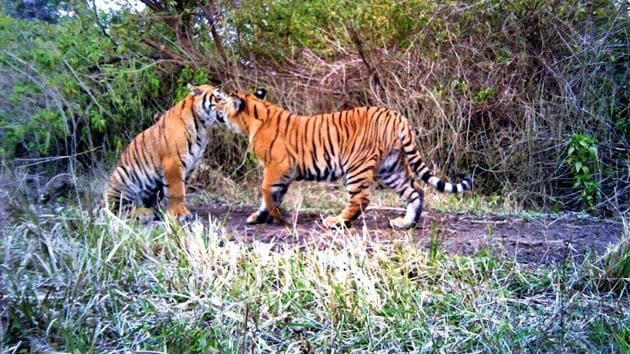
The relocation is planned in western part of the reserve where there are two tigresses after receiving final nod from the National Tiger Conservation Authority (NTCA) in June.
No breeding is reported from the area that is divided by a narrow corridor buzzing through traffic and other hurdles from the eastern part. The eastern part comparatively has reported breeding.
The latest Phase IV monitoring in the reserve has listed 34 tigers - an increase of 18 tigers since the last monitoring of 2014.
As a first step towards relocation, the management has to radio collar two lone tigresses in the western part. This area is spread across 570 sq km - wider than the eastern part which is limited to 150 sq km.
The radio collaring would be done after tranquilising both the tigresses. So, officers do not want to take any chance during the rainy season which would mean the disappearance of the wild animals post tranquilising in the dense cover.
“The tranquiliser takes at least 10 minutes. But, we cannot take a chance to tranquillise them during monsoon as they can easily elope in the thick foliage. Radio collaring is needed to study their behaviour, range, prey, pattern. We would be able to do it once monsoon bids farewell,” Sanatan Sonkar, director Rajaji, told Hindustan Times.
Monitoring of both tigresses is presently being done with the help of field staff. But, radio collars will help in establishing their movement area.
Wildlife Institute of India’s two senior scientists - PK Mallik and Bivash Pandav - will be assisting the officers in the project with the support of World Wide Fund for Nature India.
Following radio-collaring of two tigresses, the officers will also identify two pairs of tigers from Corbett landscape for translocation. These identified tigers would also be radio-collared for certain duration, studied and thereafter, would be translocated.
After Sariska and Panna, Rajaji is the third project of the country where tiger translocation would be done to ensure healthy breeding of the big cat.


