
 E-Paper



Aravallis’ sandy foothills may be out of green zone
Parts of Aravalli Range, which act as groundwater recharge zones for the national capital region, are likely to be excluded from the natural conservation zone category, in a move that could result in real estate development in the areas and which has been criticised by environmentalists.


Parts of the Aravalli Range, which act as groundwater recharge zones for the national capital region (NCR) around Delhi, are likely to be excluded from the natural conservation zone (NCZ) category in a move that could result in real estate development in the areas and which has been criticised by environmentalists.
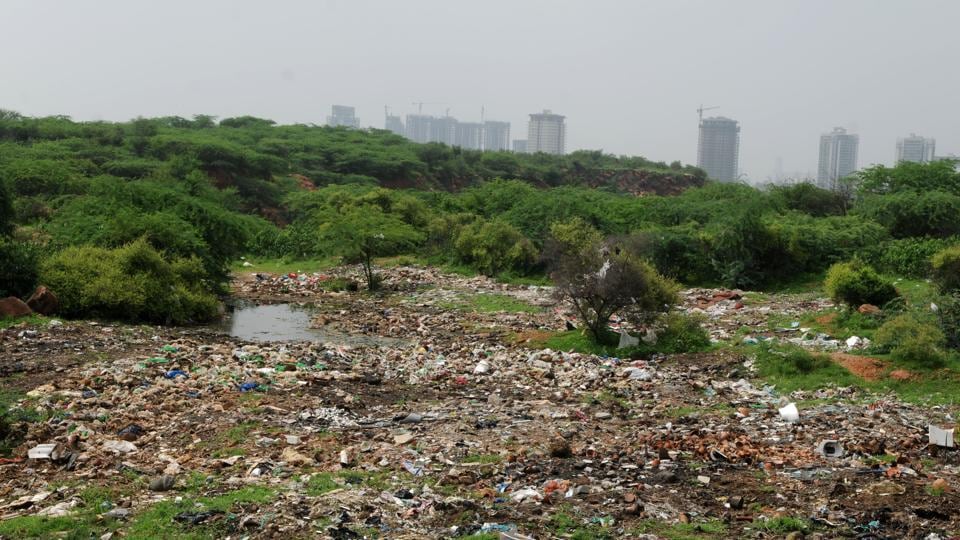
The Haryana Town and Country Planning (HTCP) department’s September 17 meeting agenda mentions its decision to exclude several Aravalli stretches from the NCZ which includes sanctuaries, major lakes and water bodies. A large part of the area being cleared for development is bhood, or sandy foothills of the Aravallis that act as water recharge zones.
The NCR Regional Plan, 2021, restricts construction and encourages conservation in NCZ areas. All of the Aravalis is categorized as NCZ in the plan.
The decision to exclude the sandy foothills was taken after the HTCP department’s recent verification exercise to determine whether these areas conform to the NCZ criterion. The decision comes on the heels of a Supreme Court verdict this week ordering the demolition of buildings located in Kant Enclave in Haryana’s Faridabad , also in the Aravallis.
“The bhood areas do not meet the definition of NCZ. It is a very sensitive matter so I cannot elaborate on it now. A survey was conducted and these areas were decided to be excluded,” said Haryana’s assistant town planner Babita Goyal.
The 2021 NCR as well as the Haryana Sub-Regional Plan, 2021, categorise Aravallis as NCZ, where constructions are restricted.
The Haryana government had categorised some of these Aravalli stretches as “status yet to be decided” and reopened them in 2014 for ground-truthing to ascertain their forest status.
The agenda of the September 17 meeting, circulated to various government departments, says that both “status yet to be decided” areas and confirmed NCZ parts have been recommended for exclusion. This means they can be opened up for real estate development.
The agenda document states that the Haryana forest department has objected to the exclusion of the Sarai Khwaja land and the green field colony project land from NCZ.
“All these areas listed to be excluded in the agenda are part of Aravallis and they fall under NCZ, where no real estate construction is allowed,’’ said Gurgaon-based environmentalist Chetan Agarwal.
“The bhood areas are one of the pristine aquifers that should be protected for drinking water supply to water scarce region of northwest India. Opening it up for development will be a mistake,” said Shashank Shekhar, assistant professor of geology at the Delhi University.
The NCR Planning Board can overrule HTCP’s decision.
In July 2017, the Haryana government wrote to the National Green Tribunal (NGT) saying that certain parts of uncultivable hills cannot be categorised as Aravallis as they have been used for roads, buildings and other such projects.
The Union environment ministry told the NGT that areas categorised as uncultivable hills, foothills, ravined hills, grassy foothills, and the rocky area between hills in NCR will be treated as Aravallis. The development will boost real estate in Gurugram and Faridabad.

Stay updated with all top Cities including, Bengaluru, Delhi, Mumbai and more across India. Stay informed on the latest happenings in World News along with Delhi Election 2025 and Delhi Election Result 2025 Live, New Delhi Election Result Live, Kalkaji Election Result Live at Hindustan Times.


