
 E-Paper



Covid-19: Testing target a bridge too far in Delhi hot spots
In an order last week, seen by HT, the government identified the need to ramp up testing and said 20,000 samples would be collected from containment areas and quarantine zones over a span of five days beginning Tuesday.


The Delhi government’s plan to carry out 20,000 swab tests in containment areas over five days between Tuesday and Saturday ended with roughly 4,000 tests after the hard lockdown in these areas turned out to be a hurdle for sample collection efforts.
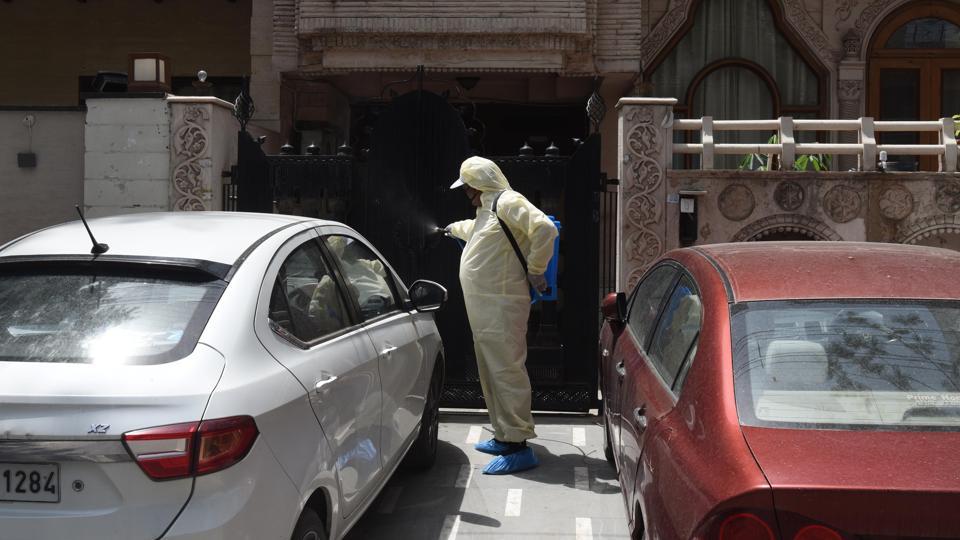
In an order last week, seen by HT, the government identified the need to ramp up testing and said 20,000 samples would be collected from containment areas and quarantine zones over a span of five days beginning Tuesday. On Saturday, the fifth day, this number was at 4,030.
“So far, samples were being collected only in our hospitals, and we cannot ask people living in containment zones to come to the hospitals. We have to go there and set up a temporary tent or room or something where we can ask people from the area to come and give their samples. With RT-PCR tests, sample collection is more difficult because when the swab is put at the back of the throat, aerosol that might contain the virus is generated,” said a senior official from Delhi’s health department, asking not to be named.
The need to ramp up testing comes at a time when new clusters are forming in the city. On Saturday, the city reported 186 new cases from among 736 samples that were processed in 24 hours. This means one in four people who were tested had the infection, underscoring the need to widen the net in order to detect the other cases that there may be.
To improve the testing rate, the Delhi government has decided to incentivise collection of samples and set up 21 collection centres in hotels, dharmashalas and hospitals that were not initially designated as collection centres. Additionally, all Delhi government hospitals will start collecting samples in tents outside main buildings.
“Teams from the dispensaries are being mobilised to collect the samples in the containment areas. They will go to the centres being set up in the community and ask people to come there,” said another official from Delhi’s health department.
Teams that will collect samples in the community will be paid Rs 100 per sample, with those actually taking the swabs getting a bigger share of the incentive.
“The incentive per team would be worked out in such a way that the person exposed to maximum danger or higher risk will be given the greater share (2 shares) of the incentive. For example, if there are 8 members in a team with two persons taking the samples then the total amount (number of samples x 100) would be divided by 10 to ensure that the two sample collectors will be given two shares of the incentive,” according to an officer order by Delhi’s health department.
The government has also roped in private laboratories to process the samples as it is likely to exceed the capacity of the six government-run labs.
Private laboratories will be paid Rs 4,500 if they collect a sample and use their own testing kit; R 3,500 if the sample is collected by the government and the kit is of the lab; and R 2,200 if the sample is collected by the government and the kit is also provided by it.
“Yes, we have started sending samples to the private laboratories. This is done only after our own capacity is exhausted,” said a third official from Delhi government health department.
Yet, this might not be enough. On Friday, 2,674 samples – more than the total number of samples collected– remaining pending at both government and private labs.
In addition to the swab tests, the government will deploy 42,000 rapid testing kits it received on Saturday to check for signs of infection through a blood sample.


Stay updated with all top Cities including, Bengaluru, Delhi, Mumbai and more across India. Stay informed on the latest happenings in World News along with Delhi Election 2025 and Delhi Election Result 2025 Live, New Delhi Election Result Live, Kalkaji Election Result Live at Hindustan Times.


