
 E-Paper



Delhi government to put 1857 uprising on city’s tourist map
The Delhi government is planning to frame a policy to highlight and popularise such monuments which are landmarks in the history of 1857 uprising

 Prefer HTon Google


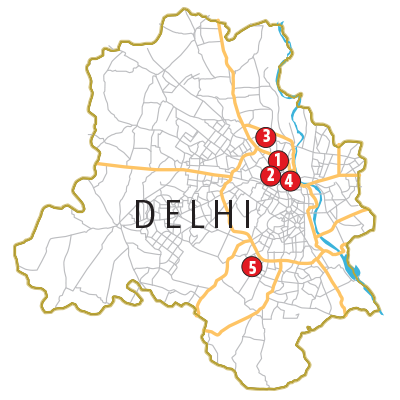
During the 1857 uprising, families of the British officers and others associated with the British rulers huddled at the Flag Staff Tower, located at an elevated point in the middle of the northern ridge near Delhi University, to escape the wrath of Indian sepoys. They stayed put there for months, despite frequent attacked by mutineers, before fleeing to Karnal.

A stone’s throw away is a lake, called Khooni Khan Jheel (Blood Lake). The name was given because of the water turned red after bodies of several British troops, Indian sepoys, women, children, and dead horses were dumped there, following repeated skirmishes between the rebels and English soldiers.
The Delhi government is planning to frame a policy to highlight and popularise the tower, the lake and several other such monuments which are landmarks in the history of the 1857 uprising — what is also often called the first war for India’s Independence.
The tourist department, which will anchor the policy, believes that it would add to Delhi’s tourist map, which is already rich with globally popular historical monuments, said an official.
“The department is of the opinion that tourism in Delhi is not only about the Red Fort or the Qutub Minar but it has much more to offer to the visitors, especially such not-so-popular locations,” he said.
The department plans to set up several themes, creating a circuit, which would tentatively be named Delhi in 1857 – first independence struggle and Heritage Havelis in Delhi, among others.
Officials say that once the themes are finalised, the places will be highlighted by organising promotional events or screening of short films at popular tourist places such as Dilli Haat and the Garden of Five Senses. Managing director of Delhi Tourism and Transport Development Corporation (DTTDC), Shurbir Singh said discussions were going on to shape the scheme.
“We are working on various themes to highlight several lesser known places related to Delhi’s cultural heritage. Currently, presentations are going on to finalise the themes in which these monuments would be included to give tourists a wholesome experience of our city’s history,” Singh told Hindustan Times.
He said once a detailed plan is in place, it will be sent to the government for its approval.
Swapna Liddle, convener of Delhi chapter of Indian National Trust for Art and Cultural Heritage (INTACH), said it was a good plan, “if crafted and implemented well”.
She counted Coronation Park in north Delhi, Mutiny Memorial at northern ridge, Bhuli Bhatiyari ka Mahal at central ridge and Shalimar Bagh in west Delhi among places which are yet to be explored fully for their tourist potential.
“Open spaces are shrinking now and such places can easily be developed for recreational activities. The government will just to have to clean the places and provide basic facilities such as washrooms and drinking water to make them tourist friendly,” Liddle told Hindustan Times.
She added that the government had been doing a lot for the restoration of historical monuments but maintaining them was equally important.
Another historian Navina Jafa, vice-president of Centre for New Perspective, said heritage was not only about historical buildings but about the development of the creative community. “It is important to highlight heritage buildings but the most important factor is how the creative community, who live on the margin and are repositories of intangible heritage and heritage skills, are provided sustainable livelihood,” Jafa said.


